Households doing laundry frequently
If one load follows another and you can install a dedicated appliance, consider the tumble dryer's capacity, its footprint, how it handles condensed water and the maintenance it requires.


If you do laundry frequently, a tumble dryer can save you from drying large loads in your living space, provided you have room to install it and can keep it maintained. For smaller amounts of laundry, a washing machine with an effective spin cycle and a clothes airer may be enough, but good airflow and ventilation at home are still important. If dampness persists, check the ventilation first; a dehumidifier should only be considered as an additional measure.
If one load follows another and you can install a dedicated appliance, consider the tumble dryer's capacity, its footprint, how it handles condensed water and the maintenance it requires.
If there's no room for a second appliance, your washing machine's spin performance becomes an important factor when drying clothes on an airer. ADEME recommends choosing spin efficiency class A if you want to dry clothes more quickly indoors; good airflow and ventilation are still essential.
Before considering a dehumidifier, check the air vents and make sure the ventilation system is working. ADEME lists a dehumidifier as an option if your home remains too damp, but not as a substitute for these checks.
The amount of laundry you do and the space available will guide your choice of equipment. How your home manages moisture is particularly important if you dry clothes on an airer.
Worth considering: if you do regular loads and the model's location and installation suit your home.
Bear in mind: this is an extra appliance to maintain. Beko says heat pump models may take longer to complete a cycle than other tumble dryers.
Worth considering: if you have a modest amount of laundry and room for an airer, without adding a tumble dryer.
Keep in mind: according to ADEME, air-drying laundry releases moisture into the air indoors. Don't overlook the need for good airflow and ventilation.
Worth considering: if dampness persists, after checking the air vents and ventilation system, as ADEME recommends.
Its limitations: it won't dry a load directly like a tumble dryer, and it can't replace a working ventilation system.
| Priority | What to check | To suit your needs |
|---|---|---|
| How often you do laundry | Compare the capacity with the loads you usually do. For a tumble dryer, also check the ECO programme duration; for a washing machine, check its spin efficiency class. ADEME recommends choosing spin efficiency class A if you want laundry to dry quickly. | I often wash large loads, so I want to know if a dedicated appliance suits my routine. For smaller loads, the space taken up by an airer matters too. |
| Indoor humidity | Check that air inlets and vents aren't blocked and that the ventilation system is working. ADEME recommends these checks if your home remains too damp. | If I dry laundry on an airer, I need to be able to air the room rather than rely on a dehumidifier to replace ventilation. |
| Energy consumption | For tumble dryers, compare models using the current A to G energy label and the ECO programme figures. Since July 2025, this scale and reference programme have been included in the energy label information published by Miele France. | I want to compare appliances on a like-for-like basis, rather than equating an old A+++ rating with a new class or relying on a standalone energy-saving claim. |
| Space and installation | Check the dimensions, the clearance needed to open the door, the stated noise level and how condensed water is handled. If you plan to stack appliances, check that this is permitted in the manuals for the specific models. | In a compact room or one close to a place where people sleep, I need to check the actual space before choosing a capacity or extra feature. |
According to Miele France, the new A to G scale and ECO reference programme have changed how tumble dryer energy labels are read since July 2025.
To compare two models, check their current labels and compare figures based on the same programme.
ADEME identifies air-drying laundry as a significant source of indoor moisture. Mechanical ventilation helps remove this moisture continuously.
Keep air inlets and vents clear, and check that the ventilation system is working, especially if dampness persists.
A dehumidifier can help manage humidity, but buying one doesn't tell you whether the air vents and ventilation system are working properly.
Start with the checks recommended by ADEME, then look at how the model you're considering handles water, its noise level and its operating requirements.
Capacity alone won't tell you whether the door can open, whether condensed water can be managed easily or whether the appliances in question can be stacked.
Measure the space and check the manual for the exact model to confirm clearances, installation requirements and maintenance.
These product ranges can help you identify features to compare. Assess each appliance using its own product details and installation requirements.
Bosch France lists heat pump tumble dryers, including an 8 kg model in its catalogue.
Miele France product details include 8 kg and 9 kg heat pump tumble dryers.
Beko France lists heat pump tumble dryers, including the D0H11230, which is rated at 12 kg and designed for bulky laundry.
These models illustrate three possible approaches: a dedicated tumble dryer, a washing machine for laundry you then dry on an airer, and a dehumidifier to consider as an additional measure. Compare each appliance with the space you have and the way you dry your laundry in mind.
 Image unavailable
A dedicated appliance to consider if your regular loads make an 8 kg tumble dryer worthwhile. The product description identifies it as a condenser model. Before choosing where to put it, check the product details for its dimensions, water management and figures on the current energy label.
 Image unavailable
Its stated 8 kg capacity is suited to drying laundry in a dedicated appliance. The product description lists a C rating; compare the ECO programme figures on the current energy label, and check the model's dimensions and installation requirements.
 Image unavailable
This washing machine suits the ‘spin, then air-dry’ approach: it doesn't dry the load. Its stated maximum spin speed is 1,400 rpm; check its spin efficiency class too when assessing how well it spins. ADEME recommends choosing class A if you want laundry to dry more quickly indoors, while ensuring that ventilation is working properly.
 Image unavailable
This 8 kg model is another option for drying laundry in a dedicated appliance. Its product description lists a D rating; check the ECO programme figures and confirm the dimensions, noise level and water management in the manual before deciding where to put it.
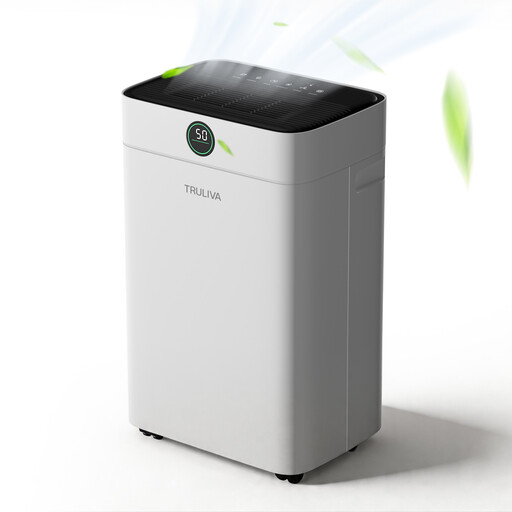 Image unavailable
Consider this as an addition to air-drying laundry, after checking the ventilation if dampness persists. The product description mentions a laundry mode, a 2.8 L tank and a continuous drainage hose. Its stated capacity of 25 L/day is based on conditions of 90 % relative humidity and 95 °F; it doesn't predict how well it will perform in your home.
Yes. ADEME recommends choosing spin efficiency class A if you want laundry to dry more quickly indoors or in a tumble dryer. If you dry laundry on an airer, make sure you have good airflow and working ventilation.
No. If your home is too damp, ADEME recommends checking the air vents and ventilation system. You can then consider a dehumidifier as an additional measure, but it won't fix a faulty ventilation system on its own.
Compare models using the same current energy label, with its A to G scale and ECO programme figures. Miele France dates the introduction of this label format to July 2025, so don't directly compare an old A+++ rating with the new scale.
Beko distinguishes between vented appliances, which need a duct leading outdoors, and condenser or heat pump models. Even so, check the manual for your chosen model to confirm how it handles condensed water, the required clearances and the installation requirements.