Which criteria should you look at first?
First decide how you’ll dry your laundry, then compare the capacity and specifications of a model suited to that approach.
Washing machine and airer
Consider this if: you can dry your laundry in a well-ventilated room and are happy with the drying time.
Bear in mind: even well-spun laundry releases moisture as it dries indoors, as the Q-WASH project cited by ADEME points out.
Washer-dryer
Consider this if: you don’t have room for two appliances and your loads fit within the stated drying capacity.
Bear in mind: you may need to split a full wash load before drying. Bosch’s range, for example, includes models with an 8 kg washing capacity and a 5 kg drying capacity.
Washing machine and separate tumble dryer
Consider this if: you regularly dry large loads and have enough room.
Bear in mind: you’ll need to install two appliances. Check the capacity and installation instructions for the specific tumble dryer before choosing.
| Criteria |
What to check |
To suit my needs |
| Indoor humidity |
Check the washing machine’s spin-drying class. If you use an airer, make sure the room is well ventilated or has an extractor fan. |
My laundry mostly dries indoors, so I need to be able to remove the moisture it releases. The Q-WASH project cited by ADEME highlights the moisture produced by air-drying. |
| Capacity |
Start with the size of your usual wash loads. For a washer-dryer, check the washing and drying capacities separately; for two appliances, compare their load capacities. |
I’d rather not have an oversized drum, but I also don’t want to split every load I dry. ADEME says that a 7 kg washing machine is enough most of the time. |
| Water and electricity |
Compare the labels and specifications of models in the same category. For a washer-dryer, check the figures for the wash-and-dry cycle, not just the washing cycle. |
If I use the dryer regularly, I want to take that cycle into account when choosing an appliance rather than relying on its stated class alone. |
| Noise and installation |
Check the noise level, dimensions and instructions for the exact model. For a separate tumble dryer, also check its operating requirements and how it collects water. |
The appliance will be close to the living areas, so its noise and the space it takes up matter just as much as its capacity. |
| Durability |
Check the washing machine’s durability index and the model’s repair information, as well as its washing specifications. |
I want to compare the washing machine’s reliability and repairability without confusing these factors with its spin performance. |
Which brands offer examples of these options?
These product ranges offer examples of features to look out for; their specifications don’t apply to every model from each brand.
Bosch
Bosch’s French range of washer-dryers shows how a combined appliance can work well when two separate appliances would take up too much room.
- Bosch lists washing and drying capacities separately, with configurations including 8 kg/5 kg and 9 kg/6 kg.
- Capacities vary by model, so check the label and specifications for the one you’re considering.
Electrolux
Electrolux’s French range of heat pump tumble dryers offers examples to consider if you have room for a separate appliance.
- For model EW6HI6284BN, Electrolux lists an 8 kg capacity, 97 kWh/100 cycles and a noise level of 67 dB.
- The stated operating temperature range for this model is 5 °C to 35 °C; these figures may not apply to other models.
Miele
Miele’s French range of heat pump tumble dryers offers another option to pair with a washing machine.
- Miele describes the TCA520WP as an 8 kg heat pump tumble dryer.
- Claims about low energy consumption and gentle fabric care come from Miele. Compare the label and specifications for the exact model.
Joybuy products for drying laundry indoors
This selection includes washer-dryers, which combine washing and drying in one appliance, as well as tumble dryers to pair with a separate washing machine. Compare their drying capacities with your usual loads. A tumble dryer on its own won’t wash your laundry.
 Image unavailable
Samsung WD11DG6B85BEU3 – 11 kg/6 kg washer-dryer
The integrated dryer means you can take care of both tasks with one appliance. Its stated capacity is 11 kg for washing and 6 kg for drying, so if you want to dry a larger wash load, you’ll need to take some laundry out first. Check the installation instructions for this model before deciding where to put it.
View on Joybuy
 Image unavailable
Samsung WD10HG6U34BEU3 – 10 kg/6 kg washer-dryer
This combined appliance handles washing and drying in homes where a second appliance would take up too much space. Its stated capacity is 10 kg for washing and 6 kg for drying, so bear this difference in mind if you usually have large loads. Class D appears in the product name; check the label to see which cycle it applies to and compare energy use.
View on Joybuy
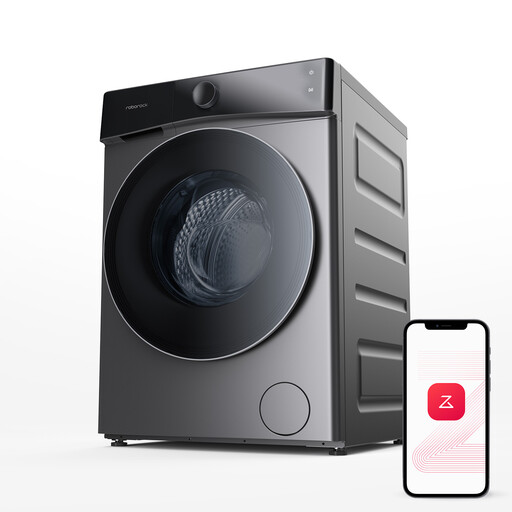 Image unavailable
Roborock Zeo Lite Gray – 10 kg/6 kg washer-dryer
This washer-dryer combines both functions, so you won’t need a separate tumble dryer. This version has a stated washing capacity of 10 kg and a drying capacity of 6 kg, so check that any loads you plan to dry stay within the latter limit. The product name mentions app control, LintClear and automatic dosing; check the model’s specifications to see which features you’ll find useful.
View on Joybuy
 Image unavailable
Hotpoint CHD84MWBSEE – 8 kg heat pump tumble dryer
This standalone tumble dryer suits a two-appliance set-up if you already have a washing machine or are planning to buy one. Its stated capacity is 8 kg and its product name lists a C energy class. Compare the capacity with your usual wash loads, then check the model’s dimensions and installation instructions.
View on Joybuy
 Image unavailable
Comfee CD08EHP05W-HR – 8 kg heat pump tumble dryer
This model dries laundry alongside a separate washing machine. Its stated capacity is 8 kg and its product name lists a D energy class; that class alone isn’t enough to compare how much energy it will use. Check the label, dimensions and instructions for the model before deciding where to put it.
View on Joybuy
Frequently asked questions
Can a washer-dryer dry the whole load it has just washed?
Not always: the drying capacity may be lower than the washing capacity. Bosch, for example, offers configurations of 8 kg/5 kg and 9 kg/6 kg. Check both figures for your chosen model and take some laundry out before drying if the load exceeds its limit.
Where should you put an airer when drying laundry indoors?
Choose a spacious, well-ventilated room or one with an extractor fan. The Q-WASH project cited by ADEME shows that air-drying releases moisture into your home, so you’ll need to use your airer in a suitably ventilated space.
Which figures should you compare before buying an appliance?
For a washing machine, look at capacity, spin performance, water and electricity use, and noise. For a washer-dryer, also check the figures for the wash-and-dry cycle and its drying capacity. For a separate tumble dryer, compare the specifications for its own appliance category. The label and specifications for the exact model help you make like-for-like comparisons.
Does a heat pump tumble dryer need to vent air outside?
It depends on the model and how it handles condensed water. For the EW6HI6284BN, Electrolux lists a water collection tank and an optional direct-drain kit. Check the instructions for the model you’re considering rather than assuming all tumble dryers work the same way.
Can a durability index help you choose a washing machine for drying laundry indoors?
It helps you assess the washing machine’s reliability and repairability, but it doesn’t tell you how quickly laundry will dry. ADEME says washing machines have also been covered by this index since April 2025. Use it alongside capacity, spin performance and the energy label.


