Households without a dedicated drying space
If you can’t leave an airer set up in your living space, a washer-dryer lets you wash and dry your clothes in the same spot. However, check its drying capacity separately from its washing capacity.


If you have room to hang your washing, start by looking at your washing machine’s spin efficiency: ADEME considers it particularly useful when clothes need to dry quickly indoors. A washer-dryer may be a better fit if space is tight, provided its drying capacity suits your loads. A separate tumble dryer needs extra space, while an airer remains a useful option for smaller loads and fabrics whose care labels advise against tumble drying.
If you can’t leave an airer set up in your living space, a washer-dryer lets you wash and dry your clothes in the same spot. However, check its drying capacity separately from its washing capacity.
If you regularly need to dry several loads, compare the amount of laundry to be dried, programme times and the space needed for a freestanding tumble dryer before choosing an additional appliance.
An airer can remain your main option for small loads or fabrics that need to dry naturally. In that case, your washing machine’s spin efficiency and the ability to ventilate the room are important considerations.
Start by choosing the option that best addresses what’s disrupting your routine: drying time, space, electricity use or your preference for air-drying.
Worth considering: if you have room to hang your washing but want it to come out of the washing machine better spun.
Bear in mind: your clothes will still need to dry in a room where you can set up an airer.
Worth considering: if washing and drying in the same spot would solve your lack of space.
Bear in mind: you may need to reduce the size of a washed load before drying it.
Worth considering: if you often dry large loads and have a dedicated space for the appliance.
Bear in mind: a second appliance takes up space and uses electricity.
| What matters to you | What to check | Who this matters to |
|---|---|---|
| Drying time | Washing machine spin efficiency rating and noise level; programme duration if you choose a drying appliance. | When my washing dries on an airer at home, I want it to spend less time there. Around 31% of consumers prioritise reducing drying time. |
| Space taken up | Dimensions and clearance required; separate washing and drying capacities for a combined appliance. | If an airer is taking up too much room in my living space, I want to free up that space first. Saving space is the main need for around 31% of consumers. |
| Electricity use | Energy label figures for comparable programmes, particularly wash-only and wash-and-dry cycles. | For frequent laundry loads, I want to understand how much each cycle uses before choosing. Around 23% of consumers put keeping energy use under control first. |
| Air-drying | Room for an airer, fabric care instructions and the ability to ventilate the room. | For small loads or fabrics that shouldn’t go in a tumble dryer, I’d rather keep some space for hanging them up. This no-electricity option is the priority for around 15% of consumers. |
ADEME recommends choosing a washing machine with an A spin efficiency rating when clothes need to dry quickly indoors or will go into a tumble dryer afterwards. This rating doesn’t replace the need to check the noise level, capacity and available space.
A washer-dryer may not be able to dry a whole load in one go. For example, Electrolux and Beko list capacities of 10/6 kg and 8/5 kg respectively for two of their models.
Check both capacities in kg and compare the drying capacity with your usual loads. Be prepared to remove some clothes if necessary.
These programmes do different jobs, so their energy use figures alone aren’t enough to compare two appliances for the same purpose.
Compare the label information for the programme, capacity and use you actually have in mind.
Revolutions per minute don’t tell you everything about spin efficiency or the practical considerations of using a washing machine near a living space.
Also check the spin efficiency rating, capacity and stated noise level.
Leaving an airer in a closed room can make drying clothes indoors harder to manage. ADEME recommends opening windows wide for 5 to 10 minutes each day to refresh the air, where the conditions in your home allow.
Choose a spot where your clothes won’t block walkways and where you can ventilate the room.
An option for households considering a washer-dryer and looking to weigh the space saved against the loads they want to dry.
A brand to explore if you have room for a freestanding heat pump tumble dryer.
A brand with options in both categories: washer-dryers and freestanding heat pump tumble dryers.
Another option to explore when comparing freestanding heat pump tumble dryers and the features available on different models.
These Joybuy models cover three needs: washing and then hanging your clothes to dry, washing and drying in the same spot, or adding a separate tumble dryer. Compare their capacity with your loads and check how much space you’ll need before choosing.
 Image unavailable
For washing and drying in the same spot when there isn’t room for two appliances. This model is listed with a washing capacity of 10 kg and a drying capacity of 6 kg, so a full wash load will need to be split before drying. Check the dimensions and the wash-and-dry cycle figures for your needs.
 Image unavailable
For drying clothes in a separate appliance after washing, if you can set aside space for it. The product listing gives it an 8 kg capacity and a C energy rating. Check the energy label, dimensions and installation instructions before choosing this model.
 Image unavailable
Another separate appliance option for loads you don’t want to hang up at home. The product listing gives it an 8 kg capacity and a D energy rating. Compare the programmes, their duration, the energy use shown on the label and the installation requirements with your other options.
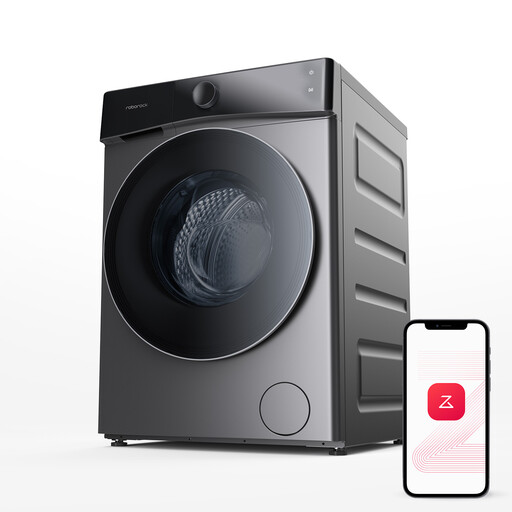 Image unavailable
For combining washing and drying in one appliance. The product listing gives it a washing capacity of 10 kg, a drying capacity of 6 kg, 27 wash programmes and app control. Use the drying capacity as your guide when organising loads, and check the dimensions and the label figures for a complete cycle too.
 Image unavailable
For washing clothes before drying them on an airer or in a separate appliance. It has a stated capacity of 8 kg and a spin speed of 1,400 rpm. Spin speed alone doesn’t tell you how efficient the spin is, so check the rating on the energy label and make sure you have a separate drying solution.
Start with your washing machine’s spin efficiency rating, then check its noise level and capacity. ADEME recommends choosing an A spin efficiency rating when clothes need to dry quickly indoors. Also make sure you can set up your airer without getting in the way of using the room.
Not always: its drying capacity may be lower than its washing capacity. Compare both figures in kg for the specific model and, if necessary, plan to remove some of the load before starting the drying cycle.
Compare label figures for the same type of programme and take the capacity used into account. On a washer-dryer, wash-only and wash-and-dry cycles have separate figures: one doesn’t tell you how much energy the other uses.
Set up your airer in a room where the air can circulate without blocking walkways. When outdoor conditions and home safety allow, ADEME recommends opening windows wide for 5 to 10 minutes each day rather than leaving one slightly open for a long time.