If you dry your laundry on an airer indoors, start by checking the room. ADEME recommends a large, well-ventilated space or a room with a mechanical ventilation extract system. If you do laundry frequently, a tumble dryer could free up your airer, provided you have space for it and compare its installation and operating requirements. If you’re already replacing your washing machine, take a look at its spin cycle options too. A dehumidifier can help when drying laundry on an airer, but it doesn’t replace ventilation in your home.
Who these options are for
The best place to start depends on how much space your laundry takes up, how often you do a wash and which fabrics you need to dry.
People who regularly use an airer
If you dry laundry in a living space, first consider where you put the airer and how well the room is ventilated before adding an appliance. ADEME’s guidance on drying laundry indoors focuses on choosing a well-ventilated room or one with mechanical extraction.
Households with frequent or large loads of laundry
If sheets, towels and back-to-back loads keep your airer occupied for a long time, compare the tumble dryer’s capacity with your usual loads. Then check you have space for it, the stated energy consumption and the length of the programmes you’re interested in.
People who dry delicate fabrics
Before choosing a programme for wool, silk or other delicate fabrics, check the garment’s care label. A manufacturer’s advertised features don’t make an item suitable for tumble drying if its care label says otherwise.
What to consider
Start by looking at the conditions for drying laundry on an airer, then decide whether the amount of laundry you have warrants a dedicated appliance. Spin performance is mainly worth considering if you’re already planning to replace your washing machine.
| What matters |
What to check |
Who it matters to |
| Drying room and ventilation |
For an airer, look for a large, well-ventilated room or one with a mechanical ventilation extract system, as ADEME recommends. Make sure air inlets and outlets are unobstructed. |
If I dry laundry indoors, I want to choose a suitable room rather than rely on an appliance to deal with humidity on its own. Around 36% of consumers prioritise good ventilation. |
| How often you do laundry and the size of your loads |
Match the tumble dryer’s capacity to your usual loads and check the length of the programmes you’ll need. If you’re replacing your washing machine, also look at spin options suited to your fabrics. |
If I need to dry sheets or towels between washes, I mainly want a more predictable turnaround time. Capacity and drying speed come first for around 29% of consumers. |
| Electricity and installation |
Compare the energy information for appliances that suit your needs. For a tumble dryer, also check where it can be installed and how water is handled—or, for a vented model, what connection is required. |
Before I use a tumble dryer regularly, I want to know where to install it and which energy figures to compare. Around 21% of consumers prioritise understanding how to use and install their appliance. |
| Fabrics and maintenance |
Check each garment’s care label, the programmes on the model you’re considering and how easy it is to access the parts that need cleaning or emptying. |
If my clothes need special care, I want to avoid using the wrong programme and be able to carry out routine appliance maintenance. Around 14% of consumers put these considerations at the heart of their choice. |
Mistakes to avoid
-
Relying on a dehumidifier instead of ventilation
Removing moisture from the air and refreshing the air in your home are two different things. For laundry on an airer, ADEME recommends a large, well-ventilated room or one with a mechanical ventilation extract system.
First choose where to put your airer and check that air can circulate. Then consider a dehumidifier as a possible extra.
It also uses electricity, and you’ll need to deal with the water it collects.
-
Choosing a vented tumble dryer without planning for an air outlet
UFC-Que Choisir distinguishes these appliances from condenser models: a vented tumble dryer needs to be connected to the outside, whereas a condenser model doesn’t require this connection.
Check where the dryer could go before choosing a technology. If you can’t install a suitable outlet, consider a condenser model instead.
-
Comparing tumble dryers on cycle time alone
The stated cycle time doesn’t tell you everything you need to know about an appliance’s energy consumption, the capacity that suits you or the programmes you’ll use.
Compare models that suit your loads, then check their energy labels and product specifications for the details that matter to the way you’ll use them.
-
Assuming a delicate programme is suitable for every garment
Even if an appliance has settings for delicate fabrics, the garment’s care label is still the deciding factor. Electrolux advises that only fabrics suitable for tumble drying should be dried in a machine.
Check the care symbol, then choose a programme and load that follow the appliance instructions.
Brands to compare
These ranges offer features worth comparing from model to model. Their inclusion here doesn’t guarantee that every model has the same specifications or is available on Joybuy.
Bosch
A range of tumble dryers where you can compare drying sensors and maintenance requirements.
- Bosch describes AutoDry as a feature that uses sensors to adjust the drying process.
- Check whether the model you choose has this feature, along with its capacity and cleaning requirements.
Miele
T1/T2 heat pump tumble dryers to consider based on the capacity and features you need.
- Miele lists DryCare 40 and SilenceDrum among the features available on some models in its French catalogue.
- Features vary by model, so check the product specifications rather than assuming they’re available across the range.
Electrolux
Models to consider if programmes for delicate fabrics are important to you.
- Electrolux describes the DelicateCare 700 YW7HI7394DC as suitable for some delicate fabrics, including wool and silk.
- This description applies to a specific model. Always check the garment’s care label before tumble drying.
Beko
A range of heat pump tumble dryers with capacities and features to compare across models.
- Beko describes heat pump models that reuse hot air inside the appliance.
- Check the capacity, noise level and features in the specifications for the model you’re considering.
Tumble dryers to explore on Joybuy
These models are worth considering if you’re thinking about a tumble dryer because you do laundry frequently or your airer takes up too much space. Choosing one doesn’t remove the need to check ventilation in your home or the care labels on your fabrics.
 Image unavailable
Hotpoint CHD84MWBSEE, 8 kg heat pump tumble dryer
Worth considering if your usual loads suit the stated 8 kg capacity. The product title lists an energy rating of C. Check the model’s energy label and make sure its location will work for your needs.
View on Joybuy
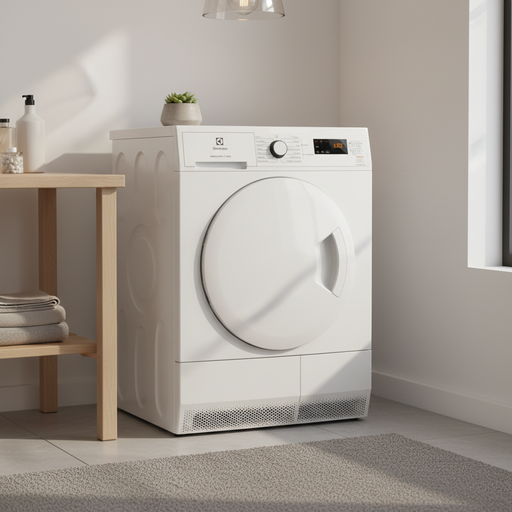 Image unavailable
Electrolux EDH1018CD GentleCare, 8 kg condenser tumble dryer
Worth considering for regular drying if the stated 8 kg capacity suits your loads. The product title mentions OptiSense; check the programmes and specifications for this model before choosing it for your fabrics.
View on Joybuy
 Image unavailable
Comfee CD08EHP05W-HR, 8 kg heat pump tumble dryer
An option to consider if your loads are suited to the stated 8 kg capacity. The product title lists an energy rating of D. Compare the energy label and check which programmes are suitable for your clothes.
View on Joybuy
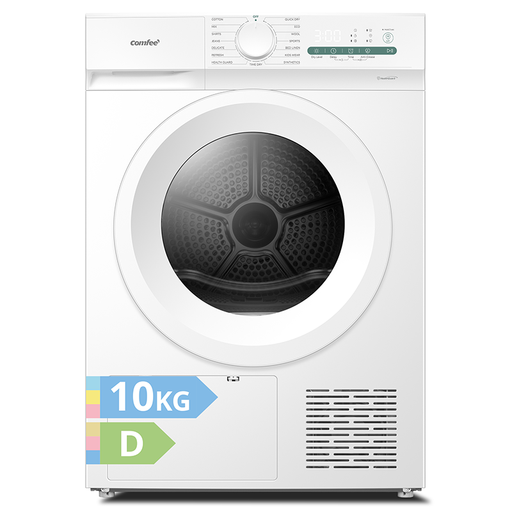 Image unavailable
Comfee CD10EHP05W-HR, heat pump tumble dryer
Worth considering if you’re looking for a heat pump tumble dryer, but confirm its capacity before choosing it for large loads: the product title states 10 kg, while another specification for this model gives 8 kg. Also check its energy label and the programmes suited to your fabrics.
View on Joybuy
Frequently asked questions
Can a dehumidifier replace ventilation when drying laundry on an airer?
No. Removing moisture from the air doesn’t refresh the air in your home. For laundry on an airer, ADEME recommends a large, well-ventilated room or one with a mechanical ventilation extract system, preferably humidity-controlled. A dehumidifier can be used as an extra.
Do you need an outlet to the outside to install a tumble dryer?
It depends on the technology. According to UFC-Que Choisir, condenser models, including heat pump models, don’t need an outlet to the outside, unlike vented models. Still, check the available space and how condensed water will be collected or drained.
How do you compare the energy consumption of two tumble dryers?
Check the energy label and product specifications for each model, taking into account its capacity and the programmes that suit your loads. Don’t use the stated cycle time alone to estimate how much energy it will use for you.
Can a delicate programme be used to tumble dry all clothes?
No. First check that the garment’s care label allows tumble drying, then choose a programme that follows the appliance instructions. Electrolux advises that only fabrics suitable for tumble drying should be dried in a machine.


