What should you check before choosing?
Start with the space you have and the amount of laundry you usually do, then consider how each appliance fits your home’s drying and ventilation needs.
Washing machine and airer
Worth considering if: you already have somewhere to hang your clothes and want to reduce the amount of water left in fabrics after washing.
Bear in mind: the airer will still take up space, and clothes need to dry in a well-ventilated room, as recommended by Anses.
Separate tumble dryer
Worth considering if: you do regular loads and can install a second appliance that suits the size of your loads.
Bear in mind: you’ll need to allow for the space and maintenance. According to UFC-Que Choisir, a vented model requires an external opening or a duct.
Washer-dryer
Worth considering if: you only have room for one appliance and want to run a wash and drying cycle without transferring your laundry.
Bear in mind: according to UFC-Que Choisir, the drying capacity is generally lower than the washing capacity.
| Priority |
What to check |
What suits my needs |
| Spin efficiency |
Check the spin-drying efficiency class on the washing machine’s label, and don’t confuse it with its energy class. ADEME recommends class A for spin efficiency. |
I’ll keep hanging out my laundry and want to reduce the amount of water left to evaporate after washing. |
| Capacity and space |
Compare your usual loads with the washing and drying capacities. These are listed separately for washer-dryers. Measure the space and check the installation instructions for the model. |
I do regular loads and have room for two appliances, or I need to fit washing and drying into a single space. |
| Energy use and cycle time |
Compare the energy label and the duration of the programme that suits your laundry. According to UFC-Que Choisir, heat-pump condenser tumble dryers use the least electricity of the types it compares. |
I want to plan several loads without choosing solely on capacity or the advertised length of a programme. |
| Installation and maintenance |
According to UFC-Que Choisir, a vented tumble dryer needs an external opening or a duct. For a condenser model, check how water is handled, where the filters are and what maintenance the instructions recommend. |
I need to know whether my home is suitable for installation and what maintenance I’ll need to make part of my routine. |
| Ventilation and humidity |
If you dry clothes on an airer, choose a well-ventilated room, as recommended by Anses. A hygrometer can help you monitor humidity; also check the room’s ventilation and airflow. |
I dry clothes indoors and want to distinguish a long drying time from a possible humidity problem in the room. |
Options available on Joybuy
These options include washing machines for use with an airer, a separate tumble dryer, a washer-dryer and a hygrometer to monitor room humidity. A hygrometer measures humidity; it doesn’t dry clothes.
 Image unavailable
Hisense WF5I8043BWF, 8 kg washing machine, 1,400 rpm
A 8 kg washing machine to pair with an airer. This model has a B spin-drying efficiency class, rather than the class A recommended by ADEME. Check the dimensions and connections in the instructions, too.
View on Joybuy
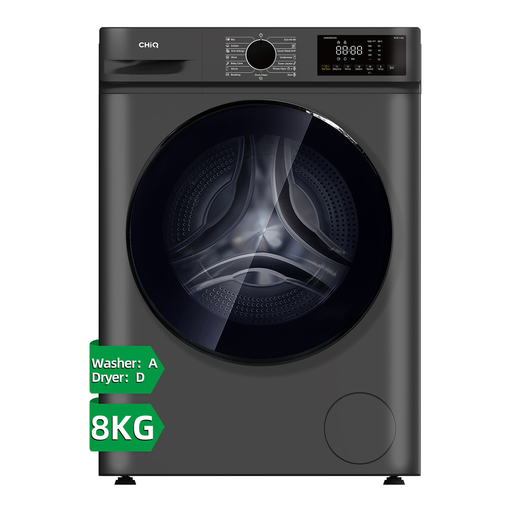 Image unavailable
CHiQ JW85882HG, 8/5 kg washer-dryer
Combines washing and drying in one appliance, with a stated drying capacity of 5 kg compared with an 8 kg washing capacity. The dimensions given in the product title and description don’t clearly match. Check the measurements and clearances in the instructions before deciding where to put it.
View on Joybuy
 Image unavailable
Hotpoint CHD84MWBSEE, 8 kg heat-pump tumble dryer
A separate appliance to consider if you have space to dry 8 kg loads without hanging them out. Its energy class is listed as C. Compare the energy use and duration of the programme you’re interested in, then check the installation instructions and filter maintenance requirements.
View on Joybuy
 Image unavailable
Electrolux EW7FI259160V, 9 kg washing machine, 1,600 rpm
A 9 kg washing machine to consider if you use an airer and wash loads that suit this capacity. The maximum spin speed of 1,600 rpm doesn’t, on its own, tell you the spin-drying efficiency class. Check the model’s label if the class A recommended by ADEME is important to you.
View on Joybuy
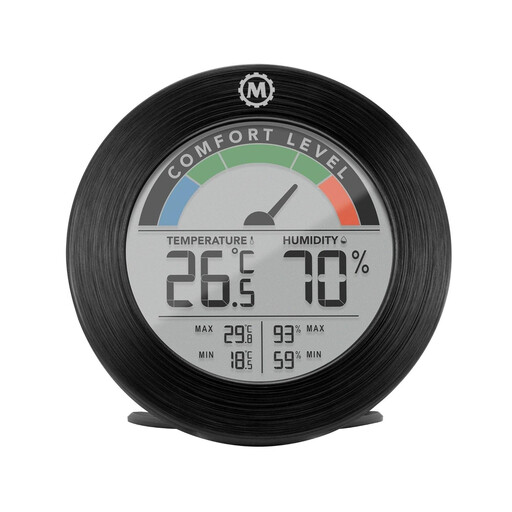 Image unavailable
Marathon Austin, indoor thermometer and hygrometer
Monitor the temperature and humidity in a room where you dry clothes. This model also displays daily minimum and maximum readings. It doesn’t remove moisture from the air or replace ventilation. If you need to interpret readings precisely, check its measurement accuracy.
View on Joybuy
Frequently asked questions
Is a more efficient spin cycle enough if I’m keeping my airer?
It’s worth considering if your priority is to reduce the amount of water left in clothes before you hang them up. ADEME recommends spin-drying efficiency class A. This won’t do away with the airer or the need for a well-ventilated room, as recommended by Anses.
Does a tumble dryer always need an external vent?
No. According to UFC-Que Choisir, a vented tumble dryer needs an external opening or a duct, whereas a condenser model doesn’t need an air outlet. Check the connections and installation requirements for your chosen model in the instructions.
Why can’t a load that’s been washed always be dried in one go in a 2-in-1 appliance?
According to UFC-Que Choisir, a washer-dryer’s drying capacity is generally lower than its washing capacity. For example, Electrolux France lists an 8 kg washing capacity and a 4 kg drying capacity for the EW8W3816BI. So, if you’ve washed a full load, you’ll need to reduce it before drying.
What maintenance does a condenser tumble dryer need?
You’ll need to manage the collected water and clean the parts listed in the instructions, including the filters and, depending on the model, the condenser. If the model allows you to drain water directly, you may not need to empty the tank, but you’ll still need to clean the filters.
Should I buy a dehumidifier if I dry clothes indoors?
Not necessarily. First, monitor the room’s humidity and check the airflow, ventilation and any potential leaks. Anses recommends drying clothes outside if possible or, if not, in a well-ventilated room. A hygrometer helps you monitor the conditions, but it won’t address the cause of any humidity.


