If you can set aside a sufficiently spacious, well-ventilated room for drying clothes, start by choosing a washing machine with a capacity and spin speed that suit your laundry loads. If you do laundry frequently, a separate tumble dryer lets you wash and dry at the same time, provided you have enough space. If you can only fit one appliance, a washer-dryer means taking its drying capacity into account, as this is usually lower than its washing capacity. In every case, check the room’s ventilation and the installation requirements for your chosen model.
Who are these options for?
People who dry clothes indoors
If your clothes airer takes up space in a living room, bathroom or utility room, the space available and air circulation matter just as much as your choice of washing machine. ADEME notes that air-drying clothes adds moisture to your home.
Households that do load after load
If you regularly need to get through several loads, compare washing and drying capacities, as well as whether you can run two appliances at the same time. Choose a drum size that suits your usual loads, too: ADEME advises against doing lots of half-loads.
Small homes with space for just one appliance
A washer-dryer combines both functions in one space. However, plan how you’ll manage your loads: according to UFC-Que Choisir, its drying capacity is lower than its washing capacity.
What should you check before buying?
Start with the space and ventilation available, then consider how much washing you need to do and dry each time.
Washing machine and indoor air-drying
Worth considering: if you have room to dry clothes in a well-ventilated space and the drying time suits your routine.
Bear in mind: a good spin won’t remove the need to ventilate the room; ADEME highlights the moisture released by clothes as they air-dry.
Separate washing machine and tumble dryer
Worth considering: if you do laundry frequently and have space for each appliance.
Bear in mind: check the dimensions, location and installation instructions before planning to stack the appliances.
Washer-dryer
Worth considering: if you only have room for one appliance and can dry smaller loads than you wash.
Bear in mind: UFC-Que Choisir points out that these appliances have a lower drying capacity than washing capacity.
| Factor |
What to check |
How it suits my needs |
| Ventilation |
If you’re air-drying clothes, consider the size of the room and how well the air circulates. ADEME notes that air-drying clothes releases moisture into your home. |
I want to dry my clothes without leaving them to dry in a small, enclosed room. |
| Capacity |
Compare the washing machine’s capacity with your usual loads. ADEME says 7 kg is usually enough and reminds us that half-loads can use just as much electricity. |
Are my laundry loads large enough to fill the drum I choose regularly? |
| Getting through your loads |
With a washer-dryer, check the washing and drying capacities separately. If you’re buying two appliances, check their dimensions and whether they can be stacked. |
If I do several loads in a row, will I need to take some clothes out before drying, or wait for the drum to become available? |
| Spin performance and energy |
If you’re drying clothes indoors, check the washing machine’s spin-drying efficiency class: ADEME recommends choosing class A when you need clothes to dry quickly. Compare the energy labels of appliances in the same category, based on their reference cycle. |
I want to reduce the amount of water left in my clothes and understand how much energy my usual usage will consume. |
What mistakes should you avoid?
-
Confusing washing capacity with drying capacity
A full load of washing may be too much for the same appliance to dry in one go. UFC-Que Choisir highlights this difference in washer-dryers.
Compare both capacities listed for the model you’re considering with the size of the loads you want to dry.
-
Setting up an airer without considering ventilation
According to ADEME, air-drying clothes releases moisture into your home, so the room you choose is part of the decision.
Before making air-drying your regular routine, check that you have enough space and can properly ventilate the room.
-
Choosing the largest drum without thinking about your loads
If you rarely use the full capacity, you may end up doing lots of small loads. ADEME says half-loads use less water but can require just as much electricity.
Estimate how much washing you accumulate between washes; ADEME’s 7 kg guide is no substitute for assessing your own needs.
-
Comparing tumble dryers on just one factor
A programme’s duration alone doesn’t tell you how much energy the model uses, how noisy it is or what maintenance it needs.
For appliances with a similar capacity, check the energy label, the duration of the listed programme and the maintenance instructions.
A few brands to know
These examples of ranges and models can help you identify features to compare; they don’t represent every appliance from each brand.
Bosch
In France, Bosch offers heat-pump tumble dryers, including models with capacities of 8 and 9 kg.
- Bosch product pages let you check the specifications of each individual model.
- Check its capacity and noise level rather than assuming them from the range.
Electrolux
Electrolux lists its EW9W1166RA washer-dryer with a 10 kg washing capacity and a 6 kg drying capacity.
- These two different capacities show what to check before expecting to dry a full load of washing.
- Don’t assume this model’s specifications apply to every Electrolux washer-dryer.
Miele
Miele offers tumble dryers with maximum capacities of 7, 8 and 9 kg, depending on the model.
- This range of capacities gives you options to match your washing machine’s loads.
- Capacity alone doesn’t tell you how much energy the model you choose uses or how long its programmes take.
Appliances for different laundry routines
These Joybuy options include washer-dryers for homes with space for just one appliance, separate tumble dryers and a washing machine for a routine where drying is handled separately. Compare each appliance based on how you’d use it at home.
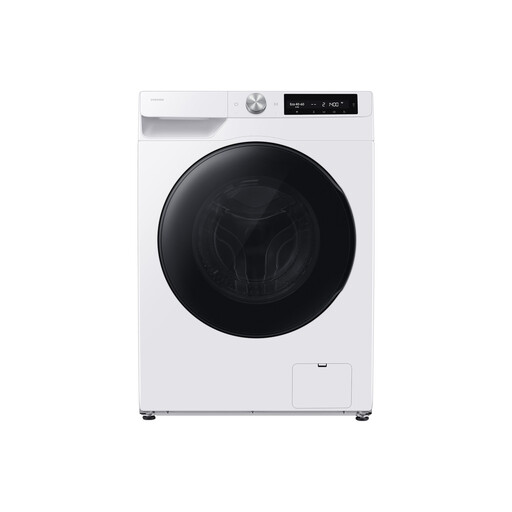 Image unavailable
Samsung WD10HG6U34BEU3, 10 kg / 6 kg washer-dryer
Combines washing and drying in one appliance, with a stated washing capacity of 10 kg and drying capacity of 6 kg. You may need to split a full wash load before drying it. The product information lists an energy class of D and says installation must be carried out by a professional. Before buying, check the connections, energy consumption and cycle times for this model.
View on Joybuy
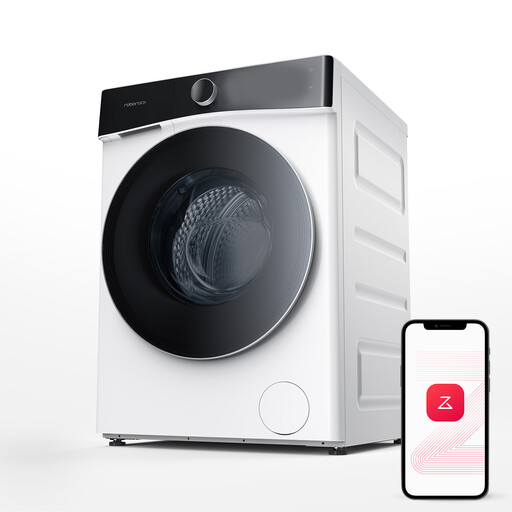 Image unavailable
Roborock Zeo Lite, 10 kg / 6 kg washer-dryer
This combined appliance has a stated washing capacity of 10 kg and a drying capacity of 6 kg, so you’ll need to remove some items before drying a 10 kg wash load. The product description mentions Zeo-Cycle technology, app control and the LintClear system. Check the dimensions, energy consumption and cycle times to make sure it suits your home and routine.
View on Joybuy
 Image unavailable
Hotpoint CHD84MWBSEE, 8 kg heat-pump tumble dryer
If you want to dry clothes in an appliance separate from your washing machine, this model has a stated capacity of 8 kg, an energy class of C and a noise level of 64 dB. The product information describes it as freestanding, with an option to connect the drain hose. Check the dimensions, clearances and programme durations before deciding where to put it.
View on Joybuy
 Image unavailable
Comfee CD08EHP05W-HR, 8 kg heat-pump tumble dryer
This alternative for separate drying has a stated capacity of 8 kg and an energy class of D. The description mentions several programmes and three drying levels, but doesn’t specify how they’ll perform on your fabrics. Check the energy consumption per cycle, programme durations and dimensions to compare it with your planned installation.
View on Joybuy
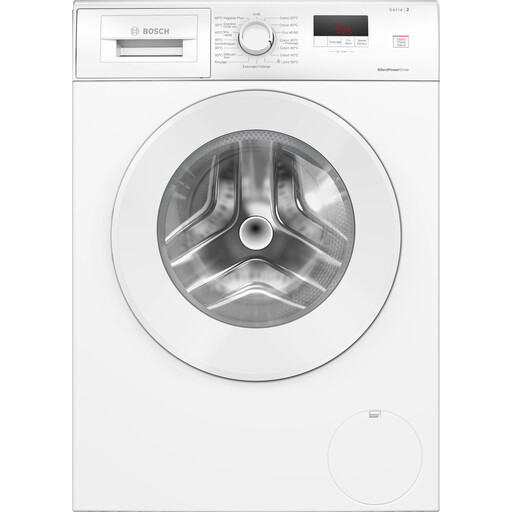 Image unavailable
Bosch WGE02407FR, 7 kg washing machine, 1,400 rpm
For washing clothes before air-drying them indoors or using a separate appliance, this model has a stated capacity of 7 kg and a maximum spin speed of 1,400 rpm; it doesn’t dry clothes. It has an energy class of A and a spin-drying efficiency class of B. ADEME recommends choosing spin-drying efficiency class A when clothes need to dry quickly indoors, so be sure to distinguish between these two classes and check the connections required.
View on Joybuy
Frequently asked questions
Can you dry clothes in a closed, poorly ventilated room?
It’s best not to make this your regular set-up for drying clothes. ADEME notes that air-drying releases a lot of moisture into your home. Instead, look for a sufficiently spacious room where the air can circulate, or consider another way to dry your clothes.
Why check the spin-drying efficiency class if clothes are drying indoors?
The spin cycle affects how much water is left to evaporate after washing. ADEME recommends choosing spin-drying efficiency class A when clothes need to dry quickly indoors or go into a tumble dryer afterwards. Don’t confuse it with the washing machine’s energy class.
Can a washer-dryer dry a full wash load?
Not necessarily: UFC-Que Choisir says these appliances have a lower drying capacity than washing capacity. For a specific example, Electrolux lists a washing capacity of 10 kg and a drying capacity of 6 kg for its EW9W1166RA model. Always compare both figures for the model you’re considering.
What should you check before installing a separate tumble dryer?
Check the instructions for the required dimensions, clearances and electrical supply. If you’re planning to connect a condensation drain or stack the dryer on top of the washing machine, also check the instructions and which accessories are compatible with the appliances in question.
How do you compare the energy use of two tumble dryers?
Compare their energy labels and product information based on the same programme, taking into account the capacity you need. Energy labelling for household tumble dryers is governed in the European Union by Delegated Regulation (EU) 2023/2534. Also check the duration of the listed cycle, as energy consumption alone won’t tell you whether the appliance suits your laundry routine.


