How do the options compare?
First decide whether you want to speed up drying on the line, regularly avoid hanging clothes out altogether, or fit both functions into one space.
| Your priority |
What to check |
Who it suits |
| Spend less time drying clothes indoors |
Spin efficiency class on the label and noise during the spin cycle; compare these with your current machine first. |
If your clothes will still be drying inside your home, removing more water before hanging them out is the priority. Around 42% of consumers put effective spinning first. |
| Regularly avoid hanging clothes out |
Drying capacity, available space and how condensed water is handled; a vented model needs a suitable air outlet. |
If you do laundry frequently, you may want clothes to come out of a separate appliance dry, rather than waiting on an airer. This self-contained drying option is the priority for around 25% of consumers. |
| Fit two functions into one space |
Separate washing and drying capacities, the length of a complete cycle and dimensions including connections. |
When there’s no room for two machines, being able to wash and then dry clothes in the same drum matters more, even if you need to reduce a full load before drying. Around 33% of consumers prioritise saving space. |
Appliances for three different needs
These models let you compare a washing machine for indoor drying, a separate tumble dryer or an appliance that combines washing and drying. Start by choosing the option that suits your available space and the amount of laundry you need to dry.
 Image unavailable
Samsung WD11DG6B85BEU3, 11 kg wash and 6 kg dry capacity
This washer-dryer is designed for households that want both functions in one appliance. It has a stated capacity of 11 kg for washing and 6 kg for drying, so you’ll need to reduce a full washing load before drying it.
View on Joybuy
 Image unavailable
Hotpoint CHD84MWBSEE, 8 kg heat pump tumble dryer
Worth considering if you have space for a separate tumble dryer and want to dry regular loads without hanging them out. This model has a stated capacity of 8 kg and energy rating C. Check its dimensions and how it handles water to make sure it’s suitable for your installation.
View on Joybuy
 Image unavailable
Haier X Series 11 HW100-BD14397PGU1, 10 kg
This washing machine is an option if you plan to keep hanging your clothes out to dry after washing. It has a stated capacity of 10 kg and a maximum spin speed of 1 400 tr/min. To assess how well it could help with indoor drying, compare its spin efficiency class with that of your current machine, rather than looking at revolutions per minute alone.
View on Joybuy
 Image unavailable
Hisense WF5I8043BWF, 8 kg and 1 400 tr/min
Another washing machine to consider if you plan to keep drying clothes indoors. It has a stated capacity of 8 kg and a maximum spin speed of 1 400 tr/min. Check its spin efficiency class, then make sure the full dimensions, including connections, will fit in the space you have in mind.
View on Joybuy
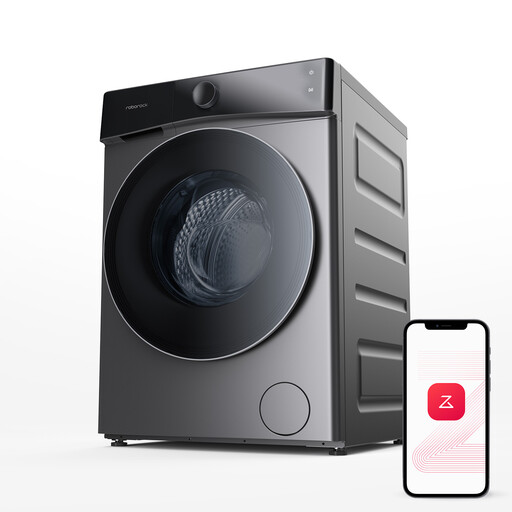 Image unavailable
Roborock Zeo Lite Gray, 10 kg wash and 6 kg dry capacity
This washer-dryer suits anyone looking for one appliance to handle both jobs. It has a stated capacity of 10 kg for washing and 6 kg for drying, as well as automatic dosing. If you fill the drum for a wash, expect to remove some clothes before starting the drying cycle. Check the full cycle time and dimensions before buying, too.
View on Joybuy
Frequently asked questions
Could a more effective spin cycle be enough if I dry clothes at home?
It could be, if your aim is to reduce drying time on the line rather than have dry clothes as soon as the cycle ends. For this use, ADEME recommends checking the spin efficiency class. Compare the rating on your current machine before replacing it, and follow the spin-cycle instructions for your fabrics.
Do you need an external vent to install a tumble dryer?
A vented model needs one: UFC-Que Choisir specifies that it requires an opening to the outside or access to an air duct. A condenser model doesn’t need this type of outlet, but you should check how your chosen model collects or drains condensed water.
Can a washer-dryer dry a full load of washing?
Not if the load is at the machine’s maximum washing capacity: UFC-Que Choisir says these appliances have a lower drying capacity. Check both figures for the model and make sure it can dry your usual washing load in one go.
What should you check before choosing a machine for a particular space?
Measure the space needed for the appliance, its door to open and its connections. For a washing machine or washer-dryer, check the water inlet, drainage outlet and power supply. For a tumble dryer, also check the requirements for its ventilation or drainage system. Have any uncertain electrical installation checked before making changes.


