What should you prioritise before buying?
To choose between prevention, monitoring and filtration, start with the problem you want to solve: an identifiable source, a need to refresh the air, a pollutant to monitor or particles to filter in a particular room.
Reduce the sources
When: You can identify a product or activity in your home that may be releasing pollutants.
Bear in mind: This may mean changing your habits. If there’s a building issue or mould that needs professional attention, it should be dealt with appropriately.
Ventilate and check your ventilation system
When: You need to check how well the air is being refreshed, particularly if household activities regularly generate pollutants.
Limit: Results depend on your home, its ventilation system and the conditions outdoors. This approach doesn’t target a single pollutant.
Consider a filtration air purifier
When: You’ve identified a particular room and pollutant for which filtration could be considered alongside the first steps.
Limit: Your choice depends on the filter, the airflow at a tolerable noise level and ongoing maintenance. A stated feature won’t necessarily apply to every pollutant.
Use a monitor
When: You want to track changes to help decide when to ventilate or look for a source.
Limit: A monitor doesn’t treat the air. Its readings depend on the parameters it tracks and aren’t a substitute for a reference measurement.
| Concern |
What to check |
Consumers concerned |
| Particles and allergens |
Type of filter designed for particles; airflow and noise for the room and speed you have in mind. |
In a bedroom or another specific room, I want to choose filtration suited to particles without assuming it also treats gases. Around 33% of consumers prioritise this need. |
| Odours and household emissions |
Source to reduce first; whether the device has an activated carbon filter if you then decide to buy one. |
If an activity or product is causing an odour, I want to find out where it’s coming from before relying on a particle filter. This is the top priority for around 25% of consumers. |
| Monitoring the air |
Parameters actually measured by the monitor; reliability of its readings and what action to take if they change. |
When I’m not sure when a problem occurs or what’s causing it, I’d rather track a relevant parameter before choosing a treatment. Around 25% of consumers put this approach first. |
| Noise and maintenance |
Noise level at the speed you need; how often compatible filters need replacing and how readily available they are. |
If the device needs to run in an occupied room, I want its noise level to be manageable and to be able to maintain it properly. This is the main consideration for around 17% of consumers. |
Air purifiers to explore on Joybuy
These models are designed to filter the air in a room. Compare them by pollutant targeted, stated coverage conditions, noise and maintenance. They don’t replace source reduction, ventilation or airing out your home.
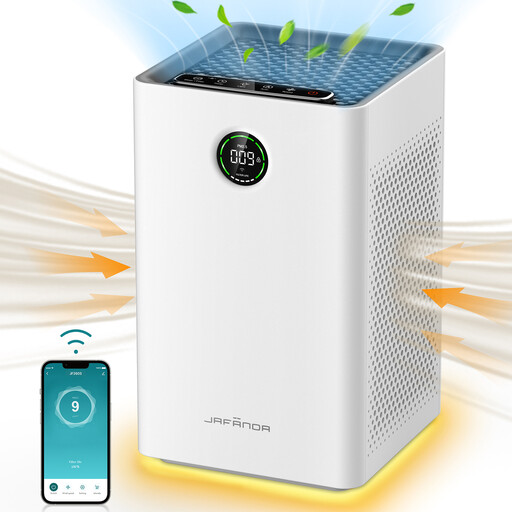 Image unavailable
Jafända H13 air purifier with activated carbon
Worth considering if you’re targeting particles in a room and also want to look at an activated carbon filter for odours.
The product title mentions an H13 filter, coverage of up to 1190 ft², Wi-Fi and Alexa control, and a sleep mode rated at 23 dB. According to the description, the maximum coverage is based on one air change per hour. Check the coverage and noise level at the setting you’ll need.
View on Joybuy
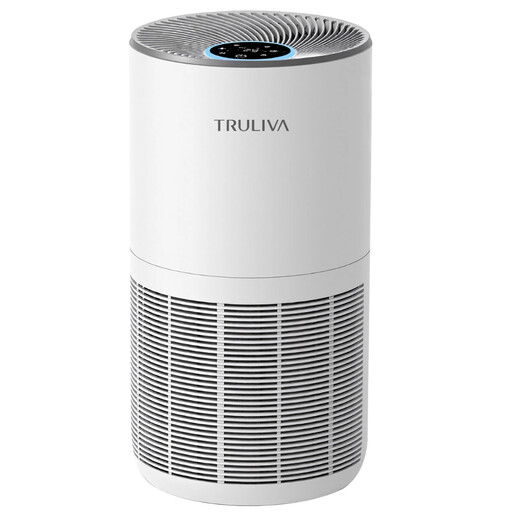 Image unavailable
TRULIVA H13 air purifier, CADR 450 m³/h
Worth considering when comparing particle filtration for a specific room. Don’t assume that the stated airflow means it’s effective against every pollutant.
The title specifies an H13 filter, a stated clean air delivery rate (CADR) of 450 m³/h and a 24-hour timer. Check the noise level at the speed you plan to use and the reference of the compatible filter.
View on Joybuy
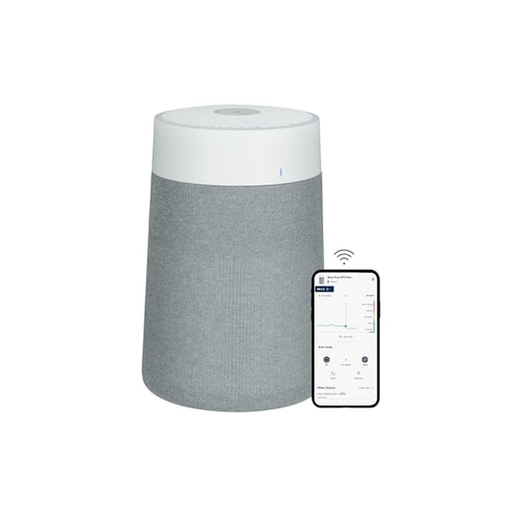 Image unavailable
Blueair Blue Pure 511i Max, grey
Worth considering if particles are your priority and you want to compare the stated coverage with the size of your room.
The title mentions HEPASilent technology and coverage of up to 43 m². If you’re buying it to tackle odours or gases, check separately which filter media is intended for this purpose and the reference of the replacement filter.
View on Joybuy
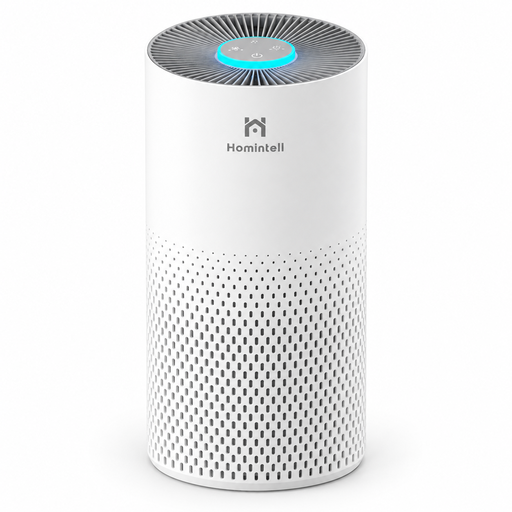 Image unavailable
Homintell air purifier, CADR 150 m³/h
Worth considering for a small room if you want to compare particle filtration and the inclusion of a carbon filter.
The title states a clean air delivery rate of 150 m³/h, three speeds and HEPA and carbon filters. The description gives different coverage figures, so ask for confirmation of the coverage for this model before choosing. Also check the noise level at the setting you plan to use.
View on Joybuy
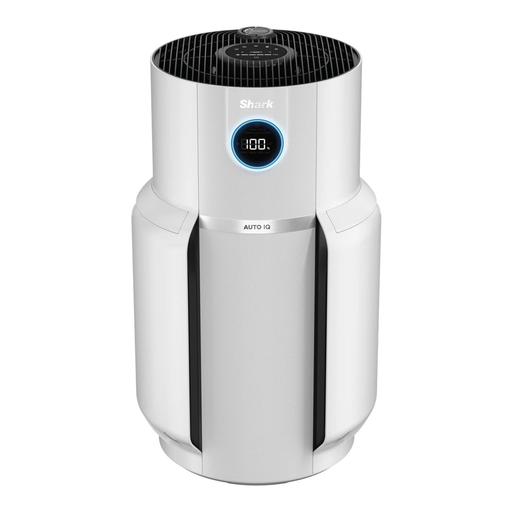 Image unavailable
Shark NeverChange Max HP300EU, white
Worth considering if you’re comparing room coverage conditions and filter maintenance.
The title states coverage of up to 130 m², an automatic mode and a HEPA filter said to last up to five years. According to the description, the maximum coverage is based on one air change per hour. Check what’s suitable for your room, how long the filter will last with your usage and the noise level at the speed you need.
View on Joybuy
Frequently asked questions
Can an air purifier replace airing out your home or using your ventilation system?
No. ADEME recommends reducing sources of pollution and refreshing the air first. An air purifier should only be considered as an addition for a specific need; it won’t fix a ventilation problem.
What should I do if cooking or tobacco odours are why I’m buying one?
First, try to reduce the source and refresh the air. If you then consider an air purifier, check whether it has an activated carbon filter and confirm the filter reference. Particle filtration alone doesn’t show that the device treats gases or odours.
Can a monitor tell me whether the air in my home is dangerous?
No. Its readings alone aren’t a diagnosis. ADEME says a micro-sensor can help you track certain parameters, but Anses highlights limitations to bear in mind when interpreting its measurements. Check what your chosen model measures before acting on its readings.
When should I replace an air purifier filter?
Follow the guidance and indicator for your model: replacement frequency depends on the filter and how you use it. Dyson generally recommends replacing its filters after 12 months with typical domestic use, while Philips gives different lifespans for different models. These recommendations aren’t interchangeable.


