Choose biscuits that are genuinely portioned into individual packets, then check the weight and carbohydrate content of each serving: convenient packaging alone doesn’t make something suitable for fuelling. Before taking these biscuits along for a marathon, consider the ingredients, allergens and how well you tolerate them during training. Nutri-Score can help you compare products where it’s displayed, but it’s optional in France.
Who might these formats suit?
Runners who keep track of their carbohydrate intake
If you plan your fuelling in advance, the packet weight and the carbohydrate content per 100 g can help you work out how much you’re getting in each serving. The number of biscuits in the pack doesn’t tell you this on its own.
Runners mindful of how well they tolerate food
An easy-to-carry packet doesn’t guarantee that a dry or filled biscuit will suit you during exercise. Try the portion and accompanying drink during training, and check the allergens for the specific product you’ve chosen.
Shoppers who compare labels
If you want to compare different biscuits, check the nutritional values per 100 g, ingredients and allergens before choosing a format. Nutri-Score offers an additional indication when it appears on the packaging; France’s DGCCRF states that displaying it is voluntary.
What should you check before buying?
| Criterion |
What to check |
Who is this for? |
| Serving format |
Whether there are individual packets, how many there are and how many biscuits each packet contains. |
When I’m preparing several servings to take with me, I want to be able to separate them without opening the whole pack; around 31% of shoppers make this their top priority. |
| Carbohydrates per serving |
The carbohydrate content per 100 g and the weight of the portion you’ll actually eat. |
To count a biscuit as part of my fuelling plan, I need to know how many carbohydrates my portion provides; this is the main criterion for around 25% of shoppers. |
| Ingredients and tolerance |
The allergens and ingredients in the specific product; you can try the portion during training. |
If a recipe or texture might not suit me, I’d rather check before race day; for around 25% of shoppers, tolerance or allergens take priority over other criteria. |
| Nutrition label |
Nutritional information per 100 g, particularly sugars and fat; and Nutri-Score, if displayed. |
I want to compare recipes without relying on the individual packaging alone; around 19% of shoppers prioritise this nutritional comparison above all else. |
Common pitfalls to avoid
-
Assuming Nutri-Score must appear on every pack
In France, the DGCCRF states that nutrition labelling is mandatory for most prepacked foods, while Nutri-Score is voluntary. So, the absence of this logo alone doesn’t tell you whether a biscuit complies with regulations or what it contains.
Compare the values per 100 g and the ingredients list; use Nutri-Score as an additional criterion when it’s displayed.
-
Confusing an individual packet with a known carbohydrate amount
Individual packaging lets you separate servings, but it doesn’t tell you how many carbohydrates each one contains.
Check the serving weight and carbohydrates per 100 g, then count that portion alongside the drinks and other foods included in your fuelling plan.
-
Trying a filled biscuit for the first time on race day
Taste and small size don’t tell you how well you’ll tolerate the recipe or the amount you eat during exercise. Allergens also vary between products.
Read the label and try the biscuit, portion and accompanying drink beforehand, in conditions similar to your training.
-
Relying on the brand to confirm the format
A brand may offer both individually wrapped biscuits and packs designed for sharing. These formats aren’t suited to the same carrying and portioning needs.
Check the specific product for the number of packets, what each contains and the nutritional information.
Brands to consider, depending on the product
LU / BelVita
BelVita breakfast biscuits are worth considering if you’re looking for several biscuits in one packet and want to calculate the carbohydrates in that portion.
- The BelVita Brut product listed by Auchan contains 8 packets of 4 biscuits; its product information gives 67 g of carbohydrates per 100 g.
- For this product, check the ingredients and allergens, particularly cereals containing gluten, milk and soya. Don’t assume that other varieties have the same Nutri-Score or format.
BN
BN offers filled biscuits in individual packets, among other products. They’re worth considering if you want to portion out your servings.
- Carrefour lists a chocolate and vanilla variety in 5 packets of 38 g.
- This product contains wheat and milk and may contain nuts. Its product information gives 21,2 g of fat per 100 g: check the recipe you choose and try it during training.
St Michel
St Michel says that some of its boxes contain individually wrapped packets, alongside other biscuit and galette formats.
- Individual packets can be a handy way to carry portions, provided the product you choose actually contains them.
- Check the weight and contents of each packet, along with the ingredients and nutritional values. A family-size pack from the brand doesn’t confirm that it comes in this format.
Biscuits to look at on Joybuy
These products give you a range of biscuits to consider, sold individually or in multipacks, for preparing portable servings for a marathon. Check the packaging of the variety you choose and calculate the carbohydrates in the portion you plan to eat.
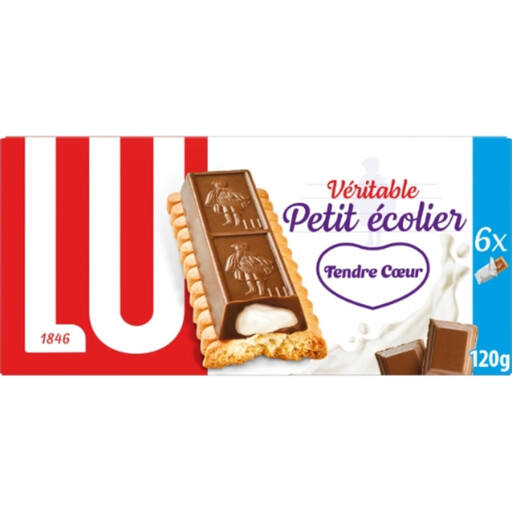 Image unavailable
LU Scholiertje Met Melk, 6 pieces, 120 g
This pack of six biscuits is worth considering if you want to count servings individually. Check how each biscuit is packaged, and use the portion weight and nutritional values to calculate its carbohydrate content. Try the biscuit during training before including it in your fuelling plan.
View on Joybuy
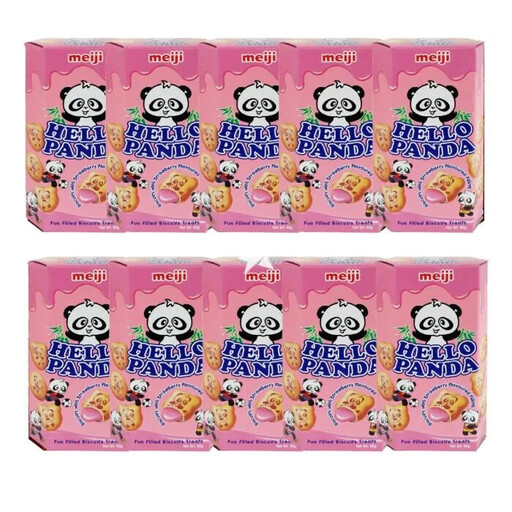 Image unavailable
Meiji Hello Panda strawberry, 50 g, pack of 10
This multipack of filled biscuits may appeal to runners who want to portion out their servings. Check the packaging to see what each separate portion contains before calculating its carbohydrate content; the multipack format alone doesn’t tell you how much is in each packet. Try this recipe during training.
View on Joybuy
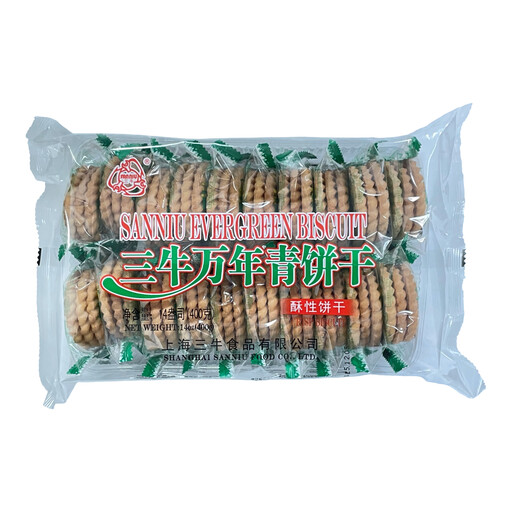 Image unavailable
Sanniu Evergreen, 20 packets, 400 g
The 20 individual packets give you separate portions to take with you. To find out how many carbohydrates are in a serving, check the weight of one packet and the corresponding nutritional values: 400 g is the total weight of the pack, not the weight of one portion.
View on Joybuy
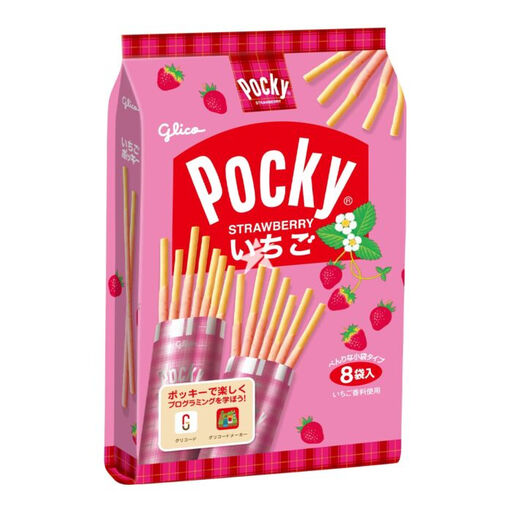 Image unavailable
Glico Pocky Strawberry, 8 packets, 93,6 g
This pack of eight packets can help you separate servings before race day. The 93,6 g refers to the whole pack, so check how much is in the packet you plan to eat and try these biscuit sticks during training.
View on Joybuy
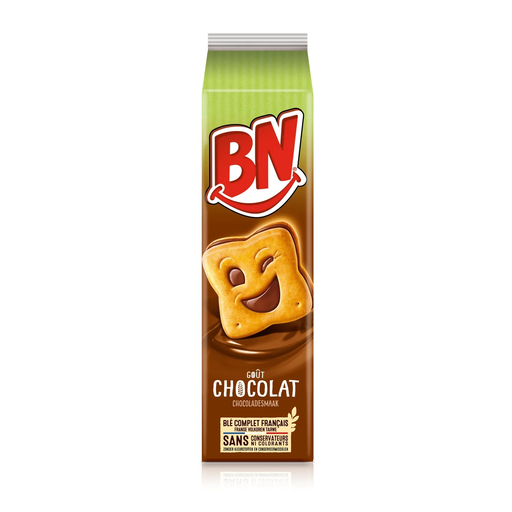 Image unavailable
BN chocolate-filled biscuits, 16 pieces, 285 g
These filled biscuits are worth considering if you prefer to prepare individual servings. Check that the 16 biscuits are individually wrapped in the variety you buy, then note the weight and carbohydrate content of one biscuit. Try the recipe during training rather than relying on the number of biscuits alone.
View on Joybuy
Frequently asked questions
Is Nutri-Score mandatory on these biscuits in France?
No. The DGCCRF states that Nutri-Score is voluntary, while nutrition labelling is mandatory for most prepacked foods. If the logo isn’t shown, compare the nutritional values and ingredients rather than assuming the biscuit doesn’t comply with regulations.
How do I calculate the carbohydrates in a packet?
Multiply the carbohydrate content per 100 g by the packet weight in grams, then divide by 100. Use the weight of the portion you’ll actually eat, not the weight of the whole pack if it contains several packets.
Is one packet of biscuits enough to fuel a marathon?
Not necessarily: count the carbohydrates in that packet alongside those in the drinks and other foods included in your race-day fuelling plan. Practise with the whole plan during training, including the amount of biscuits you can eat.
What should I check if I have an allergy or avoid certain foods?
Check the ingredients list, declared allergens and any ‘may contain’ warnings on the exact product every time you buy it. An individual packet alone won’t tell you whether the recipe is suitable for your dietary needs.


