Anyone putting together a cold platter
Whether you’re making toast or an Easter salad, you’ll want a tin with a recipe that complements the rest of the meal and needs little preparation.


For Easter lunch, choose a tin to suit how you plan to serve the sardines: whole sardines for a plate or on toast, or a product explicitly labelled boneless if ease of eating is your priority. Then check the recipe, drained weight and storage instructions after opening. The weight shown on the tin may not match the amount of fish you’ll serve.
Whether you’re making toast or an Easter salad, you’ll want a tin with a recipe that complements the rest of the meal and needs little preparation.
Choose fillets or a product explicitly labelled ‘boneless’ to make serving and eating easier.
You want to compare the oil or sauce, salt, allergens and drained weight before adding sardines to the menu.
When choosing a tin to serve at Easter lunch, start by thinking about how your guests will eat the sardines. Then check the recipe and the amount of fish stated on the label.
| What to check | Look for | Who is it for? |
|---|---|---|
| Bones and ease of eating | The words ‘boneless’ or ‘fillets’ on the exact product you’re buying. | If the sardines are being shared without any preparation, I’d rather not have to remove bones at the table. Around 30% of consumers prioritise ease of eating. |
| Recipe and presentation | Whole sardines or fillets; oil, sauce and flavourings. | For toast or a cold platter, I want a recipe that goes with the other dishes, without having to adjust the seasoning. This is the top priority for around 30% of consumers. |
| Ingredients and nutritional information | Ingredients list, allergens and nutritional values per 100 g. | If the menu already includes seasoned dishes, I want to know what’s in the tin before serving it. Around 20% of consumers put ingredients first. |
| Format and serving quantity | Whether it’s sold individually and its drained weight, where stated. | To plan how many slices of toast or plates I’ll need for my guests, I need to estimate the amount of fish rather than rely on the total weight alone. This is the top priority for around 20% of consumers. |
Net weight includes the liquid the sardines are packed in, so it doesn’t tell you on its own how much fish there is to share between your guests.
To work out how many tins you’ll need, look for the drained weight on the label and factor in any accompaniments.
A tin of whole sardines won’t necessarily meet the same needs as a product explicitly labelled boneless.
If this is important to you, check the wording on the exact tin rather than relying on the brand or product photo.
Oil, sauce or flavourings can change how the sardines taste on toast or in a salad, and may affect what you need to check if anyone has an allergy.
Read the full ingredients list and check any allergens highlighted on the packaging.
Once opened, a tin should be stored according to the product’s instructions. The Saupiquet and Auchan product information cited for some products says to refrigerate them and eat them within two days.
Check the instructions on your tin before the meal and follow them if there’s any left after serving.
The products listed by Carrefour France include 135 g tins of whole sardines in olive oil and a 115 g product labelled ‘boneless’.
Saupiquet offers fillets of sardines in extra virgin olive oil in a 100 g format.
Carrefour France lists an individual 135 g tin of sardines in extra virgin olive oil.
The range listed by E.Leclerc includes 95 g tins of whole sardines in water, 100 g tins of fillets in olive oil and 135 g tins of sardines in olive oil.
Auchan’s range includes 135 g tins of sardines in extra virgin olive oil and in water, as well as 100 g tins of fillets.
These tins of sardines suit different ways of serving them at Easter lunch: on a plate or on toast with olive oil, in a flavoured recipe, or in water and labelled ‘boneless’. Compare the recipe and weight of each product before working out how much you’ll need.
 Image unavailable
For a plate or toast, when a recipe with olive oil suits your menu.
Stated format: 135 g. Check the drained weight on the tin to work out how much fish to serve.
 Image unavailable
Worth considering for toast or a salad if you’re looking for small sardines in olive oil.
The title states 16/20u and 115/81 g: check the label to see what the two weights refer to. Also check for any ‘may contain’ information if it’s relevant to your guests.
 Image unavailable
For toast or a cold platter, if your guests enjoy the recipe with Espelette pepper.
Stated format: 1/6, 115 g. Check the drained weight if you’re sharing the fish between several plates.
 Image unavailable
For a meal where boneless sardines are important and you’d like to choose the seasoning yourself.
Stated format: 98 g. Check the exact presentation and drained weight on the label.
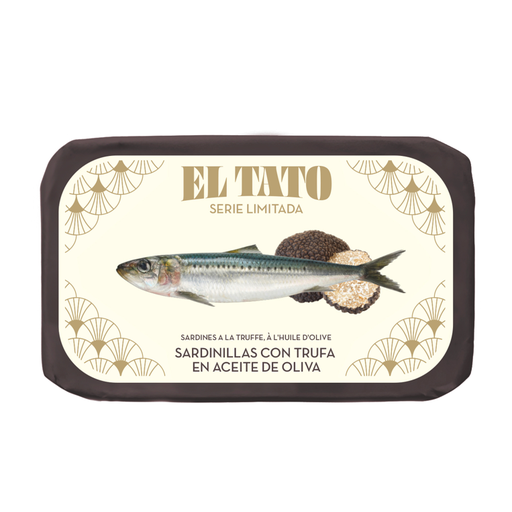 Image unavailable
For toast or a salad, if the truffle recipe goes with the rest of your lunch.
The title states 115/81 g: check the label to confirm which figure is the drained weight. Also check for any ‘may contain’ information if it’s relevant to your guests.
Not necessarily. It depends on the drained weight, the accompaniments and how much each guest would like. The products listed by Saupiquet, Carrefour France and Auchan include formats from 100 to 135 g. Check the amount of fish stated for the tin you choose rather than treating its total weight as a serving.
Read the ingredients list and allergen information on the packaging of the product you’ve bought. The DGCCRF says allergenic ingredients must be highlighted on the label. Also check the information for recipes containing a sauce or flavourings.
Follow the storage instructions on the tin in question. For the products cited, Saupiquet and Auchan advise refrigerating them after opening and eating them within two days. Check the storage time for any other product.
The best-before date indicates how long the product is expected to retain its specific qualities. The DGCCRF says that a tin may still be eaten after its best-before date if the packaging is intact, although its taste may have deteriorated. Check the condition of the tin and follow the product instructions.