Choose an individually wrapped cake for cycling based on its carbohydrate content per portion, then check the ingredients, how well you tolerate it during exercise and how it will travel. For high-intensity exercise lasting 1 to 2.5 hours, a publication in Nederlands Tijdschrift voor Geneeskunde gives a guideline of 30 to 60 g of carbohydrates per hour. The 15 g per portion stated by St Michel for a Tam Tam, or the 19 g stated by Auchan for a 35 g Bio mini cake, can contribute towards this, but neither is a complete fuelling option on its own.
Who are these formats for?
Cyclists who want a sweet treat to take with them
An individually wrapped cake makes it easy to slip a portion into a pocket or saddlebag for a relaxed ride, or to have alongside other fuel. St Michel and Auchan offer individual portions, although their storage guidance recommends keeping them away from heat and moisture.
Cyclists keeping track of their carbohydrate intake
When planning fuel for a sustained effort, what matters is the amount in each cake, not just its size. St Michel states that a Tam Tam portion contains 15 g of carbohydrates, while Auchan gives 19 g per 35 g Bio mini cake. Remember to include the other food and drinks you consume too.
Cyclists who pay attention to ingredients and how well they tolerate them
Depending on the product, the recipes reviewed list wheat or gluten, egg, milk, soya or possible traces of nuts. Check the packaging of the exact product and, if you plan to eat it during exercise, try it first on a training ride.
What should you look for?
Start with the portion size and the carbohydrates it provides, then consider how easy it is to carry and what it contains. A cake that’s handy for a sweet break won’t necessarily meet the needs of a sustained effort on its own.
| Criteria |
What to check |
Who it’s for |
| Carbohydrates per portion |
Check the amount per cake and the portion weight. Add up the carbohydrates in your other food and drinks too. |
On a sustained ride, I want to know how each cake contributes to my fuelling. Around 40% of consumers make calculating their carbohydrate intake a priority. |
| Carrying and storage |
Check whether it’s individually wrapped and read the guidance on heat and moisture. |
For a break along the way, I look for a portion that’s easy to carry and keep in good condition; this is the main concern for around 30% of consumers. |
| Ingredients and tolerance |
Check the ingredients, listed allergens and the details for the exact product. |
If certain ingredients don’t suit me, I need to choose a compatible recipe before thinking about its format. Ingredients come first for around 20% of consumers. |
| Local availability |
Check that the product is available at the shop or through the grocery collection service where you plan to buy it. |
Before a ride, I want to be able to find the portion I’ve planned for, without assuming it’s stocked everywhere; around 10% of consumers prioritise local availability. |
Mistakes to avoid
-
Assuming an individual cake is the same as a measured energy bar
The format doesn’t tell you how many carbohydrates it contains. For high-intensity exercise lasting 1 to 2.5 hours, the publication in Nederlands Tijdschrift voor Geneeskunde cites 30 to 60 g of carbohydrates per hour. By comparison, St Michel states that a Tam Tam portion contains 15 g, while an Auchan Bio 35 g mini cake contains 19 g.
Check the values per portion and remember to count your other sources of carbohydrates too. Try the amount of cake you plan to take with you during training.
-
Relying on the product range name to check for allergens
Ingredients vary from one product to another. Products from St Michel, Auchan and E.Leclerc list wheat, egg, milk, soya or possible traces of nuts, depending on the recipe.
Check the ingredients and allergen information on the packaging of the exact product, even if you’re already familiar with the brand.
-
Exposing a cake to heat or moisture
Auchan says its Bio mini cakes are sensitive to heat and moisture. St Michel recommends storing Tam Tam in a dry place, away from heat and light.
Follow the manufacturer’s storage advice and choose a sheltered spot in your pocket or saddlebag.
Brands and retailers to consider
St Michel
Tam Tam L’Original cakes come in individual sachets, making them worth considering for a treat on the go rather than as a dedicated energy bar.
- St Michel states that the pack contains 18 sachets, weighing 495 g in total, and that each portion contains 15 g of carbohydrates.
- The brand lists gluten, milk, soya and egg, as well as possible traces of nuts. It recommends storing the cakes in a dry place, away from heat and light.
Auchan Bio
These mini cakes with fruit pieces may suit you if you’re looking for a small cake with the weight and nutritional values given per item.
- Auchan states that the pack contains five individually wrapped 35 g portions. Each cake provides 19 g of carbohydrates and 5.4 g of fat.
- The recipe contains wheat and egg, with possible traces of milk, soya and nuts. Auchan says the product is sensitive to heat and moisture.
P'TIT DELI / Marque Repère E.Leclerc
The pack of ten mini chocolate chip cakes lets you plan for several portions, but don’t assume they’re individually wrapped.
- For this product, E.Leclerc states that it contains 51 g of carbohydrates and 22 g of fat per 100 g.
- The ingredients list includes wheat, eggs and soya, as well as traces of milk and nuts. Check availability with your local shop or grocery collection service.
LU
LU offers biscuits including Petit Écolier classique, Pocket and Tendre Cœur. These are different from soft cakes and energy bars.
- These products are an option if a biscuit is the kind of treat you’d like to take with you.
- To check the carbohydrate content or allergens, consult the nutritional information and ingredients for the specific product.
Carrefour
The retailer also offers individual snacks such as a 50 g Twix chocolate bar. This is a different category from an individual cake.
- The Carrefour product listing gives the weight of this bar, which helps you identify the portion you’re looking at.
- Before choosing it for a ride, check its ingredients, carbohydrates per item and local availability. Its format alone doesn’t tell you whether it’s suitable during exercise.
An option on Joybuy
This sweet tart could be a treat to take along on a leisurely ride. If you plan to include it in a fuelling plan, check the packaging for the number of portions and the carbohydrates per portion.
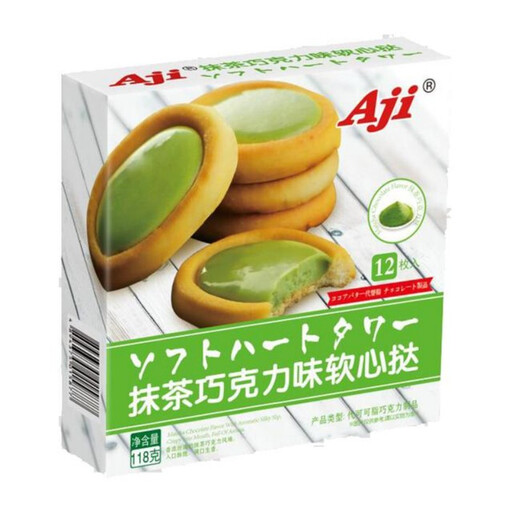 Image unavailable
Aji soft-centred matcha and chocolate flavour tart, 118 g
A treat to consider for a break on a leisurely ride, but not as a complete source of fuel for exercise.
The stated pack size is 118 g. Check the packaging to work out how much to take, how many carbohydrates it contains and which ingredients to bear in mind.
View on Joybuy
Frequently asked questions
Is one individual cake enough for an hour of sustained cycling?
Not necessarily. For high-intensity exercise lasting 1 to 2.5 hours, a publication in Nederlands Tijdschrift voor Geneeskunde gives a guideline of 30 to 60 g of carbohydrates per hour. St Michel states that a Tam Tam portion contains 15 g, while an Auchan Bio 35 g mini cake contains 19 g. Count the carbohydrates in all the food and drinks you plan to have.
Should you try a cake before taking it on a long ride?
Yes. Try it during training before relying on it for an important ride. A review published in Nutrients notes that the amount to be eaten, how easy it is to carry and digestive discomfort can all limit the use of certain foods during exercise.
What should you check on the packaging of a prepacked cake?
Pay particular attention to the ingredients list, highlighted allergens, nutritional information, quantity and date shown. The French Directorate-General for Competition, Consumer Affairs and Fraud Control outlines the labelling rules for prepacked foods sold in France. For cycling, also compare the values per 100 g with the portion you’ll actually eat.
Can you eat a cake after the date shown on the pack?
It depends on the type of date. The French Directorate-General for Competition, Consumer Affairs and Fraud Control says that food must not be eaten after its use-by date, whereas a product with a best-before date may be eaten afterwards if its packaging is intact. Follow the storage instructions too and check the product in question.


