What should you check before choosing?
When stocking up for the first time, decide whether you’ll often take the biscuits out with you. Then compare the quantities, labels and packaging of products that suit the way you’ll use them.
| What matters |
What to check |
Who it matters to |
| Taking them with you and individual packs |
Number of packs, how much each contains and storage instructions. |
When I’m taking a snack to class, I want to grab one pack without opening the others. Around 33% of shoppers prioritise this convenience when taking snacks out. |
| How much you’re getting for the cupboard |
Net weight, number of packs and how much each one contains. |
If the pack needs to last in a shared cupboard, I want to know what’s actually inside. Quantity is the top priority for around 27% of shoppers. |
| Ingredients and nutritional information |
Allergens highlighted in the ingredients list; sugars and other nutritional values per 100 g. |
Before choosing a chocolate biscuit, I need to check its ingredients and nutritional information. This comes first for around 20% of shoppers. |
| Packaging waste |
Whether there are individual wrappers and what the recycling instructions say; compare with a larger pack of a similar product. |
If the biscuits are staying at home, I’d rather check how much packaging there is than automatically choose individually wrapped portions. Around 20% of shoppers prioritise this. |
ADEME says that a family-size pack can have two to three times less packaging than a comparable individually portioned format. Consider this alongside how often you’ll actually take the individual packs out with you.
Brands to know
These examples can help you identify different types of biscuits and packaging. The features of one product don’t necessarily apply to the whole brand.
LU
Carrefour lists products including Pocket Prince and Pocket Petit Écolier LU in boxes of ten individual packs, as well as La Barquette Lulu in multipacks.
- These products are worth considering if you’re looking for individual packs to take with you or share.
- Check the recipe and allergens on the specific box you choose.
BN
BN Biscuits lists its chocolate-filled biscuit among its products.
- One to consider if you’re specifically looking for a chocolate-filled biscuit.
- Check the packaging of the product you choose if you want individual packs.
Carrefour Classic’
Carrefour’s biscuit aisle includes several types of chocolate biscuits under its own brand.
- You can check the recipes and formats product by product.
- The packaging of one product won’t necessarily be the same across the whole range.
P’tit Déli / Marque Repère
E.Leclerc lists products including P’tit Déli mini shortbread biscuits with cereals and milk chocolate, packed in four individual bags.
- This product is a specific example of biscuits divided into individual packs.
- The nutritional information and packaging for these mini shortbread biscuits don’t represent other P’tit Déli products.
Individually portioned formats on Joybuy
These products are chocolate snacks to take with you when moving into student accommodation. The first is described as a biscuit; the second is a wafer, so it’s worth bearing that distinction in mind if you’re specifically looking for chocolate biscuits.
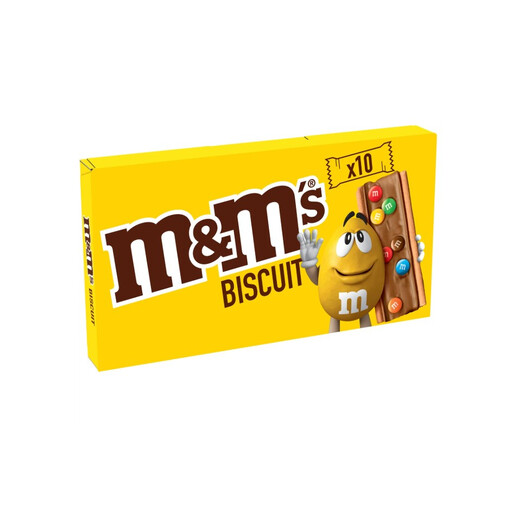 Image unavailable
M&M's Biscuit Pocket X10 198 g
Worth considering if you want to slip an individually wrapped portion into your bag without opening the others. The pack is described as an X10 format weighing 198 g; check how much each portion contains and read the label for the product you’re buying.
View on Joybuy
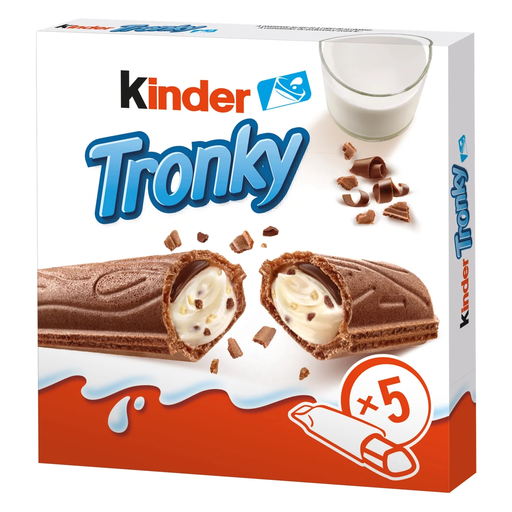 Image unavailable
Kinder Tronky, milk chocolate wafers, 90 g
An option to consider if you want individually wrapped snacks to take out with you. These are milk chocolate wafers, not chocolate biscuits; the pack is labelled 90 g. Check the contents of the individual wrappers and the ingredients for the product you choose.
View on Joybuy
Frequently asked questions
Does the ‘soda tax’ apply to chocolate biscuits?
No. France’s Ministry of the Economy explains that this contribution applies to sugary drinks, not chocolate biscuits. When choosing biscuits, check their ingredients and nutritional information instead.
Does a pack of biscuits have to display a Nutri-Score?
No. Nutri-Score is optional in France, as France’s Ministry of Agriculture explains. To compare prepacked biscuits, check their nutritional declaration per 100 g and their ingredients list. If a Nutri-Score is displayed, you can use it as additional information.
How can I check for allergens in a chocolate biscuit?
Read the ingredients list and check which allergens are highlighted on the pack of the product you’re buying. According to the DGCCRF, highlighting allergens is part of the labelling rules. Don’t assume that one biscuit has the same ingredients as another version from the same brand.
Where should I dispose of the wrappers and box after eating the biscuits?
In France, ADEME advises putting packaging loose in the collection point for paper and packaging. Also check the recycling instructions on the product to identify how to dispose of its different components.
Do biscuits have to be thrown away once their best-before date has passed?
No. A best-before date doesn’t, by itself, mean the product must be thrown away the next day. France’s Ministry of the Economy distinguishes this from a use-by date. Check the condition of the pack and follow the manufacturer’s storage instructions.


