
Livraison le jour même ou le lendemain

Qualité garantie

Débloquez vos offres de bienvenue: Livraison GRATUITE | Jusqu'à -80 % | 30 jours d'essai gratuits à JoyPlus
Téléchargez l'application
An ice cube maker can make aperitifs, cocktails, family meals or running a small bar so much easier. But a tempting product page doesn't always guarantee a pleasant experience day to day. Stated capacity, actual storage volume, noise levels and maintenance are all factors to consider before you place your order.
This guide from the Joybuy Product Recommendation Officer will help you compare the models available, based on the space you have, how much ice you use and how often you need it.
An ice cube maker advertised at 12 kg per day may not actually be able to store 12 kg of ice. This figure is usually an estimate over 24 hours, while the removable bin might only hold a few hundred grammes.
Once the bin is full, production stops. So for a party, check the ice-making rate, the water tank capacity and the size of the ice basket.
Stated times, like "6 minutes" or "9 minutes", often refer to the first cycle under very specific conditions. The room temperature, the water temperature and the ventilation around the appliance can all affect the actual speed.
A portable or countertop ice cube maker should be placed on a flat, dry surface with enough space around it. Generally, allow at least 10 cm around the vents, unless the manual says otherwise.
Stagnant water can affect the smell and taste of your ice cubes. A self-cleaning ice cube maker function makes routine maintenance easier, but it doesn't replace the need to rinse and wipe the bin and regularly drain the appliance.
To keep your machine in good condition, only use cold, drinkable water. Juices, sugary drinks and dairy products can clog the pump and pipes.
For home, office or motorhome use, a rate of 9 ice cubes in 6 to 10 minutes is usually enough for everyday needs. A stated output of 10 to 12 kg in 24 hours is suitable for daily drinks and small gatherings.
For a bar, restaurant or heavy use, go for a higher capacity and a rate that matches the pace of service. A professional ice cube maker should be chosen based on the actual volume you need, the space available and the installation conditions.
The shape of the ice matters too. Hollow, bullet-shaped ice cubes cool drinks quickly. Larger ice cubes can be better for spirits, but this depends on the model.
A tank of 1.2 to 3.2 litres means you won't need to refill it as often. The storage bin is often much smaller than the daily output, so if you need a large quantity of ice, transfer it to a freezer regularly.
"Low water" and "bin full" indicators are particularly handy. They stop the appliance running empty and let you know straight away why production has stopped.
Measure your worktop before you order. Compact models are often around 30 to 36 cm wide, but some more powerful machines are over 40 cm tall or weigh more than 10 kg.
For domestic models, power is usually between 100 and 150 W. However, this figure alone isn't enough to work out actual energy use – the compressor, room temperature and how long you run it all play a part.
In the UK, plug the appliance into a suitable 220–240 V, 50 Hz socket, with an earth connection if the manual requires it. Never immerse the motor unit in water, and always unplug the machine before cleaning it.
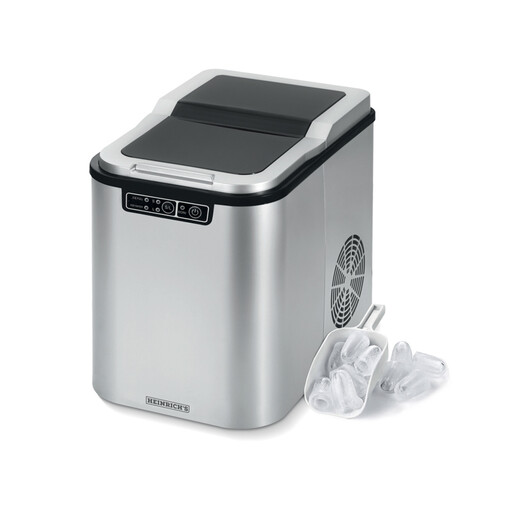
Why this suits this profile: Its compact size of 36 × 24.9 × 32.7 cm fits easily into a kitchen or office. It offers two ice cube sizes, a stated output of up to 12 kg in 24 hours and includes a scoop.
The bin full and low water alerts let you know straight away why the machine has stopped. The self-cleaning function also makes routine maintenance simpler.
2.2-litre tank, two ice cube sizes and a stated cycle of 9 ice cubes in around 9 minutes.
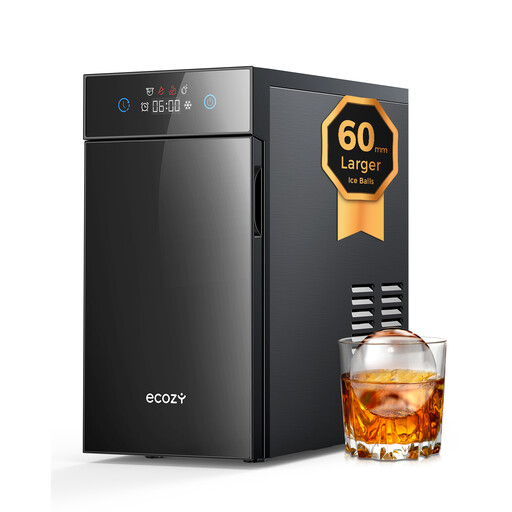
Why this suits this profile: This machine is designed for whisky, bourbon and cocktail lovers who want a large, clear ice sphere.
It doesn't promise a high output of standard ice cubes – its use is specialised, with around 32 spheres per day and a stated cycle of 40 minutes.
60 mm spheres, 8-hour timer, touchscreen and self-cleaning function.

Why this suits this profile: Its 3.2-litre tank and larger size could suit a home bar, a professional kitchen or frequent entertaining.
Its large tank cuts down on constant refilling. However, check the exact capacity before you buy – the title mentions up to 24 kg in 24 hours, while the specs say 20.5 kg.
24 ice cubes stated in 13 minutes, basket and scoop included, stainless steel construction and self-cleaning function.
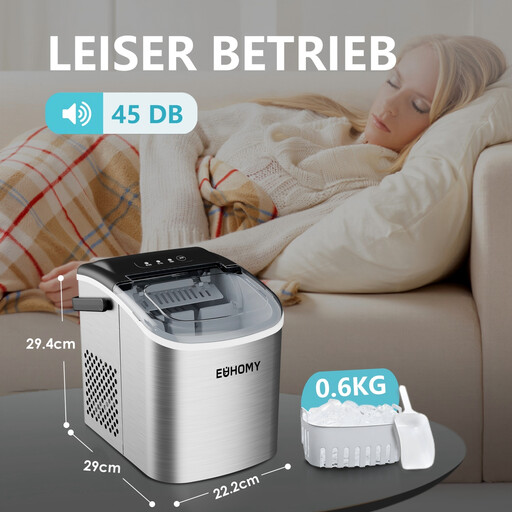
Why this suits this profile: Its carry handle and compact size make it ideal for motorhome owners, office workers or families who move the appliance around regularly.
The alerts and automatic shut-off reduce the risk of forgetting about it. However, you do need to let the appliance rest upright before first use, as per the instructions provided.
9 ice cubes stated in 6 minutes, output up to 12 kg per 24 hours, basket and scoop included.
We've put together a comprehensive, real-time updated list of products that fully meet these demanding selection criteria and European safety regulations.
An ice cube maker with a removable bin is easier to empty and wipe clean. For a model intended for a bar, also plan a separate storage space to keep the ice cubes at the right temperature.
Energy use depends on the power, how long it runs and the room temperature. A 120 to 150 W appliance doesn't necessarily draw that power continuously – the compressor works in cycles. To estimate the cost, check the stated power and multiply the measured consumption by your electricity tariff.
It depends on the manufacturer's recommendations. Models with a bin full alert and automatic shut-off reduce the risk of overflow, but it's best to avoid leaving an electrical appliance running unattended for a long period. Always unplug it before cleaning or draining.
The lifespan varies depending on how often you use it, how well you maintain it, the ventilation and whether you follow the safety instructions. Regularly cleaning the tank, using only drinkable water and not blocking the vents all help to protect the compressor and pump.