
Livraison le jour même ou le lendemain

Qualité garantie

Débloquez vos offres de bienvenue: Livraison GRATUITE | Jusqu'à -80 % | 30 jours d'essai gratuits à JoyPlus
Téléchargez l'application
An ice cube maker can make life so much easier when you're hosting friends, enjoying family meals, throwing together impromptu cocktails, or even just keeping things cool at the office. The trouble is, product specs don't always make it easy to compare machines in a meaningful way. A claimed capacity of several kilogrammes per day doesn't tell you how many ice cubes you'll get after a few minutes, nor how much the basket can actually hold.
Before you buy an electric ice cube maker, it's worth looking at three points that are often overlooked.
An ice cube maker might promise a first cycle in 6 to 13 minutes, yet still need several hours to reach its theoretical daily capacity. A claim of "12 kg per day" usually refers to specific usage conditions set by the manufacturer. It doesn't mean the machine will produce 12 kg of ice cubes non-stop in every kitchen, especially if the room is warm or ventilation is poor.
A machine that can produce a lot of ice cubes may come with a fairly limited water tank or basket. That means you'll need to empty the tray and refill the machine regularly. For family use, a 1.2 to 1.3 litre tank should be enough. For a long evening or a machine destined for a home bar, a 2 to 3 litre capacity will cut down on the number of refills.
The self-cleaning function makes rinsing the circuit easier, but it doesn't do away with the need to wipe down the basket, lid and all surfaces that come into contact with water. Only use cold drinking water, unplug the appliance before cleaning, and never immerse the electrical unit in water.
A countertop ice cube maker needs to sit on a flat, dry, stable surface. Leave around 10 cm of free space around the ventilation grilles, unless the manual says otherwise. Also, measure the depth available under your wall units.
Compact models fit easily into a small kitchen, an office or a campervan, but they're generally not designed to replace a professional machine. A portable ice cube maker with a handle is easier to move around, but it should be kept out of direct sunlight and plugged into a suitable mains socket.
Check how many ice cubes the machine produces per cycle, the stated time, and the sizes available. Hollow or bullet-shaped ice cubes cool drinks quickly, while thicker cubes melt more slowly in a glass. Because manufacturers don't always measure performance under the same conditions, it's best to compare figures with a pinch of salt.
For regular use, machines that claim 9 ice cubes in 6 to 10 minutes and up to 12 kg per day are a good starting point. A higher capacity, such as the 20.5 to 24 kg per day some models boast, will better suit frequent needs. However, that means allowing more space and refilling the tank more often.
Go for models with a removable basket, a scoop, and indicator lights for water level and basket fullness. Also check that the tank and any parts that come into contact with water are made from food-safe materials. If the machine uses a refrigerant like R600a, be careful not to damage the circuit and follow the disposal instructions.
After transport, some machines need to be kept upright for several hours before being switched on, to let the cooling circuit settle. Always check the manual for your chosen model.
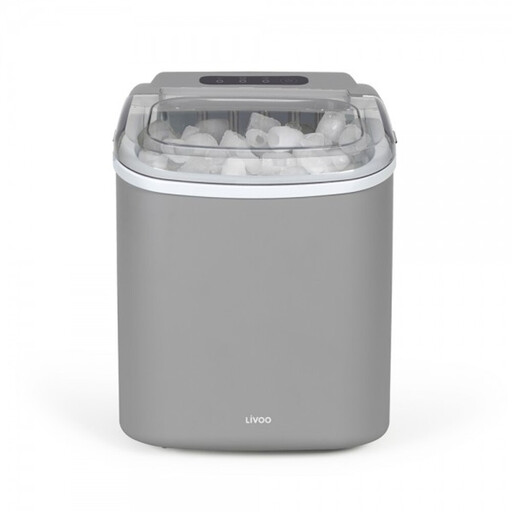
Why this choice suits this profile: Easy to use, this first home ice cube maker has a 1.2 litre tank, a 600 g basket and a transparent window.
Indicator lights for low water and full basket save you from constant checking, while the stated 12 kg per day capacity gives you an easy-to-understand benchmark.
Stated cycle of 6 to 13 minutes, self-cleaning function and ice scoop included.
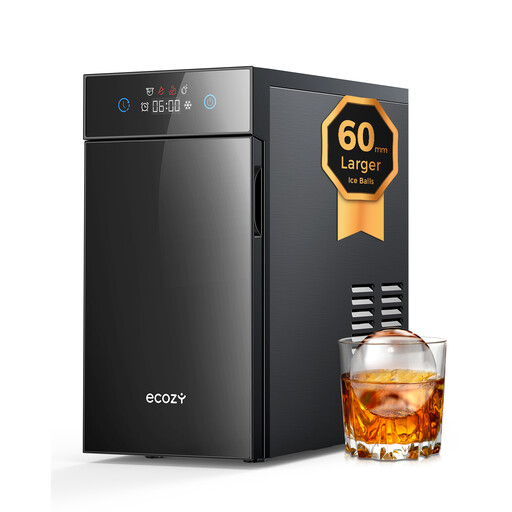
Why this choice suits this profile: This machine is aimed at whisky and cocktail lovers who want 60 mm spheres, with touch controls and a timer.
The spec states it produces one sphere in 40 minutes, not a rate of standard ice cubes. So the pace is much easier to anticipate.
0.85 litre tank, basket that holds around 9 spheres, 8-hour timer and cleaning function.

Why this choice suits this profile: With its 3.2 litre tank and stated capacity of up to 24 kg per day, it's ideal for large gatherings, home bars and frequent use.
The spec sheet distinguishes the first 13-minute cycle from the stated daily output. However, check the final product page: some data mentions 20.5 kg.
Stainless steel and plastic construction, basket, scoop and self-cleaning function included.
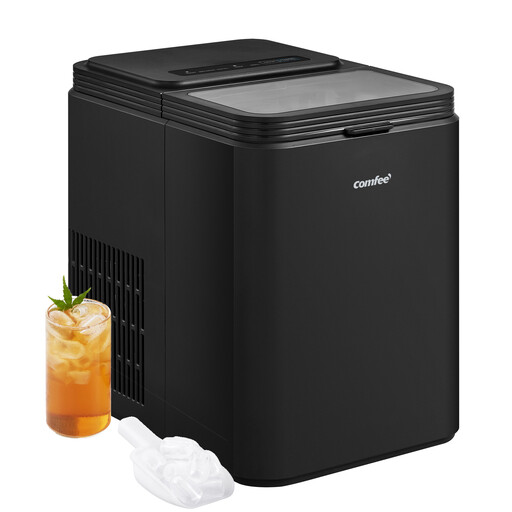
Why this choice suits this profile: With stated dimensions of 295.7 × 213 × 295 mm, this model fits easily on a shallow worktop, in an office or a mobile space.
With a basket of just 0.4 kg, this compact machine reminds you that it makes ice cubes on demand and isn't a large storage reserve like a freezer.
Stated output of 12 kg per day, two ice cube sizes, 1.3 litre tank and automatic cleaning.
We've put together a comprehensive, real-time selection of products that meet these strict criteria and comply with European safety regulations.
Depending on the model and usage conditions, the first cycle can start after 6 to 13 minutes. The duration of subsequent cycles varies, particularly with room temperature, water temperature and how full the basket is.
Power consumption depends on the machine's wattage, how long it runs and the room temperature. The models featured here have a power rating between 100 and 150 W. To keep electricity use down, only run the machine when you need it, keep it away from heat sources and unplug it after use.
Use cold drinking water, clean the tank and basket regularly, and run the self-cleaning function if your model has one. Then let the parts dry thoroughly. Also follow the ventilation clearances and any instructions regarding the refrigerant.