People looking for a lower-fat option
You’re mainly looking for a low figure per 100 g and are happy for sorbet to have a different texture from ice cream.


If your priority is to cut down on fat, start by comparing tubs of sorbet labelled as containing 0 g or less than 0.5 g of fat per 100 g, rather than relying on the fruity flavour. Ice cream may be a better fit when you’re after something creamy, but the products mentioned here contain more fat. Either way, check the sugar content, allergens and storage instructions too.
You’re mainly looking for a low figure per 100 g and are happy for sorbet to have a different texture from ice cream.
Once you’ve compared the fat content, check the ‘sugars’ line per 100 g. The lemon sorbets from E.Leclerc and Auchan France show that these two factors don’t necessarily go hand in hand.
Check the ingredients and any ‘may contain’ warnings for the exact flavour you’re buying, even if it’s a sorbet.
When choosing a frozen dessert for your holiday, compare the fat content per 100 g first, followed by the sugars and ingredients. You can then use the pack size and freezer storage requirements to narrow down your options.
| What to check | What to look for | Who it matters to |
|---|---|---|
| Fat | Compare the figure per 100 g and the product description. Don’t assume you know what’s in it based on the flavour alone. | If my main aim is to limit fat, a lemon flavour alone doesn’t tell me enough. Around 36% of consumers would put this first. |
| Sugars | After checking the fat, compare the sugars per 100 g and read the ingredients list. | A low-fat sorbet isn’t right for me if I also want to keep an eye on sugars. This would be the top priority for around 29% of consumers. |
| Allergens | Read the ingredients and any ‘may contain’ warnings for the exact product. | If I have an allergy, I need to be able to check the ingredients in the product I choose, whatever the flavour. Around 21% of consumers would put suitability for their dietary needs first. |
| Pack size and storage | Check the size of the pack, the space in your freezer, and the transport and storage instructions. | If I’m sharing a dessert at my holiday accommodation, I need a pack I can transport and keep frozen. This would come first for around 14% of consumers. |
A lemon-flavoured recipe isn’t necessarily a low-fat sorbet: Auchan France lists 7.8 g of fat per 100 g for its lemon meringue product.
Check the product description and the ‘fat’ line per 100 g for the exact product.
Carrefour France uses this claim for its lemon sorbet, which also contains 30 g of carbohydrates per 100 g. So a low fat content doesn’t tell you about the sugars on its own.
Check the fat, carbohydrates and sugars figures per 100 g separately.
‘May contain’ warnings can vary from one recipe to another, even between sorbets.
If you have an allergy, check the ingredients and warnings on the exact pack before eating it.
The products mentioned should be stored at −18 °C and must not be refrozen once defrosted.
Buy frozen products last, plan suitable transport and check you have enough room in the freezer.
The nutritional information below relates to specific flavours and pack sizes. A figure for one sorbet doesn’t apply to other products from the same brand.
The range includes lemon sorbet and a tub of vanilla ice cream.
The ESKISS range includes sorbets and ice creams with different nutritional profiles.
The products mentioned include lemon and mango sorbets, as well as a lemon meringue recipe.
The products mentioned are tubs of ice cream, so consider them separately from tubs of sorbet.
The Half Baked product mentioned is a tub of ice cream with brownie and cookie pieces.
These fruit sorbets give you a chance to compare flavours and nutritional information before your holiday. If you’re specifically looking for a tub of ice cream, check the type of pack for each product before buying.
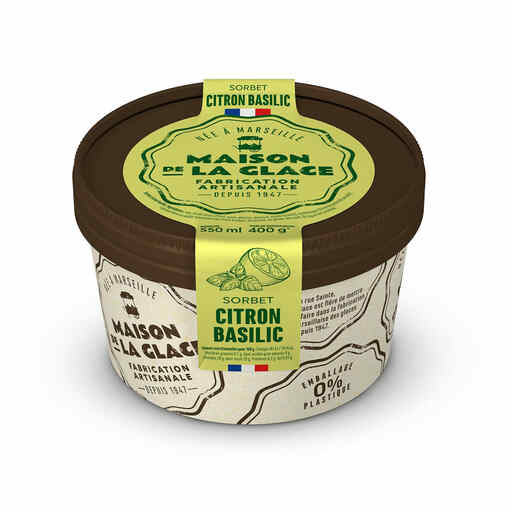 Image unavailable
Worth considering if you fancy a lemon and basil flavour. Compare the fat and sugar content, and check the pack type and allergen information on the product.
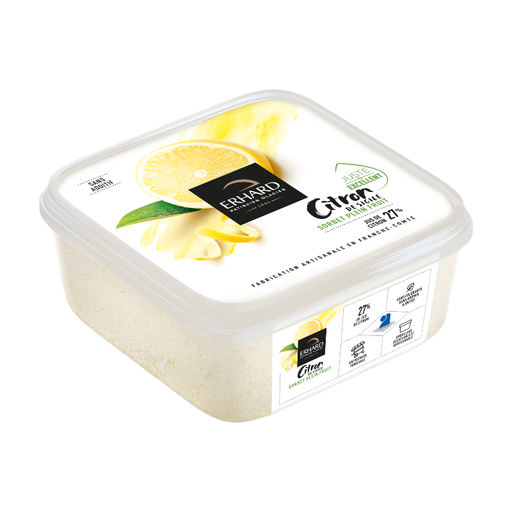 Image unavailable
This Sicilian lemon flavour could be one to compare with other sorbets for your holiday. Check the sugars, allergens and pack type before choosing.
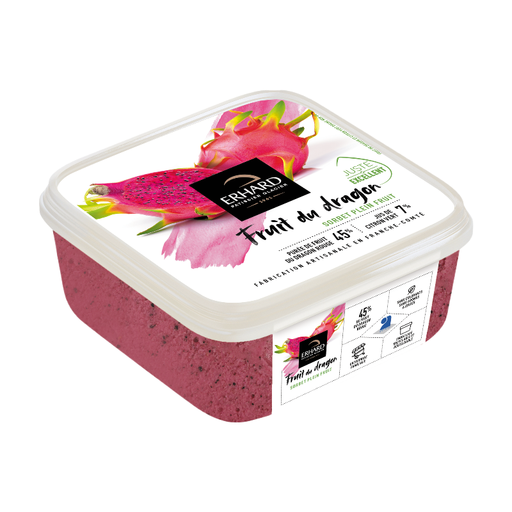 Image unavailable
If you prefer dragon fruit and lime, compare this product with other sorbets on a per-100 g basis. Also check the packaging and allergen information.
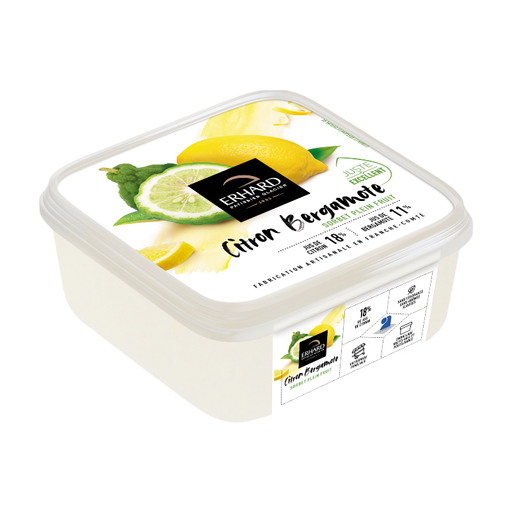 Image unavailable
If you’re choosing between different citrus flavours, compare the fat and sugars in this product separately. Also check the pack type and any ‘may contain’ warnings.
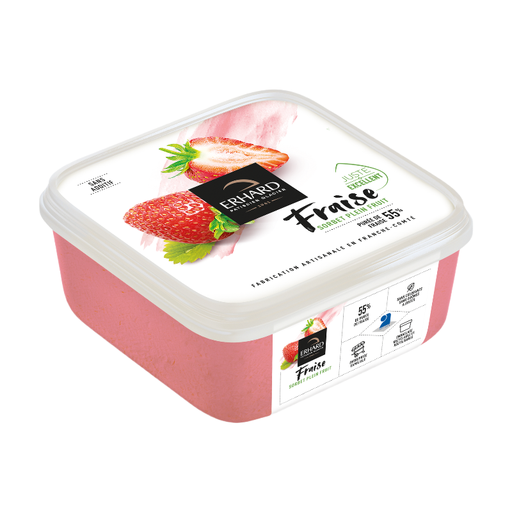 Image unavailable
This strawberry option gives you another flavour to compare for your holiday. Check the nutritional information and pack type, and, especially if you have an allergy, read the details on the product label.
For solid foods, EU rules on nutrition claims reserve this description for products containing no more than 3 g of fat per 100 g. Carrefour France also states that the ‘0% fat’ claim on its lemon sorbet means a maximum of 0.5 g per 100 g or 100 mL. Always check the figure and unit shown on the product you choose.
No. E.Leclerc lists 22 g of sugars per 100 g for its lime sorbet, while Auchan France lists 21 g for its lemon sorbet with pieces, even though their fat contents are 0.0 g and less than 0.5 g per 100 g respectively. Compare both lines in the nutrition table.
No. Ingredients and ‘may contain’ warnings vary by product. If you have an allergy, check the label on the exact pack rather than relying on the ‘sorbet’ category.
First, check its size and how much freezer space you have at your holiday accommodation. Then follow the temperature, transport and do-not-refreeze instructions on the product.