Canteen managers serving high volumes
If lots of employees choose dessert within a short time, tub size and how often you need to replenish it both matter. Transgourmet’s catalogues include 2.5 L and 5 L tubs designed for catering.


For regularly serving multiple portions of the same flavour, a 2.5 L or 5 L catering tub is a more practical starting point than several small tubs. Which size you choose depends on actual demand and freezer space; smaller tubs are better suited to lower volumes or trying out a flavour. In every case, make sure you have the ingredients and allergen information, as well as the storage instructions for each product.
If lots of employees choose dessert within a short time, tub size and how often you need to replenish it both matter. Transgourmet’s catalogues include 2.5 L and 5 L tubs designed for catering.
When desserts are served in portions, you need to be able to check the ingredients and allergens for every flavour on offer. Keeping the labels and batch information also helps your team follow the product’s storage instructions.
When it’s hard to predict demand for each flavour, smaller sizes let you try a product without opening a large tub straight away. Carrefour and Picard offer tubs weighing a few hundred grams, which are different from 2.5 L or 5 L catering sizes.
First, choose a size based on the expected demand for each flavour, then check that your team can manage product information and storage during service.
Consider it: if you regularly serve several portions of the same flavour but don’t want to go straight to a 5 L tub.
Bear in mind: you’ll need sufficient turnover and a suitable system for managing an opened tub.
Consider it: when demand for a flavour is high and footfall is fairly predictable.
Bear in mind: you’ll need more freezer space, and there’s a greater risk of leftovers if demand drops.
Consider it: for lower volumes, occasional offers or trying out a flavour.
Bear in mind: if service gets busier, you’ll need more tubs and more handling.
| Criterion | What to check | Relevant considerations |
|---|---|---|
| Demand and volume | Compare the tub size with the number of portions usually served for each flavour. Also check the number of tubs per case and the space available in your freezer. | When lunch service is concentrated into a short period, I want to limit tub changes without opening more product than necessary. Around 45% of consumers are said to make serving volume their top priority. |
| Product information and storage | Check the ingredients, allergens and storage instructions for every product and batch before serving. | If I need to give guests information about several flavours, I need details that are easy to find and specific to each one. Product information is said to come first for around 33% of consumers. |
| Variety and leftovers | Estimate demand for each flavour before opening several products; adjust quantities based on observed consumption. | When footfall varies, I’d rather try a flavour in a smaller quantity than leave a large tub partly used. Around 22% of consumers are said to favour variety while keeping leftovers to a minimum. |
Transgourmet’s product listing for a 2.5 L ice cream states that each case contains four tubs. So the size of one tub doesn’t tell you how many units you’ll need to store.
Check the net volume, the number of tubs per case and the space required in your freezers separately.
A large tub can mean fewer top-ups during a busy service, but it may leave you with more opened product if demand for that flavour has been overestimated.
Save this size for flavours with enough turnover to justify it. For a trial, consider a 2.5 L tub or a smaller one.
If you can’t clearly match the tub being served to its product information, your team may no longer be able to give guests accurate details about ingredients and allergens.
Keep the label and product specification accessible, and link each flavour being served to its product and batch.
Smaller sizes can work for occasional needs, but regularly serving lots of portions means opening and replacing more tubs.
Save them for trials or slower-selling flavours, and choose sizes for your most popular flavours based on canteen demand.
This approach also means managing more packaging during service.
Transgourmet features TG Quality Bourbon vanilla ice cream in a 2.5 L tub, sold in cases of four.
Unilever Food Solutions presents Carte d’Or as a catering range that includes ice creams and sorbets.
Transgourmet’s catering range includes 2.5 L and 5 L tubs for food service.
Carrefour’s range includes ice cream and sorbet in smaller tubs, including a 500 g Carrefour Extra product.
Picard offers ice cream and sorbet to share, including a 380 g Madagascar vanilla ice cream tub.
These products are frozen desserts in small tubs, worth considering for lower volumes or to offer a wider choice of flavours. For regularly serving multiple portions, compare them separately with 2.5 L and 5 L catering tubs.
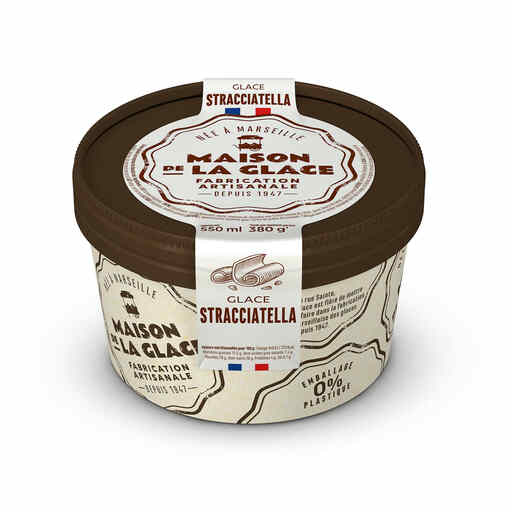 Image unavailable
Worth considering for trying stracciatella in a smaller size, rather than as the sole option for a busy service.
Listed as a 380 g tub; check the ingredients, allergens and storage instructions on the packaging you receive.
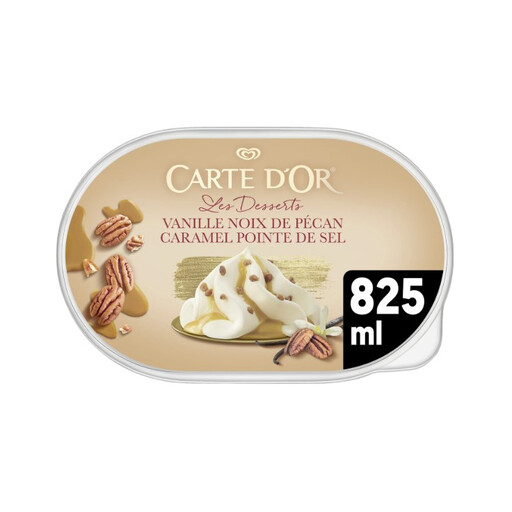 Image unavailable
This small tub could be a good option for rotating flavours when demand is moderate.
The title lists it as 470 g: confirm the net quantity and pack format on the label of the product you receive. Check the allergen declaration before serving, too.
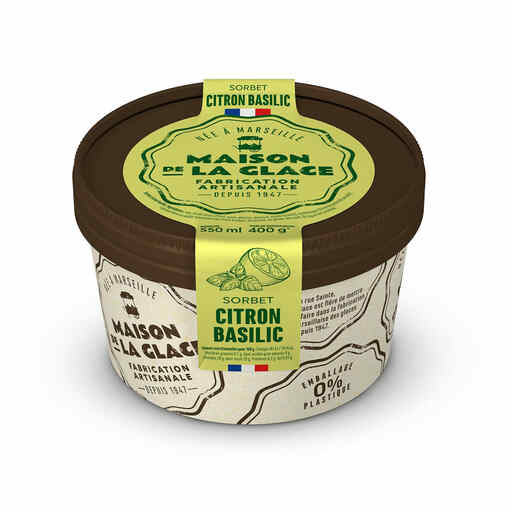 Image unavailable
This size could be a good way to try a lemon and basil flavour when demand is uncertain.
Listed as a 380 g tub. Before serving it to guests, check the batch’s allergen information and storage instructions.
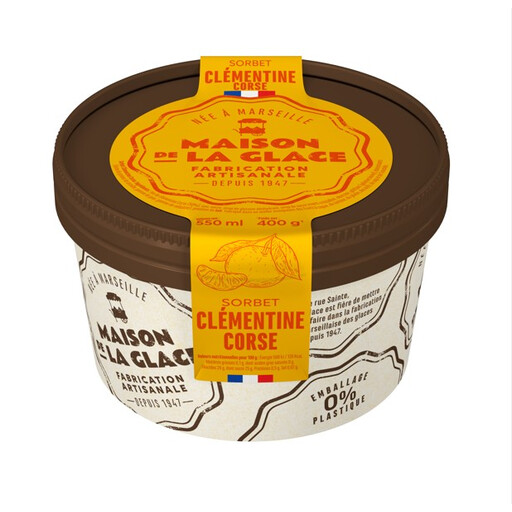 Image unavailable
Worth considering for occasionally offering a sorbet flavour without opening a large catering tub.
The title lists it as 380 g: confirm the net size on the label you receive. Also check the allergen information and any instructions that apply after opening.
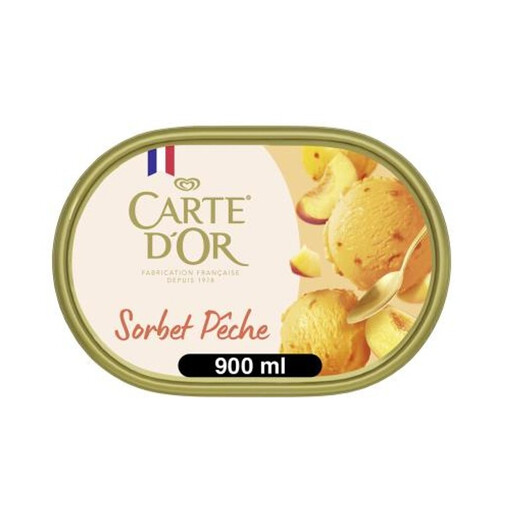 Image unavailable
This 900 ml tub could suit an occasional peach flavour option, rather than a service based on a large catering tub.
The product name differs between the title and description: check the packaging you receive to confirm whether it’s ice cream or sorbet before adding it to the menu. Also check the allergens and instructions for after opening.
A 2.5 L tub is worth considering if you regularly serve several portions of the same flavour. For lower volumes or a trial, smaller tubs can limit how much you open; compare each size with observed turnover and the space available in your freezer.
Check the allergens for every product you actually serve, even if it arrives in a labelled tub. The French decree of 17 April 2015 covers, among other things, allergen information for non-prepacked foods. Keep labels and product specifications accessible when dessert is presented to guests without its packaging.
Follow the temperature specified for each product: the catering products mentioned by Transgourmet state that they should be stored at −18 °C. Also check the instructions for after opening and organise service to maintain the cold chain.