
Livraison le jour même ou le lendemain

Qualité garantie

Débloquez vos offres de bienvenue: Livraison GRATUITE | Jusqu'à -80 % | 30 jours d'essai gratuits à JoyPlus
Téléchargez l'application
Buying an ice cream machine isn’t simply about comparing power or the number of programmes on the box. Between sorbet makers, granita machines, automatic ice cube makers and compressor-equipped appliances, the uses vary enormously. A model designed for making sorbet with the family won’t necessarily suit a bar or a small business.
Certain pitfalls crop up time and again when you’re buying: the stated capacity doesn’t match the usable volume, preparation times are measured under very specific conditions, or cleaning is reduced to a quick rinse. Here are the criteria to examine before you make your choice.
A 2.6-litre bowl doesn’t always guarantee 2.6 litres of ready-to-serve preparation. The quantity you get depends on the programme selected, the expansion of the mixture and the maximum fill level indicated by the manufacturer.
For a family, a capacity of between 1.5 and 2 litres is usually enough to prepare several portions. For a party, a 2.6-litre or larger granita machine means fewer refills. Conversely, appliances with individual tubs focus more on small quantities and a variety of flavours.
A traditional sorbet maker requires you to put its bowl in the freezer for several hours. If you forget this step — or if your freezer is already full — your preparation could be delayed.
An ice cream machine with a compressor cools the mixture directly and doesn’t need the bowl to be pre-frozen. It’s the most practical solution for making multiple recipes in a row, but it’s generally heavier, bulkier and more expensive to buy. Machines like the Ninja CREAMi work differently: the base must be frozen in advance, then quickly processed by the machine.
Sugary preparations, dairy products and juices can leave residue in the ducts, on the paddles or around the dispensing tap. A self-cleaning function makes maintenance easier, but it doesn’t always mean you can avoid dismantling the parts that come into contact with food.
Check whether the removable parts are dishwasher-safe, whether the drip tray comes out easily, and whether the motor block just needs wiping with a damp cloth.
Compare the usable capacity, not just the total volume stated by the manufacturer. For a family sorbet maker, 1.5 litres is enough to prepare a quantity suitable for several guests. A 0.95-litre sorbet machine or two 710 ml tubs is more about variety in recipes.
The stated time varies depending on the initial temperature of the ingredients, the volume used and the recipe chosen. Some appliances prepare a granita drink in around 15 to 30 minutes, while a sorbet maker with a pre-frozen bowl can take longer, not counting the hours spent in the freezer.
An appliance marketed as an Italian ice cream machine may actually offer mainly cooling and stirring functions. Look closely at the available programmes: ice cream, sorbet, granita, frappé, milkshake, frozen yoghurt or iced drink.
Adjusting the temperature or duration lets you fine-tune the consistency. For drinks, an adjustable negative temperature range helps you achieve a thicker or thinner texture. For desserts, the shape of the paddle and the option to continue freezing in the freezer directly affect the final firmness.
A professional or semi-professional ice cream machine with a compressor must be installed on a flat, dry, stable surface. Leave the ventilation space specified in the manual and never block the openings.
The presence of a refrigerant, such as R600a or R290, means you must never pierce the cooling circuit. Before buying, also check compatibility with the UK electrical supply, the type of plug supplied and the maintenance instructions. For commercial use, examine the warranty conditions, the availability of spare parts and the manufacturer’s recommendations.
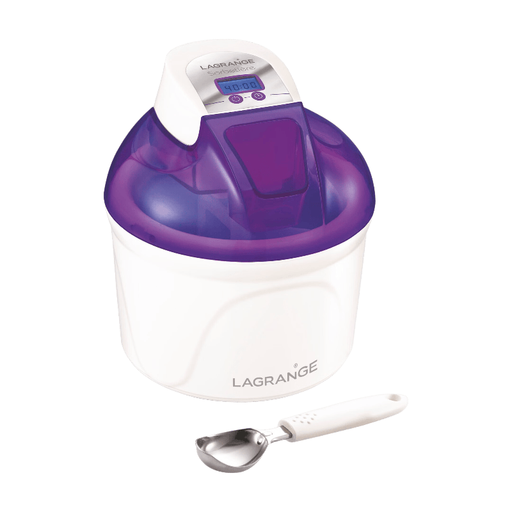
Why this choice suits this profile: This pre-freeze bowl sorbet maker is ideal for households that want to make ice cream and sorbets without investing in a compressor model.
The time needed to freeze the bowl must be clearly planned for, which avoids confusing immediate preparation with how a traditional sorbet maker works.
1.5-litre bowl, adjustable timer from 5 to 45 minutes, automatic shut-off and lid with opening.
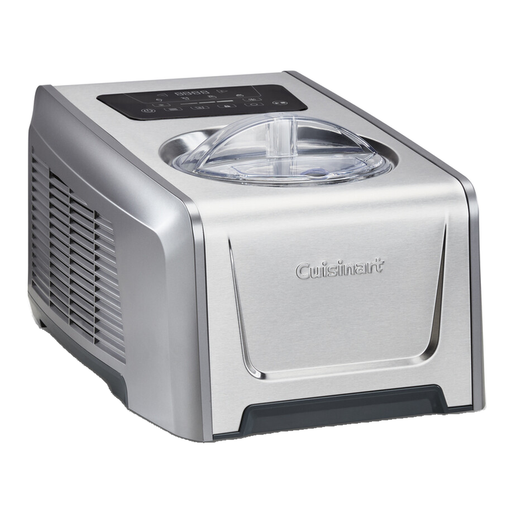
Why this choice suits this profile: Its built-in compressor is aimed at users who want to make several recipes regularly without having to pre-freeze the bowl.
The built-in cooling system removes the need for pre-freezing and the unpleasant surprises of a bowl that isn’t cold enough.
1.5-litre capacity, four programmes, two dedicated paddles, keep-cold function for 90 minutes and removable, washable parts.
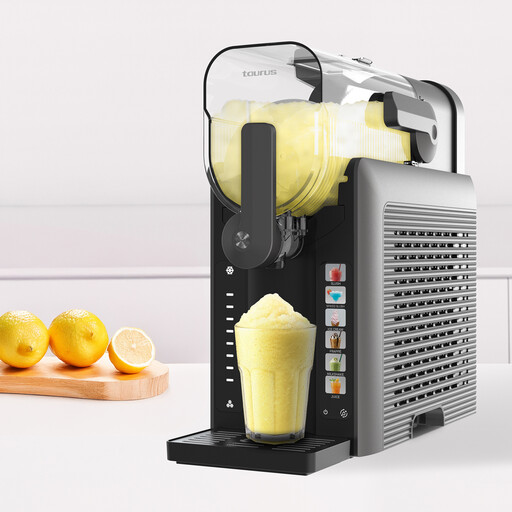
Why this choice suits this profile: This granita machine is ideal for families, parties and spaces where iced drinks are regularly served.
The six programmes and stated capacity let you quickly check whether the appliance is suited to a drinks-focused use rather than moulded ice creams.
2.6-litre tank, adjustable from -9°C to 10°C, preparation claimed in around 15 minutes and self-cleaning programme.
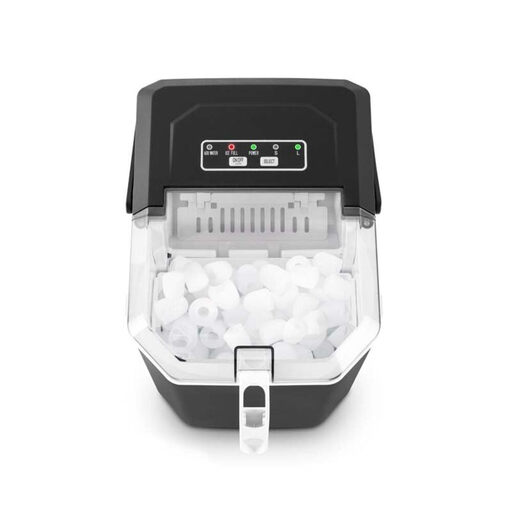
Why this choice suits this profile: This automatic ice cube maker meets the needs of a household, office or reception space that wants to produce ice cubes without filling up freezer trays.
The water level and full basket indicators reduce unexpected stops and make daily operation clearer.
Two ice cube sizes, claimed cycle of 6 minutes, production up to 12 kg in 24 hours and cleaning function.
We’ve put together a comprehensive, real-time updated selection of products that meet these strict criteria and European safety requirements.
A sorbet maker with a pre-frozen bowl typically needs between 8 and 24 hours of freezing before use. An ice cream machine with a compressor cools the mixture itself. It’s better suited to repeated batches, but takes up more space and requires more maintenance.
The cost depends on the power, the length of the cycles and how often you use it. An automatic ice cube maker used occasionally will consume less than a compressor model running for several hours. Check the power rating in watts and avoid leaving the appliance on unnecessarily, especially when the keep-cold function is activated.
Only use the ingredients or water specified in the manual, respect the maximum fill level and clean the parts after each use. Never immerse the motor block in water, keep the ventilation openings clear and have the appliance checked by a professional if the cooling circuit appears damaged.