What should you check before buying?
If you’re considering ice cream for a school lunchbox, first establish whether it can be kept frozen. Only then consider the format and flavour, while following any dietary guidance that applies to your child.
Ice cream or sorbet tub
Choose this if: you’re serving different portion sizes somewhere with a freezer.
Bear in mind: you’ll need to serve each portion and keep the rest cold; a tub doesn’t solve the problem of transporting ice cream to school.
Box of ice cream cones
Choose this if: you want pre-portioned servings and can confirm they’ll be stored properly until serving.
Bear in mind: each cone is still a frozen product, and both the wafer and the topping need to be checked for allergens.
A non-frozen dessert
Choose this if: the school can’t confirm suitable storage for ice cream brought from home.
Accept that: this isn’t a like-for-like substitute for ice cream; you’ll still need to check its ingredients and the school’s instructions.
| Factor | What to check | Who it matters to |
|---|
| Keeping it cold |
Ask where the ice cream will be stored and for how long. The Ministry of Agriculture gives a freezer temperature range of −18 °C to −24 °C; Carrefour specifies −18 °C for its frozen cones. |
If dessert has to wait for several hours at school, I want to know it’ll stay frozen until it’s served. Keeping it cold would be the top priority for around 46% of consumers in this situation. |
| Allergens and school guidance |
Read the ingredients and any ‘may contain’ statements for the exact product. Check the school’s guidance and, where relevant, the PAI. |
If my child has dietary requirements, I need to be able to identify exactly which recipe they’ll be bringing. Around 27% of consumers would put this compatibility first. |
| Portions and packaging |
Compare the number of cones with the portions you need, or the tub size with the number of portions you’ll be serving. |
When I’m serving several people at home, I’m looking for either ready-to-serve individual portions or the freedom to choose the serving size. Around 27% of consumers would put this need first. |
Ice cream cones available on Joybuy
These three boxes of cones are individual portions to serve somewhere they can be kept frozen. For a school lunchbox, first confirm the storage arrangements with the school, then check the label of the product you choose.
 Image unavailable
Extrême Strawberry and Vanilla Ice Cream Cones, 6 cones, 426 g
For serving individual portions somewhere the cones can stay frozen until dessert.
The product page lists milk, wheat and soya, as well as possible traces of other allergens. Check the details on the exact pack, especially if a PAI applies.
View on Joybuy
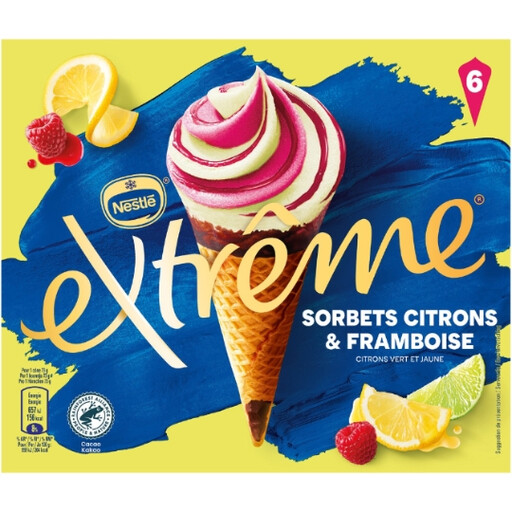 Image unavailable
Extrême Raspberry and Lemon Ice Cream Cones, 6 cones, 438 g
Another individually portioned recipe to consider when you can confirm it’ll be kept frozen until serving.
The product page lists wheat, soya and milk in the form of whey, as well as possible traces of other allergens. Check the pack before choosing it for a child with dietary requirements.
View on Joybuy
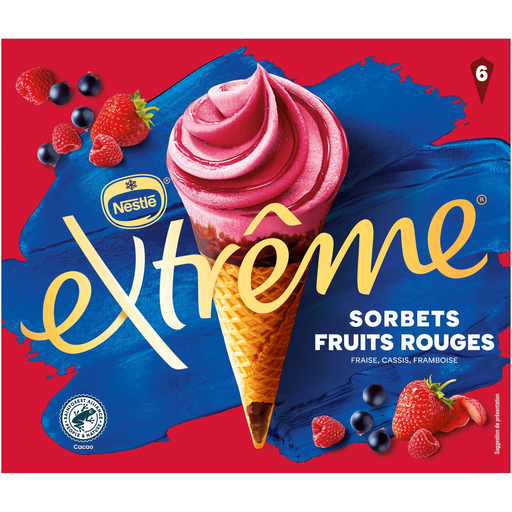 Image unavailable
Extrême Red Berry Sorbet Ice Cream Cones, 6 cones, 438 g
A red berry recipe to compare in a six-portion format, while still making sure it stays cold until serving.
Despite being labelled as sorbet, the product page lists milk, wheat and soya, as well as possible traces of other allergens. Don’t assume it’s suitable for someone avoiding milk: check the exact product label.
View on Joybuy
Frequently asked questions
Can you put an ice cream cone or a portion from a tub in a school lunchbox?
Only if suitable frozen storage is arranged until the ice cream is served. The Ministry of Agriculture gives a freezer temperature range of −18 °C to −24 °C; an insulated bag for the journey doesn’t, by itself, confirm that the ice cream will be stored properly throughout the day. Ask the school before choosing either format.
When should you choose a tub rather than a box of cones?
Choose a tub if you want to decide the size of each portion when serving, somewhere with suitable freezer storage. Cones are handy when you want pre-portioned servings. Neither format removes the need to keep the product frozen.
What should you check if your child has a food allergy?
Check the ingredients and any ‘may contain’ statements for the exact product, then check the guidance that applies to your child and their school. Some Carrefour cone product pages list milk, wheat or nuts, depending on the recipe. The flavour and brand alone won’t tell you whether the product is suitable.
What role does a PAI play for a dessert brought to school?
According to the Ministry of National Education, an individual support plan can set out adjustments for a pupil with a food allergy. Before bringing in a dessert, check that it follows the guidance for your child and the arrangements agreed with the school.


