Parents with a freezer at the destination
They’re considering a frozen dessert after school or following a short journey in an insulated bag. Anses recommends limiting the time frozen products are in transit.


An ice cream cone is only suitable for a secondary school lunchbox if it stays frozen until it’s eaten. The French food safety agency Anses recommends insulated transport and a short journey, while Carrefour Extra says its cones should be kept at −18 °C. If the product will need to stay in a school bag until lunchtime without suitable cooling, choose a non-frozen snack instead. Either way, check the allergens for the exact product; a box of ice cream cones can’t be transported in the same way as a box of chocolates.
They’re considering a frozen dessert after school or following a short journey in an insulated bag. Anses recommends limiting the time frozen products are in transit.
They need to check each recipe and its ‘may contain’ information before a pupil eats it at school. The French Ministry of National Education says an individual support plan can be put in place for pupils with food allergies.
For dessert at home, they can compare the number of portions and the freezer space needed. Products from Magnum, Carrefour Extra, Auchan and E.Leclerc include packs of 4, 6 or 8 cones, depending on the product.
Start by considering where the product will be kept until it’s eaten. A popular flavour or a large multipack won’t solve the problem of keeping it cold throughout the school day.
Consider these: for dessert at home or after a short journey, if there’s a freezer available at the destination.
Bear in mind: individual wrapping and an insulated bag alone aren’t enough to keep ice cream frozen all day.
Consider this: if the snack or gift needs to be transported without access to a freezer.
Bear in mind: even if it’s shaped like a cone, confectionery isn’t a substitute for ice cream. You should still check its storage instructions and allergens.
| Criteria | What to check | Who is it for? |
|---|---|---|
| Keeping it cold | Journey time, insulated transport and access to a freezer; follow the storage instructions on the pack. | If I’m planning to have ice cream after school, I need to be able to keep it frozen until it’s time to eat it. Around 36% of consumers rank this as a priority. |
| Allergens and school requirements | Ingredients and ‘may contain’ information for the exact product; arrangements with the school, if needed. | If a pupil needs to avoid certain ingredients, the flavour alone won’t tell me whether a product is suitable. This is the first thing around 29% of consumers check. |
| Pack size | Number of cones, stated quantity and available freezer space. | If I’m serving dessert at home to a group, I want enough portions without taking up unnecessary freezer space. Around 21% of consumers say this is a priority. |
| Flavour and presentation | The exact recipe and whether a frozen gift can be put straight into the freezer. | If I’m giving someone a chocolate dessert to share, I’ll look at the recipe first, but the recipient still needs somewhere cold to store it. Around 14% of consumers prioritise flavour or presentation. |
An ice cream cone is still a frozen product, even when individually wrapped. Carrefour Extra says its cones should be kept at −18 °C; Anses recommends using an insulated bag and keeping transport time to a minimum.
Before packing one in a lunchbox, make sure you know how it will stay frozen on the journey and until it’s eaten. Otherwise, choose a non-frozen product.
Ingredients vary. The products reviewed include milk and wheat, and some contain or may contain nuts or soya.
Read the ingredients and ‘may contain’ information for the product you choose. If there’s a food allergy, also check the arrangements agreed with the family and school.
A large number of cones takes up freezer space and doesn’t make the pack easier to take to school.
Compare the number of portions and the total quantity with how you plan to use it. For a supermarket product, also confirm it’s available at the store you’re buying from.
The range includes the Cône Disc Pistache in a pack of four, described by Magnum France as featuring a chocolate disc and pistachio pieces.
The hazelnut and caramel product featured by Carrefour combines ice cream in a cone with a wafer and chocolate sauce.
The vanilla and chocolate product featured by Carrefour contains 6 cones and weighs 408 g.
The chocolate ice cream cones featured by Auchan come in a pack of 6, weighing 450 g.
The Eco+ chocolate and pistachio product featured by E.Leclerc contains 8 cones and weighs 520 g.
These products suit two different occasions: ice cream cones to keep frozen for sharing as a dessert, and confectionery in a cone to consider if you’re looking for a non-frozen option. Check the storage instructions and allergens for each product before choosing.
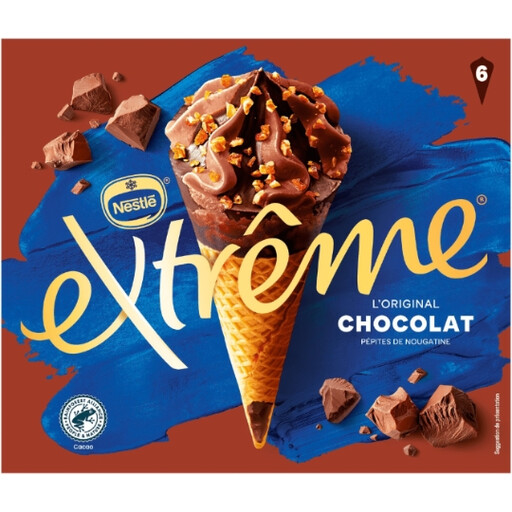 Image unavailable
A pack of chocolate cones to consider for sharing as a dessert, provided they can stay frozen until they’re eaten.
The product name states that the pack contains 6 cones and weighs 426 g. Before considering it for school, check the packaging for storage instructions and allergens.
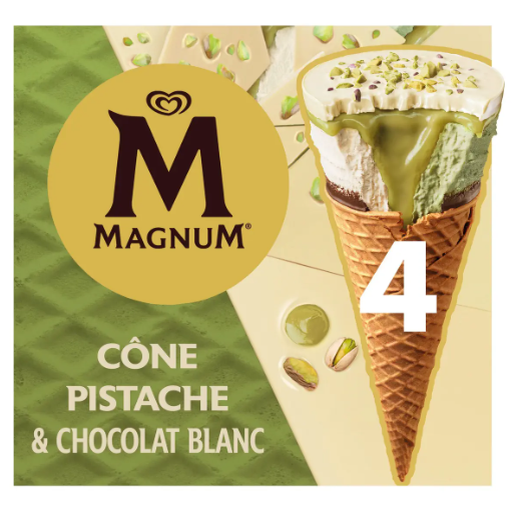 Image unavailable
A pistachio-flavoured frozen dessert to share, provided the cones stay frozen until they’re eaten.
The pack contains 4 cones, each holding 90 ml. Before offering one to a pupil, check the label for this variant, including allergen information and storage instructions.
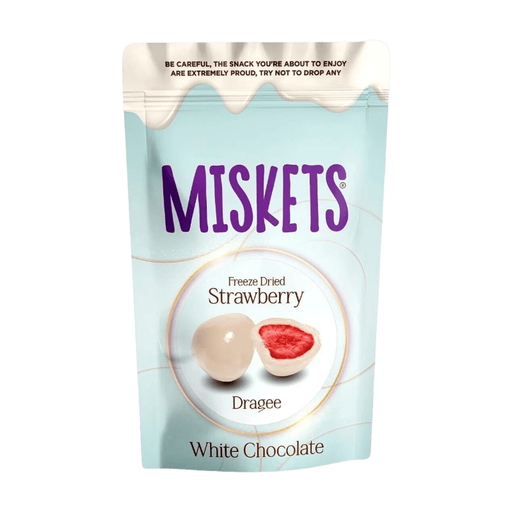 Image unavailable
This cone-shaped confectionery is an option if you’re looking for a non-frozen chocolate treat, but it isn’t used in the same way as ice cream.
Before choosing it for a lunchbox or as a gift, check the packaging for the net quantity, storage instructions and allergens.
Yes, but only if it can stay frozen until it’s eaten. Anses recommends using an insulated bag and keeping the journey short when transporting frozen products. These precautions don’t turn an ordinary lunchbox into a freezer for the whole day.
Carrefour Extra’s product information says never to refreeze a thawed product. For any other cone, follow the storage instructions on its own packaging.
Check the ingredients and ‘may contain’ information for the exact product, as well as the arrangements agreed with the family and school. The French Ministry of National Education says an individual support plan can be put in place for a pupil with a food allergy.
Only if the recipient can put the cones in a freezer soon after they’ve been transported appropriately. If the gift needs to stay in a bag all day, look for a non-frozen product instead and check its storage instructions.