
Livraison le jour même ou le lendemain

Qualité garantie

Débloquez vos offres de bienvenue: Livraison GRATUITE | Jusqu'à -80 % | 30 jours d'essai gratuits à JoyPlus
Téléchargez l'application
Itching, digestive issues, skin irritation… As the owner of a sensitive dog, you know the feeling of helplessness. Switching to a specialised diet, like hypoallergenic duck kibble, is often the solution. But the market is a jungle of marketing promises and confusing labels. To help you see more clearly, we've decoded the pitfalls to avoid and the criteria that truly matter before you choose.
Choosing the right food for your dog can sometimes feel like an uphill battle. Here are three common mistakes that can undermine the benefits of a hypoallergenic diet.
To make the right choice, you need to learn how to decode labels. Here are the three points to scrutinise.
The principle of a single-protein diet is simple: use only one source of animal protein. For a dog prone to food allergies, duck is an excellent option. It's a so-called "novel" protein for many dogs' systems, which limits the risk of a reaction. Make sure the label clearly states duck as the sole meat source and that its percentage is clearly indicated (and high!).
Choosing grain-free duck kibble is a good start, but it's not enough. The important thing is to see what the grains have been replaced with. Legumes (lentils, chickpeas) are often much better alternatives. Check that the ingredient list is transparent and that vegetables and fruits are included for their nutrients, not just as fillers.
A clear and detailed ingredient list is the first sign of a trustworthy brand. Avoid generic terms like "animal by-products" or "animal fats." A reputable brand will always specify the origin: "duck fat" rather than the vague "animal fats." It's this level of detail that makes all the difference in finding the ideal kibble for your sensitive dog.
Every dog is unique. Here are a few products that meet different profiles and needs, in line with the selection criteria we've just discussed.
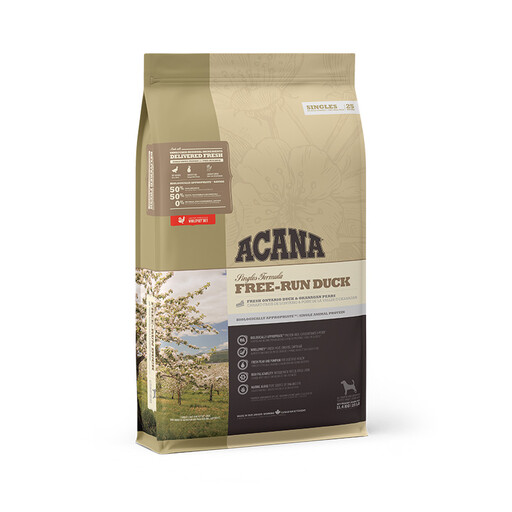
Why it's a match: Ideal for owners who refuse to compromise. This formula is built around a single animal protein: duck. It's a benchmark for elimination diets or the most sensitive dogs.
The Acana Free-Range Duck formula is crystal clear: 50% duck, with no other hidden animal proteins. It sidesteps the "fake single-protein" trap.
High in protein (31%) to support muscle mass. Contains whole vegetables and fruits (pumpkin, pears) for a natural source of fibre.
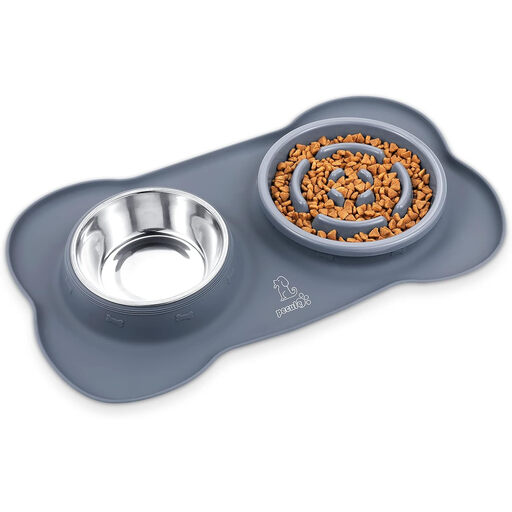
Why it's a match: For dogs that devour their food in seconds, causing bloating and regurgitation that worsen their digestive sensitivity. This is the perfect accessory to complement a suitable diet.
It tackles an often-overlooked issue: the speed of eating. Focusing only on ingredients while ignoring how a dog eats means missing a key part of good digestion.
Its obstacles force the dog to eat more slowly, promoting better digestion and reducing the risk of bloat. Its food-grade silicone is safe and easy to clean.
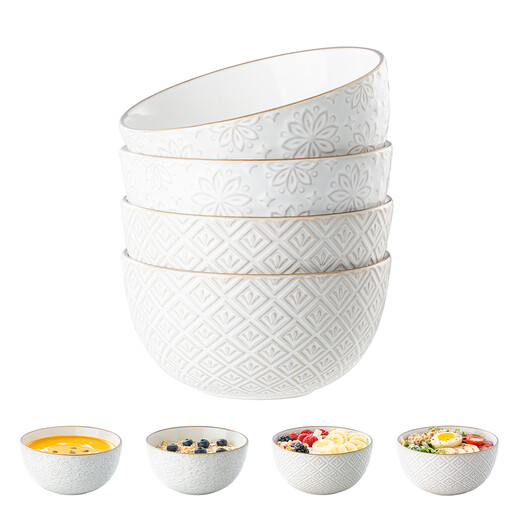
Why it's a match: For those who understand that bowl hygiene is as crucial as kibble quality. Ceramic is the healthy alternative to plastic, which gets scratched and becomes a breeding ground for bacteria.
It prevents the risk of contamination. A porous or scratched bowl can ruin the benefits of a hypoallergenic diet by introducing bacteria responsible for irritation (like chin acne).
Ceramic is a non-porous, durable, and very easy-to-clean material (dishwasher safe). It doesn't retain odours or bacteria, making for a healthier meal, plain and simple.
A proper diet is the cornerstone of your dog's well-being, but the mealtime environment also plays a role. Good posture while your dog eats can greatly improve digestion—a detail that changes everything for a sensitive animal.
If you're interested in improving your dog's posture during meals, we've compiled a selection of products that meet strict criteria for comfort and ergonomics.
1. How long should the transition to new kibble take? A food transition should always be gradual to avoid upsetting your dog's digestive system. Ideally, spread it over 7 to 10 days. Start with a mix of 25% new food and 75% old food. Then, increase the proportion of the new kibble every two or three days until you reach 100%.
2. How do I know if my dog is actually allergic to duck? A duck allergy is rare (as it's an uncommon protein), but it does exist. If, after several weeks on a strict duck-only diet, your dog's symptoms (itching, digestive issues) persist or worsen, it's possible they are sensitive to it. The best course of action: consult your veterinarian to explore other options, such as lamb, fish, or formulas based on hydrolysed proteins.
3. Is grain-free kibble always a good choice? For many sensitive dogs, grain-free formulas are an excellent option because they eliminate known allergens (wheat, corn, soy). However, be aware that the "grain-free" label is not a guarantee of quality. The most important thing is to check what the grains are replaced with. Favour recipes with low-glycaemic carbohydrates (lentils, chickpeas, sweet potatoes) and a controlled starch content. Ultimately, the key is to find a balanced diet that meets your pet's unique needs.