
Livraison le jour même ou le lendemain

Qualité garantie

Débloquez vos offres de bienvenue: Livraison GRATUITE | Jusqu'à -80 % | 30 jours d'essai gratuits à JoyPlus
Téléchargez l'application
A hydraulic car jack makes it easier to change a wheel, inspect the chassis or carry out minor repairs in your home garage. But a lifting capacity stated in tonnes is not enough to guarantee compatibility with your vehicle. Minimum height, stability, vehicle type and operating conditions should all be checked before you buy.
A jack rated for 3 tonnes is not necessarily suitable for every vehicle. This figure must be compared with the vehicle weight, shown on the registration document or in the manufacturer’s handbook. For an estate car, SUV or van, the way the weight is distributed around the lifting point also needs to be taken into account.
The jack’s maximum load must never be exceeded. The vehicle must be raised on flat, sufficiently strong ground, with the handbrake applied and the opposite wheels chocked.
A jack that is too tall may not fit beneath a low saloon or sports car. Conversely, a maximum height that is too low may prevent you from working on an SUV or commercial vehicle. An ultra-low-profile hydraulic jack is better suited to vehicles with low ground clearance, provided you also check the maximum height it can reach.
A jack is designed to lift a vehicle, not to support it on its own throughout a repair. When working underneath the car, use suitable axle stands positioned at the lifting points specified by the manufacturer. A safety valve, non-slip saddle or certification mentioned in the product listing are good indicators of the design, but they never replace properly securing the vehicle.
For a typical car, a 3-tonne car jack provides a comfortable margin, provided its height range is suitable for the vehicle. A 2.5-tonne model may be sufficient for a saloon, MPV or certain SUVs. A 6-tonne bottle jack, meanwhile, is more suitable for heavy vehicles, pick-ups and light commercial vehicles.
Always check the following three values:
A hydraulic trolley jack is easy to manoeuvre in a garage and practical for regular tyre changes. A car scissor jack is more compact and fits easily in a boot, but operating it manually requires more effort. Its stability also depends heavily on the quality of the ground.
For a motorbike or quad bike, choose a motorbike jack with a suitable platform and a capacity stated in kilograms. In a workshop, a professional garage jack should prioritise stability, durability under repeated use and the availability of spare parts.
The 5-tonne pneumatic jack, meanwhile, uses compressed air to speed up lifting. It is mainly intended for garages and users who already have a compatible compressor.
Steel offers excellent mechanical strength, while aluminium helps reduce the overall weight. Swivel castors make it easier to position the jack, but they require an even surface. A wide, rubber-covered saddle reduces the risk of marking the vehicle’s contact point.
Also consider how the handle is stored, whether it has a padded grip and what compliance information the manufacturer provides. The TCE 2.5-tonne product listing specifically mentions EN 1494 and CE: these details should be checked on the packaging and in the documentation supplied with the product.
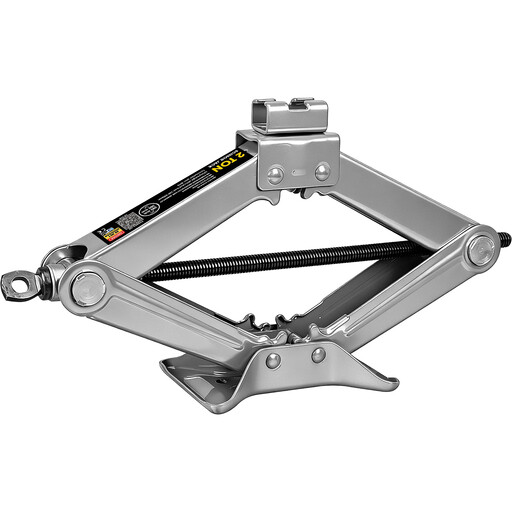
Why it suits this profile : Its foldable design fits easily in the boot and is sufficient for an occasional wheel change or a quick chassis inspection.
Its stated starting height of 88 mm makes it easier to access low vehicles. You must still confirm the vehicle’s permitted load and lifting points.
Forged alloy construction, widened non-slip base and foldable storage design.
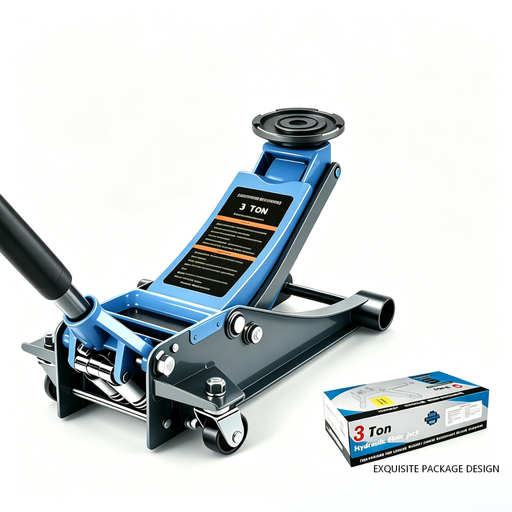
Why it suits this profile : Its dual-pump system and combination of steel and aluminium make it suitable for regular use in a home garage.
Its stated range of 80 to 465 mm covers several configurations, but it must be compared with the vehicle’s actual ground clearance.
Stated 3-tonne capacity, large-diameter rubberised saddle and removable handle.
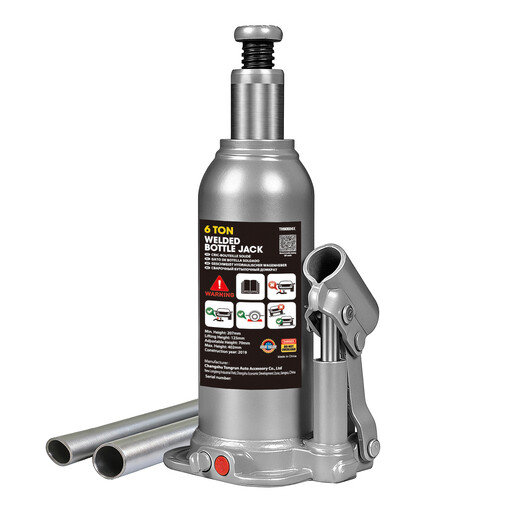
Why it suits this profile : This bottle jack is designed for SUVs, pick-ups and light commercial vehicles that require more capacity than a standard car jack.
Its 207 to 402 mm range reduces the risk of choosing a model that is too low for a tall vehicle, subject to checking the support point.
Stated 6-tonne load, chrome-plated piston, treated saddle and adjustable safety valve.
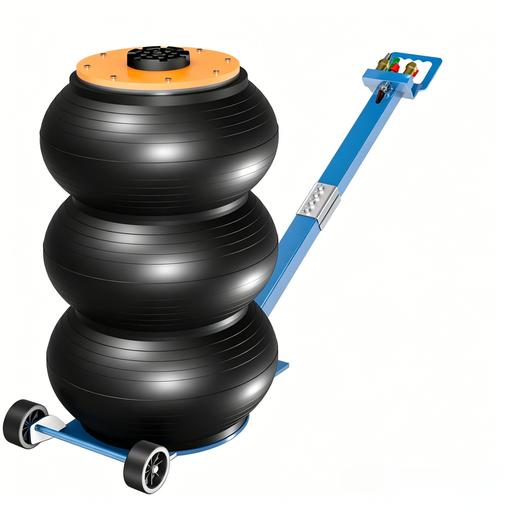
Why it suits this profile : This pneumatic model is intended for workshops and breakdown technicians who already have a compressed-air supply.
Pneumatic operation reduces manual effort, but you need to check the available pressure, connections and the space required for manoeuvring.
Stated 5-tonne capacity, rapid pneumatic lifting and removable handle.
A 2.5- to 3-tonne hydraulic trolley jack is suitable for many cars and light SUVs, provided its minimum height allows it to fit beneath the vehicle. For occasional use and storage in the boot, a scissor jack is more compact. Whichever option you choose, consult the vehicle handbook and use an axle stand to support the load during a prolonged repair.
It depends on how often it is used, the loads it supports, storage conditions and maintenance. Store the jack in a dry place, wipe its metal parts after use and never overload it. Regularly inspect the castors, handle and seals, and check for oil leaks. Any equipment that leaks or lowers unevenly must be taken out of service until it has been inspected.
It does not use fuel, but it does require a suitable compressor. You also need to consider its air consumption and maintenance. For a few tyre changes a year, a manual hydraulic jack is generally the simplest choice. In a workshop, however, when lifts are carried out one after another, the time saved may justify switching to a pneumatic model, especially if a compressor is already available.