
Livraison le jour même ou le lendemain

Qualité garantie

Débloquez vos offres de bienvenue: Livraison GRATUITE | Jusqu'à -80 % | 30 jours d'essai gratuits à JoyPlus
Téléchargez l'application
Every rider knows it: working on your bike on the garage floor is an ordeal. An uncomfortable position, nearly impossible access to certain components, and above all, a constant danger to both your safety and your ride. A hydraulic motorcycle lift is a game-changer, but the market is flooded with models making flattering promises that often hide critical flaws.
To avoid buyer's remorse, it's best to know the pitfalls to avoid. Some equipment, seemingly robust, can turn into a real trap. Here are the points you absolutely must check to make the right choice.
To be sure you're investing in reliable and durable motorcycle workshop equipment, several technical points need to be examined closely. These are what truly determine the quality and safety of your future motorcycle lift.
The first thing to do is to know your motorcycle's wet weight (never rely on the dry weight). Then, apply a safety margin of at least 20-25?%. If your bike weighs 300?kg, a lift with a 400?kg capacity is the absolute minimum. A 700 kg motorcycle lift is not overkill; on the contrary, it's a sign of a more robust design and will offer you more flexibility for your future rides. Consider the load capacity as an excellent indicator of the overall quality of the materials.
The lifting range is a dual concern?:
The platform, for its part, must be wide and long enough to support the motorcycle with perfect stability. A non-slip platform, usually rubber-coated, is a non-negotiable criterion for keeping the machine secure once it's in the air.
A good hydraulic motorcycle jack must include mechanical safety features. Insist on the presence of safety locks. They allow you to lock the lift in the raised position, which relieves the hydraulic system and prevents any accidental descent in case of failure.
Finally, don't underestimate mobility. High-quality casters, with at least two that swivel and have effective brakes, will make your life easier when positioning the lift under the machine and moving it around the garage.
Every rider has different needs. Here is a selection of models suited to various profiles, all validated against the safety and practicality criteria we've just discussed.
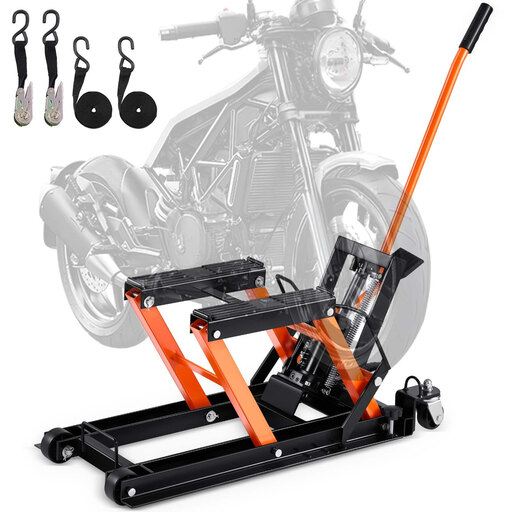
Why this one ? For those who work on heavy cruisers, large touring bikes, or simply want complete peace of mind. Its exceptional capacity allows it to lift almost any motorcycle on the market.
Its 700 kg capacity provides a colossal safety margin, eliminating any risk of overloading. The wide, rubber-coated platform locks the motorcycle in position.
Effortless foot-pedal lifting thanks to the hydraulic pump and multi-directional casters for millimeter-perfect positioning.
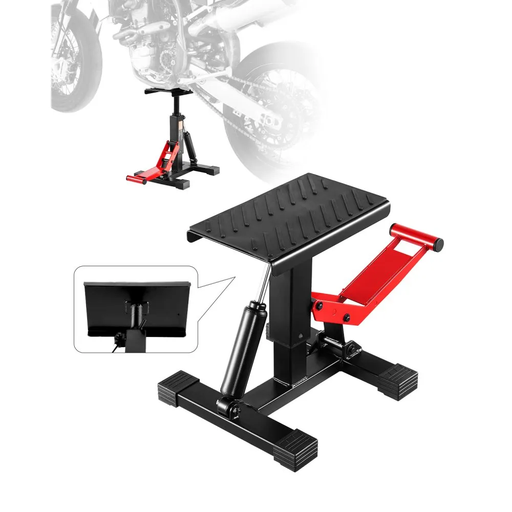
Why this one ? An ultra-versatile option for owners of mid-weight motorcycles, adventure bikes, and even ATVs, thanks to its wide platform and very comfortable capacity.
With its 544 kg capacity, it covers the vast majority of needs without any compromise on safety. Its hydraulic system is proven for regular use.
Excellent value and versatility, suitable for both motorcycles and small all-terrain vehicles.
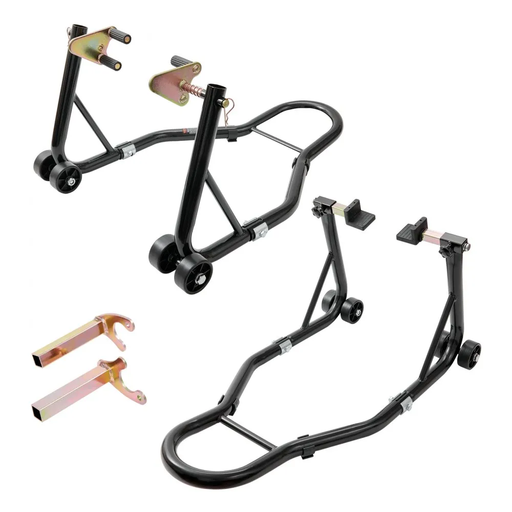
Why this one ? Indispensable for tasks that don't require lifting the entire frame: chain lubrication, brake maintenance, or winter storage. A perfect complement to a lift, or a very economical alternative.
Being 100 % mechanical, it eliminates the risk of hydraulic failure by definition. Its function is simple and clear: lift one wheel at a time, which prevents handling errors.
Simple and quick to use for both front and rear wheels. The ideal solution for stable storage during the winter.
Good maintenance goes beyond just lifting. Discover our complete selection of equipment and accessories to keep your motorcycle in pristine condition.
The lifespan depends on the build quality, frequency of use, and, most importantly, maintenance. A quality model that is regularly maintained (checking oil levels, cleaning the ram, storing in a dry place) can last for many years, even with amateur use.
No, and this is a crucial point. Flat platform lifts are designed for motorcycles with a double-cradle frame or a flat engine underside. For bikes with fairings, low-slung exhausts, or specific frames, you will need adapters or a different type of stand (paddock stands, motorcycle lift table). It is therefore imperative to check compatibility with your machine before purchasing.
If your jack feels "spongy" or struggles to lift, there is likely air in the system. The standard procedure is to open the release valve and then pump the pedal about fifteen times to push the air into the reservoir. Warning?: This is a generic method. You must consult your model's user manual to follow the manufacturer's exact procedure. Your safety depends on it.