
Livraison le jour même ou le lendemain

Qualité garantie

Débloquez vos offres de bienvenue: Livraison GRATUITE | Jusqu'à -80 % | 30 jours d'essai gratuits à JoyPlus
Téléchargez l'application
Whether for a simple seasonal tire change, an oil change in your garage, or more serious mechanical work, the hydraulic jack is an indispensable tool. However, the market is flooded with models featuring such varied specifications that it's easy to make the wrong choice. An unsuitable jack isn't just a waste of money? it's a direct risk to your safety and your vehicle's integrity.
As a product expert for Joybuy, my mission is to help you see things more clearly. Let's cut through the marketing jargon and get straight to the point. Here are the common pitfalls to avoid and the essential criteria for choosing the jack that's right for you.
Misleading Lifting Capacity?: Many jacks display a maximum capacity (e.g., 3 tons) that doesn't reflect their true, safe operational capacity. An entry-level model will struggle to lift a vehicle approaching this limit, straining the mechanism and shortening its lifespan. The stated capacity should be seen as an absolute limit never to be exceeded, not as the everyday working load.
A Lifting Range Unsuitable for Your Vehicle?: This is the most common mistake. Buying a standard jack for a lowered sports car is useless? it simply won't fit under the chassis. Conversely, an extra-low profile jack might not have a sufficient lifting height for an SUV or a van, preventing you from getting the wheel off the ground. Measuring your vehicle's ground clearance and the required lifting height is a non-negotiable step.
To avoid these pitfalls, focus on three fundamental parameters. They will determine the compatibility, safety, and efficiency of your garage jack.
The general rule is to choose a jack that can support at least 75% of your vehicle's total weight. Why not 100%?? Because a jack never lifts the entire vehicle, only an axle or a corner.
This is the ultimate compatibility factor.
Rather than an endless list, here are three targeted options for three distinct user profiles.
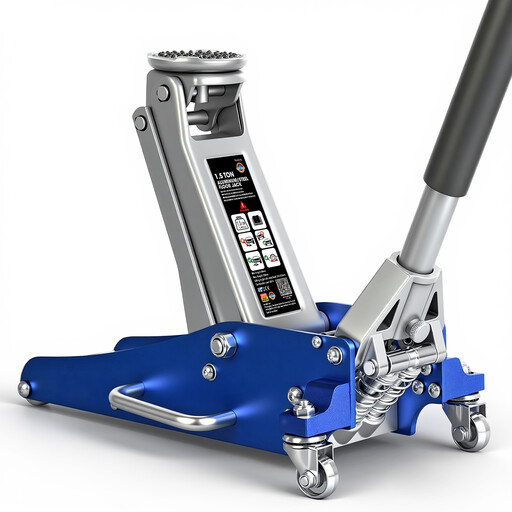
Why it's perfect for this profile : Ideal for owners of low-ground-clearance vehicles who need lightweight, portable equipment for a track day or home maintenance.
Its minimum height of 90 mm allows it to slide under most sports and lowered cars, solving the classic problem of a jack being too high to fit.
Aluminum alloy construction for a feather-light weight (only 14.3 kg) and a dual-pump system for rapid lifting. EN 1494 + CE certified.
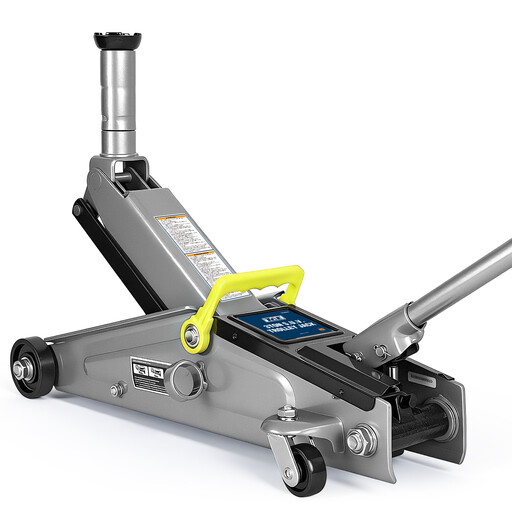
Why it's perfect for this profile : A versatile and robust choice for drivers of SUVs, minivans, and heavy sedans who need a wide lifting range and a reassuring capacity.
Its lifting range of 150 to 530 mm is perfectly suited for high-ground-clearance vehicles, ensuring you can lift the wheel high enough to work comfortably.
A true 3-ton capacity and robust steel construction for enhanced durability. The inclusion of an overload safety valve is a true mark of reliability.
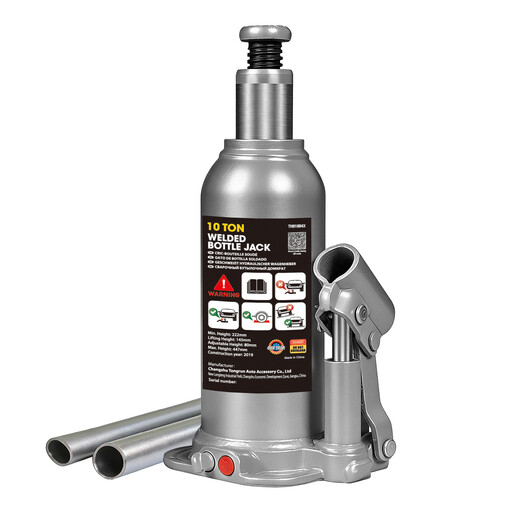
Why it's perfect for this profile : Designed for heavy-duty use and very heavy loads like trucks, buses, construction machinery, or industrial equipment. A powerful tool, built for the pros.
Its nominal capacity of 10 tons is designed for real-world use on heavy vehicles, avoiding the trap of overstated "marketing" capacities found on consumer-grade jacks.
Forged steel base, rust-resistant chrome-plated piston, and an adjustment screw for precise height tuning. A compact yet extremely powerful bottle jack.
We have curated a complete range of products that meet these quality criteria and European safety standards.
Yes, absolutely and without exception. A hydraulic jack is a lifting device, not a holding device. Once the vehicle is raised to the desired height, it is imperative to secure it with appropriate jack stands before working underneath it or even removing a wheel. This is a fundamental safety rule.
The lifespan depends on the manufacturing quality and maintenance. A good jack, used within its capacity limits and properly maintained (stored away from moisture, oil level checked, system bled if necessary), can last for many years. Entry-level models with low-quality seals may show signs of failure after just a few uses.
As mentioned, aim for a capacity of at least 75% of your vehicle's total weight. You can find your car's weight on the vehicle registration document (look for the Gross Vehicle Weight Rating or GVWR). For a 2-ton vehicle, a 1.5-ton jack (2000 kg * 0.75 = 1500 kg) is the bare minimum, but a 2 or 3-ton model will offer a better safety margin, greater ease of use, and increased longevity.