
Livraison le jour même ou le lendemain

Qualité garantie

Débloquez vos offres de bienvenue: Livraison GRATUITE | Jusqu'à -80 % | 30 jours d'essai gratuits à JoyPlus
Téléchargez l'application
Seasonal tire changes, oil changes, complex repairs... For the DIY mechanic, the hydraulic jack is the cornerstone of any garage toolkit. Yet, choosing the right model can often feel like an uphill battle. Between marketing promises and unreadable spec sheets, it's easy to end up with unsuitable, or even dangerous, equipment.
To ensure you don't regret your purchase, here are the pitfalls to avoid at all costs.
To avoid these disappointments, let's focus on the features that truly matter. The secret is to find the jack that is perfectly suited to your car and how you'll use it.
The choice of material directly impacts the jack's weight, durability, and price.
The lifting range is arguably the most critical factor. It is defined by two values:
A good jack is great. But its effectiveness is multiplied with the right tools. To change a car tire in record time, pair it with a cordless impact wrench to loosen lug nuts effortlessly. For an oil change, an oil filter wrench quickly becomes indispensable. Thinking about your purchase as part of a complete garage toolkit is the best way to make coherent and lasting choices.
Rather than searching for a one-size-fits-all jack that doesn't exist, it's better to find the one that perfectly matches your vehicle and your needs.
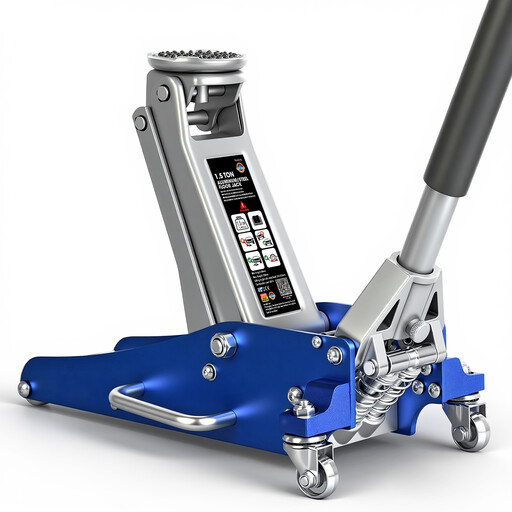
Why it's the right choice: Perfect for owners of sports coupés or lowered cars looking for easy-to-carry equipment for a track day or a roadside repair. Its feather-light weight (approx. 14.3 kg) makes it ultra-manoeuvrable.
Its ultra-low entry height of 90 mm allows it to slide under the lowest chassis, where standard jacks fail.
Its aluminium construction ensures maximum portability, and its dual-pump system provides rapid lifting.
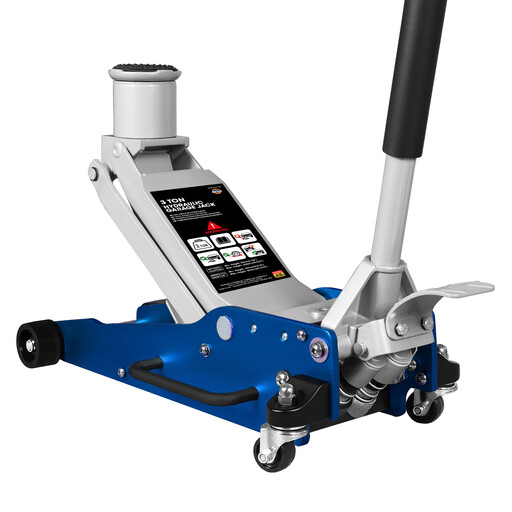
Why it's the right choice: The perfect ally for the DIY mechanic who works on multiple vehicles. It can lift a low saloon as easily as a large SUV or van, without needing two different jacks.
It avoids both pitfalls at once: a certified capacity of 3 tons and an extra-wide lifting range (from 85 mm to 541 mm with its extender) that makes it compatible with almost any car on the road.
Impressive versatility thanks to its extender and 3-ton capacity, all in an aluminium frame that remains easy to handle.
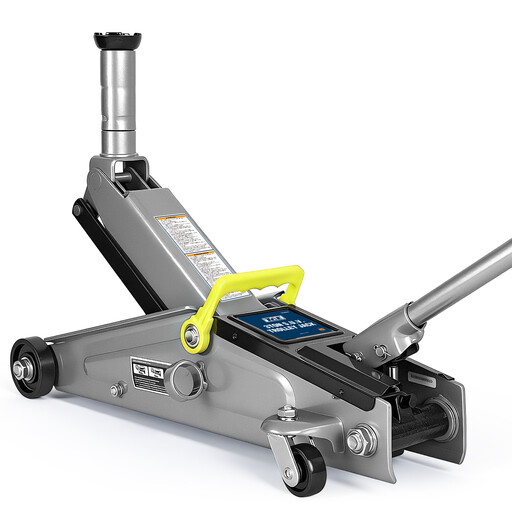
Why it's the right choice: Built for heavy-duty workshop use. Its massive steel frame guarantees unbeatable stability and durability for maintaining family cars, SUVs, and MPVs. The focus here isn't portability, but robustness.
It counters the overstated capacity pitfall with its solid steel frame and overload safety valve. Its 3 tons are real, and more importantly, safe.
Its ultra-robust steel construction is a guarantee of long-term reliability, and its maximum lifting height of 530 mm is perfect for high-clearance vehicles.
Discover our full selection of jacks and tools that meet our selection criteria and European safety standards.
The longevity of a trolley jack depends on its frequency of use, build quality, and maintenance. A well-maintained steel model (oil level checked, stored in a dry place) can serve faithfully for many years. The hydraulic seals are the main wear parts, but they are often replaceable.
Yes, and this is non-negotiable. A hydraulic jack is for lifting, not holding. Once the vehicle is in the air, it is imperative to secure it on certified jack stands rated for its weight before getting underneath or starting work. This is the golden rule of mechanical safety.
Not exactly. The 3-ton capacity indicates the maximum load the jack can lift. However, when you lift a car, you are usually only lifting one corner or one half of the vehicle, which is much less than its total weight. A 3-ton car jack therefore offers a very comfortable safety margin for almost all cars, including large SUVs that weigh around 2 to 2.5 tons.