
Same-day & Next-day Delivery

Quality Guaranteed

Unlock Your Welcome Offers: FREE Delivery | Up to 80% OFF | Free 30-day JoyPlus trial
Download the APP
Changing a wheel, inspecting the chassis or carrying out routine maintenance can quickly become difficult if the hydraulic car jack is not suitable. A minimum height that is too great will prevent it from fitting under a lowered car, while insufficient lifting capacity will reduce your safety margin. The weight shown on the packaging is therefore not enough to make the right choice.
Before buying, three mistakes are particularly common:
Check the vehicle’s maximum authorised mass shown on the registration document, then choose a device whose rated capacity matches the intended use. When only one lifting point is being used, the jack does not necessarily support the vehicle’s entire weight. It must nevertheless retain a sufficient safety margin.
A 3-tonne hydraulic trolley jack is generally suitable for saloons, SUVs and MPVs, provided that its height and contact points are compatible with the vehicle. For a workshop or regular use, choose a model with a thick steel construction and an overload safety valve.
Entry height is crucial for a jack designed for a lowered car. An ultra-low model starting at 85 or 88 mm may slide under certain sports cars. However, you should measure the actual distance between the ground and the lifting point recommended by the manufacturer.
Maximum height is just as important for SUVs and vehicles with raised suspension. A range of 150 to 530 mm does not offer the same possibilities as an ultra-low model ranging from 85 to 380 mm. Compare these measurements with the height of the underside of the bodywork, rather than the vehicle’s overall height.
The CE marking indicates that the manufacturer declares the product compliant with the requirements applicable to it. It does not replace reading the instructions or checking the technical specifications. The EN 1494 standard covers, among other things, the requirements applicable to certain mobile lifting devices. Make sure that the stated compliance applies to the model you are buying and that the documentation is available.
To work underneath the vehicle, use the jack together with an adjustable car support or a pair of axle stands. Set everything up on a hard, level and unobstructed surface, apply the handbrake and use the lifting points specified by the manufacturer. A bottle jack and scissor jack can be useful in an emergency, but they do not offer the same stability or ease of storage as a trolley jack.
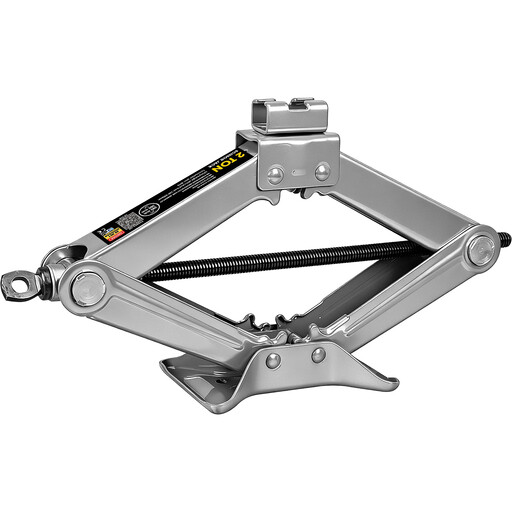
Why this choice suits this profile : This foldable scissor jack is designed for occasional wheel changes, roadside emergencies and storage in the boot. With a stated folded height of 88 mm, it can be stored easily in the spare-wheel compartment or a side pocket.
Its low, foldable design reduces the risk of buying a device that is too bulky for emergency use. However, check its capacity in the product details and compare it with your vehicle’s weight.
Forged steel construction, widened non-slip base and stated operating range of 88 to 380 mm.
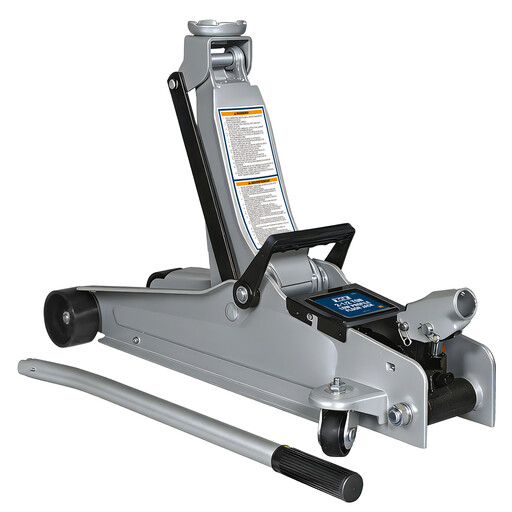
Why this choice suits this profile : Its stated minimum height of 85 mm meets the requirements of some sports cars, lowered saloons and performance vehicles.
The minimum height is clearly stated, helping you avoid ending up with a jack that is too tall. However, the product details specify that the handle fittings shown in the illustrations are not included in this pack : check the contents before ordering.
Stated capacity of 2.5 tonnes, 85 to 380 mm range, steel construction, and stated CE and EN 1494 compliance.
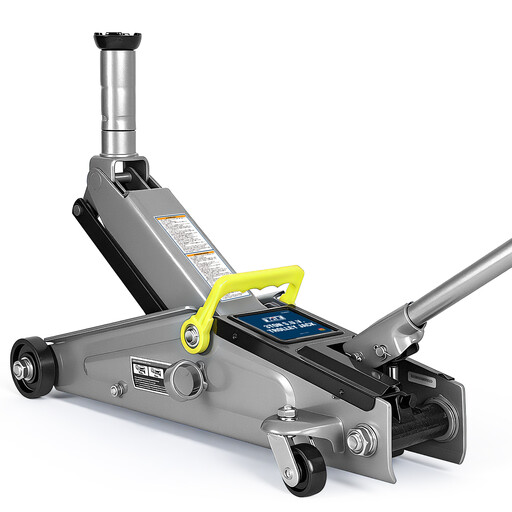
Why this choice suits this profile : With a stated range of 150 to 530 mm, this 3-tonne hydraulic trolley jack is aimed at car, SUV and MPV owners looking for a wide lifting range.
The rated load, lifting dimensions and safety valve are specified in the description. Your choice is therefore not based solely on a marketing promise.
Stated capacity of 3 tonnes, steel construction, adjustable height from 150 to 530 mm and stated CE certification.
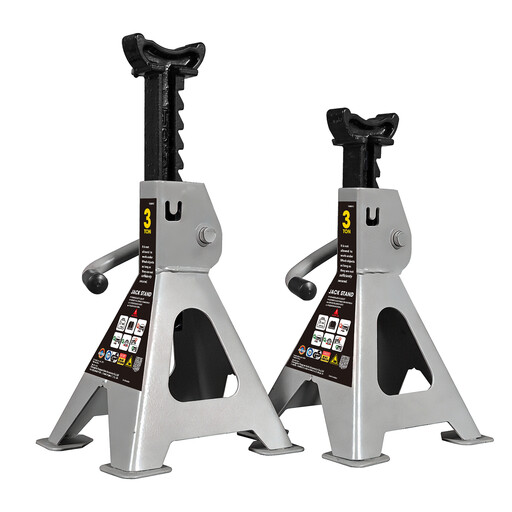
Why this choice suits this profile : This pair of adjustable axle stands is suitable for garages, workshops and private users who regularly work underneath their vehicle.
They complement the jack and prevent the car from being supported solely by the hydraulic system. The locking mechanism must be engaged before carrying out any work.
Adjustment range of 276 to 420 mm, thick steel, welded base, and stated EN 1494 and GS compliance in the product details.
We have selected a comprehensive, real-time updated list of products that meet these demanding selection criteria and European safety standards.
No. The jack is used to lift the vehicle, but it is not a permanent work support. Install a pair of axle stands suitable for the load, check that they are locked and confirm that the entire setup is stable before starting.
Measure the ground clearance at the lifting point. An ultra-low-profile car jack with a minimum height of 85 or 88 mm may suit some models, subject to the shape of the underside of the bodywork and access to the support point. Taking an actual measurement on the vehicle is essential.
A bottle jack is compact and positioned vertically, but its starting height may be considerable. A scissor jack is easy to store and suitable for simple roadside repairs, with a crank handle and gradual lifting action. A hydraulic trolley jack moves on castors and generally allows you to lift the vehicle more quickly, but it takes up more space in the garage or boot. The right choice therefore depends on the vehicle, how often it will be used and the type of work planned.