
Livraison le jour même ou le lendemain

Qualité garantie

Débloquez vos offres de bienvenue: Livraison GRATUITE | Jusqu'à -80 % | 30 jours d'essai gratuits à JoyPlus
Téléchargez l'application
Changing a wheel, inspecting the suspension, or carrying out a repair in your garage requires the right equipment. However, choosing a hydraulic car jack isn't just about looking at the maximum capacity printed on the box. A poorly sized model can be difficult to position, lack stability, or simply not fit under your vehicle.
A 3-tonne car jack isn't necessarily suitable for every car. The stated load refers to the device's maximum capacity. Your choice must also take into account the vehicle's weight, the manufacturer's designated lifting point, and the height needed to lift the wheel clear.
For a saloon car, a 2 to 3-tonne model can work depending on usage. An SUV, van, or 4x4 often requires a greater lifting height. Conversely, a sports car or a lowered vehicle needs a low-profile hydraulic jack that can slide under a very low chassis.
The minimum height is a crucial factor. A trolley jack that is too tall can be useless under a car with low ground clearance. So, check the jack's minimum height and compare it to the distance between the ground and the lifting point.
Models with an entry height of around 85 to 100 mm are better suited to low vehicles. For an SUV, a higher minimum height may be acceptable if the maximum lift range is enough to raise the wheel sufficiently.
A jack is for lifting, not for holding a vehicle on its own during a lengthy job. Once the car is raised, place axle stands on appropriate support points and work on a flat, solid, and clear surface. Apply the handbrake and chock the wheels that remain on the ground.
A safety valve, a non-slip saddle, and a stable base make operation safer, but they never replace essential precautions.
Choose a capacity higher than the weight actually supported by the jack. Don't rely solely on the total weight shown on the V5C logbook: during a partial lift, the load is distributed differently depending on the point used.
Pay close attention to the following two values:
A model offering a range of 135 to 460 mm will suit many cars and some SUVs. For a heavy vehicle, a hydraulic bottle jack with the right capacity can be a compact solution thanks to its vertical design. However, you will need to check its height and contact point carefully.
Steel offers good rigidity for regular garage use. Models combining steel and aluminium are generally lighter to move around. For a trolley jack, check the base width, the quality of the wheels, and the presence of swivel castors.
A rubber saddle helps prevent marks on lifting points, while a long handle makes pumping easier. A jack with a dual pump can speed up the lift when the vehicle's load and geometry allow it.
The CE marking should be accompanied by clear information about the manufacturer, capacity, conditions of use, and instructions. Some models also mention compliance with EN 1494, which covers mobile or movable lifting devices.
This indication does not replace reading the instructions, checking the pictograms and usage limits, or inspecting the product's condition upon receipt. For a workshop purchase, keep the documentation and check that all advertised accessories are present.
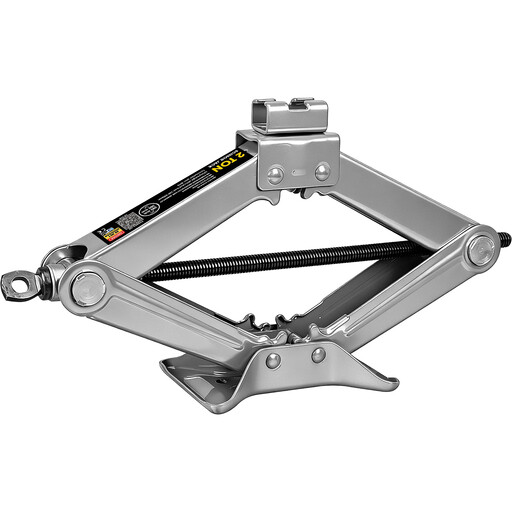
Why this choice suits this profile: This foldable jack stores easily in a boot and is suitable for occasional wheel changes on saloons, city cars, and some urban SUVs.
With a stated folded height of 88 mm, it reduces the risk of incompatibility with low vehicles. Its widened, non-slip base makes positioning easier.
Forged steel construction, foldable design for easy storage, and a stated lifting range of 88 to 380 mm.
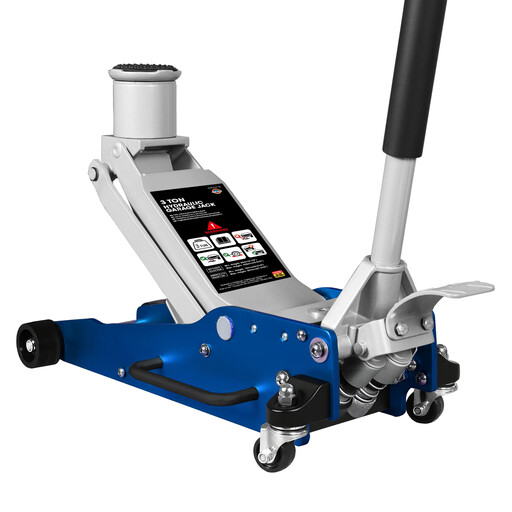
Why this choice suits this profile: It is aimed at motorists looking for a versatile tool for working on low cars, SUVs, MPVs, or light commercial vehicles.
Its stated entry height of 85 mm meets the demands of low chassis. According to the product page, the height extension can be fitted without tools.
Stated capacity of 3 tonnes, dual pump, lift from 85 to 465 mm, and indication of EN 1494 with CE marking.
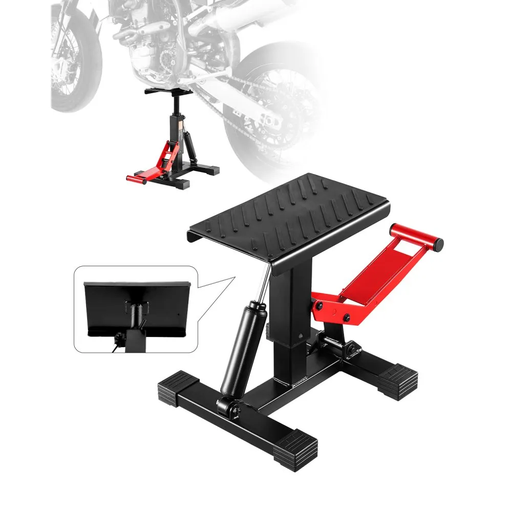
Why this choice suits this profile: This hydraulic motorcycle lift is suitable for a home or professional workshop working on motorcycles and quads.
Its dedicated design avoids using a car jack to support a motorcycle. Its stated capacity is 544 kg.
Stated lifting range of 250 to 465 mm and intended use for motorcycles and all-terrain vehicles.
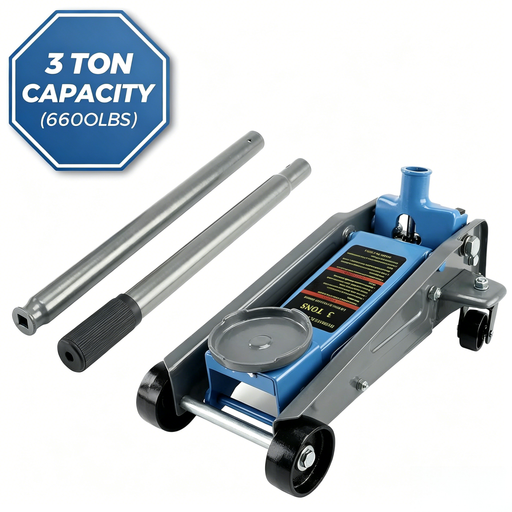
Why this choice suits this profile: Its wheeled design lends itself to regular use in a garage, on compatible cars and SUVs.
Its range of 135 to 460 mm covers several chassis heights. The swivel castors make it easier to position the jack, rather than moving the vehicle.
Stated capacity of 3 tonnes, steel construction, two fixed wheels and two 360° swivel castors.
We have compiled a comprehensive, real-time updated list of products that fully meet these strict selection criteria and European safety regulations.
Before each lift, inspect the wheels, saddle, handle, and welds, then check for any oil leaks. Never exceed the stated capacity and never place any part of your body under a vehicle supported only by the jack.
Store the device away from moisture and follow the instructions for lubrication or possible replacement of the hydraulic oil. An air car jack or a model intended for heavy goods vehicles may require a compressor, fittings, and a suitable operating pressure: check these elements before buying.
For a standard car, a 2 to 3-tonne trolley jack is generally more practical to use than a vertical model, provided its minimum height is compatible with the vehicle. A foldable jack can supplement the emergency kit, but it is often less suitable for longer repairs.
Yes, provided its capacity, maximum height, and lifting point are compatible with the vehicle. For a heavy SUV, also check the stability of the base and the presence of a safety valve. For a particularly heavy vehicle, choose a jack with a capacity specifically designed for that purpose.
Its lifespan depends on the frequency of lifts, the load supported, storage conditions, and maintenance. A leak, uneven lowering, or a damaged saddle should lead you to stop using it immediately. The manufacturer's instructions specify the maintenance operations and replacement conditions.