
Livraison le jour même ou le lendemain

Qualité garantie

Débloquez vos offres de bienvenue: Livraison GRATUITE | Jusqu'à -80 % | 30 jours d'essai gratuits à JoyPlus
Téléchargez l'application
A hydraulic car jack makes changing a wheel, routine maintenance and certain repairs in a garage much easier. However, a capacity stated in tonnes alone isn't enough to make the right choice. Minimum height, maximum height, stability and compatibility with lifting points matter just as much.
A 3-tonne hydraulic jack isn't designed to lift 3 tonnes every single time you use it. The load must remain compatible with the vehicle's total weight, the mass distribution and the lifting point being used. For a standard car, a 2.5 or 3-tonne model can be suitable, whereas a heavy SUV, a van or a commercial vehicle may require more margin.
Consult your vehicle's manual and check the maximum load permitted by the jack manufacturer. Never get underneath a car supported only by a hydraulic jack: always use appropriate axle stands.
A hydraulic trolley jack that's too tall may not fit under a low or sports car. Conversely, a model designed for a low entry height may lack the travel needed for an SUV or a van.
The minimum height must be compared with the vehicle's actual ground clearance, especially when the tyre is flat. An extra-low-profile hydraulic jack with an entry height of 85 mm meets a different requirement than a garage jack offering a minimum height of 135 or 150 mm.
These terms don't replace a proper specification sheet. Instead, examine the construction, the lifting range, the type of wheels, the presence of a safety valve and the intended use conditions. A steel build can suit heavy-duty use, while an aluminium chassis often prioritises weight reduction.
The EN 1494 certification indicates that the product complies with a European standard applicable to mobile or movable lifting equipment. The CE marking must be present where regulations require it, but it doesn't exempt you from checking the load capacity, dimensions and usage instructions.
Always compare the two values:
For example, a model rated from 85 to 465 mm suits different situations than a unit limited to 150–530 mm. Adding an extension can increase the available height, but you must check its fixing and the intended use.
A hydraulic trolley jack moves more easily on a hard, level surface thanks to its wheels. Swivel castors make manoeuvring easier, but they don't compensate for an uneven floor or poor positioning under the vehicle. For a narrow garage, measure the space needed around the car as well as the room available for storing the equipment.
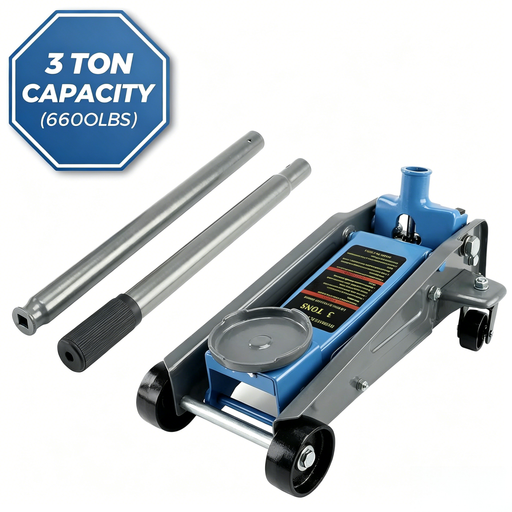
Why this choice suits this profile: Its lifting range of 135 to 460 mm and its stated 3-tonne capacity cover many needs for changing a wheel or carrying out routine maintenance in a private garage.
The lifting dimensions are clearly stated, unlike offers that only highlight the tonne capacity.
Steel construction, two main wheels and two 360° swivel castors.
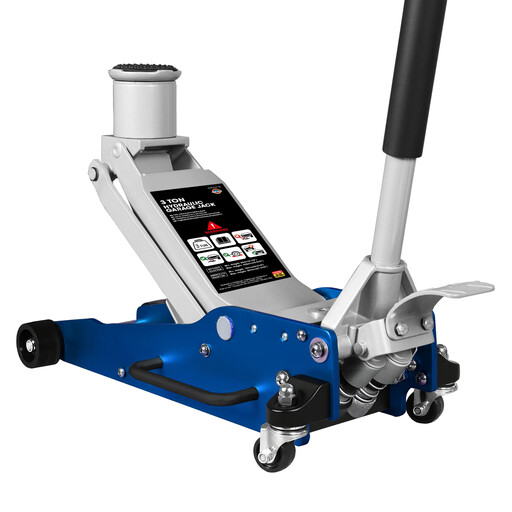
Why this choice suits this profile: Its 85 mm entry height targets low cars, while the extension extends the stated range up to 541 mm.
The dual height range limits the risk of choosing a jack that's too low or too short for different vehicles.
Stated 3-tonne capacity, aluminium alloy body and indicated compliance with EN 1494 and CE standards.
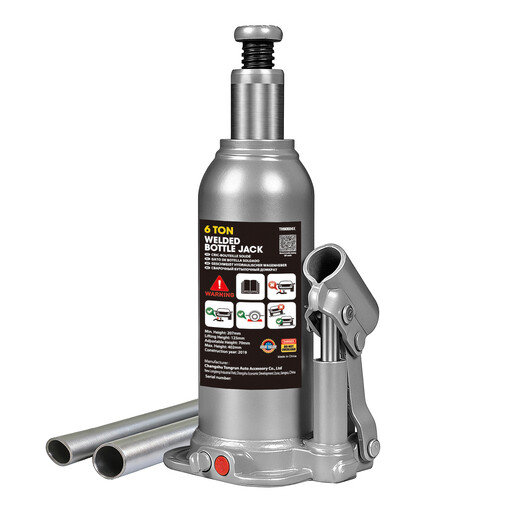
Why this choice suits this profile: This hydraulic bottle jack targets SUVs, light commercial vehicles and vans requiring a stated 6-tonne capacity.
Its range of 207 to 402 mm and its adjustment screw allow you to precisely check compatibility with the lifting point.
Forged steel base, chrome-plated piston and overload safety valve.
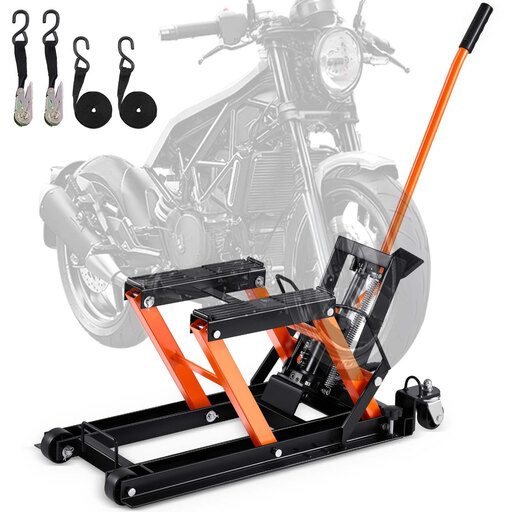
Why this choice suits this profile: Its dedicated platform and range of 120 to 385 mm are suited to motorcycle maintenance in a personal or professional workshop.
The non-slip platform reduces the risk of slipping, but the motorcycle must always be correctly positioned and secured.
Stated 700 kg capacity, two 360° swivel castors and lever or pedal control.
We've put together a comprehensive, real-time updated list of products that fully meet these strict selection criteria and European safety regulations.
Start by checking the total weight stated by the manufacturer, then verify the jack's load rating and the lifting point. A 3-tonne capacity can suit many passenger vehicles, but a heavy SUV or van may require a 6-tonne model. Capacity should never be considered in isolation.
Yes, provided its minimum height fits under the vehicle and its maximum height allows the wheel to clear the ground. Park the car on a level surface, apply the handbrake, engage a gear or activate the mode specified by the manufacturer, then use axle stands before any prolonged work.
An electric hydraulic jack uses a motor powered by a battery or the vehicle's power socket, which reduces the pumping effort. A manual model is generally simpler to store and use, without relying on a power source. In both cases, the load capacity, dimensions and safety features remain the priority.