
Livraison le jour même ou le lendemain

Qualité garantie

Débloquez vos offres de bienvenue: Livraison GRATUITE | Jusqu'à -80 % | 30 jours d'essai gratuits à JoyPlus
Téléchargez l'application
Changing a wheel at the roadside or working on your car in the garage isn’t something to improvise. The wrong car jack might not lift high enough, could slip on uneven ground or may not line up with your vehicle’s jacking points. Before choosing between a hydraulic jack, a trolley jack or an electric model, make sure you avoid these three common mistakes.
The first is confusing your car’s total weight with the load the jack actually has to support. When you lift one side of a vehicle, the load isn’t distributed in the same way as when all four wheels are on the ground. You must still follow the jack’s capacity limits and the vehicle manufacturer’s recommendations.
The second thing to check is the lifting range. A car jack may have a generous capacity but be impossible to fit under a low-slung saloon, or may not lift high enough for an SUV. Finally, a handle, wheels or a hydraulic system alone won’t guarantee stability. The ground surface, the lifting saddle and compatibility with the manufacturer’s recommended jacking points are just as important.
For a city car or saloon, a 2-tonne jack is generally sufficient for routine jobs, subject to the manufacturer’s recommendations. A 3-tonne jack offers more capacity for an SUV, MPV or light commercial vehicle. 5-tonne jacks are generally intended for heavier vehicles and specific uses, such as with motorhomes or in a workshop.
However, you should interpret the stated capacity with care. It applies when the jack is used in the conditions specified by the manufacturer. It’s not permission to lift any load. If you have a heavy vehicle, check the minimum height and the width of the saddle too.
Measure the distance between the ground and the recommended jacking point, with the vehicle stationary and the tyres inflated to the correct pressure. A folding scissor jack is handy to keep in the boot thanks to its compact size and low minimum height. In a garage, a hydraulic trolley jack generally provides a smoother lift and is easier to position.
As a guide, some models have the following lifting ranges:
These figures don’t replace checking your vehicle’s handbook. A high maximum lifting height doesn’t mean the jack will suit every chassis.
Choose a jack with a sufficiently wide base, a suitable saddle and a controlled lowering mechanism. Some product listings state compliance with EN 1494 and CE marking. Before you buy, take the time to check the documents supplied and the product traceability information.
A jack is designed to lift a vehicle, not to support it on its own during extended work. If you need to work underneath the car, position vehicle axle stands at the designated support points. The ground should be hard, level and clear. Apply the handbrake and engage a gear — or select the appropriate setting if the car has an automatic gearbox.
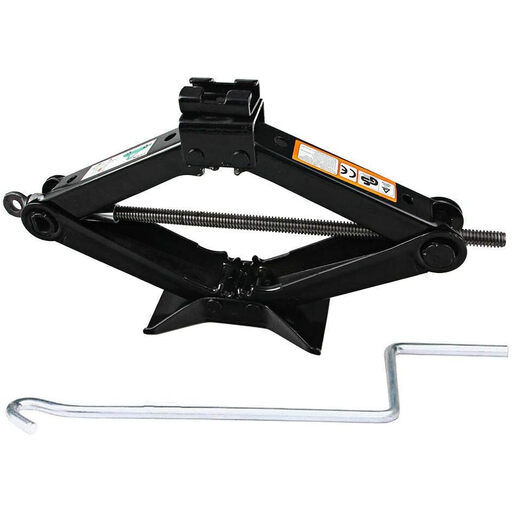
Why it suits this type of user: Compact and listed at 2.1 kg, it’s easy to store in the boot and suitable for the occasional wheel change.
With a folded height of 11.5 cm and a capacity of 2 tonnes, it reduces the risk of choosing a model that’s too bulky or underpowered for a typical car.
2-tonne capacity, maximum height of 39 cm and supplied chrome-plated handle.
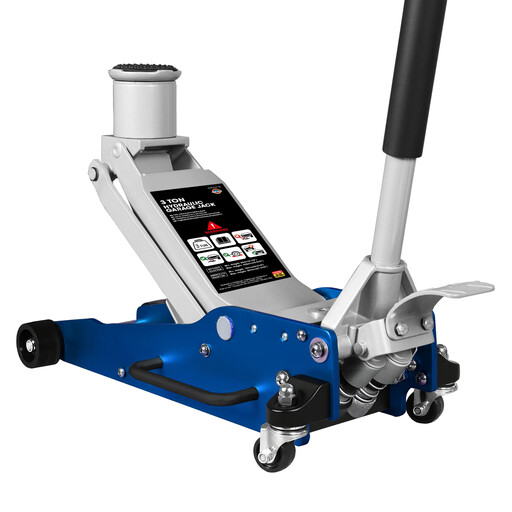
Why it suits this type of user: Its aluminium frame, dual-pump system and lifting range make it suitable for both low-slung cars and SUVs.
Its minimum height of 85 mm reduces the risk of it being incompatible with a car with low ground clearance, while the extension increases its lifting range.
3-tonne capacity, lifts from 85 to 465 mm, with dual lifting mode listed in the product details.
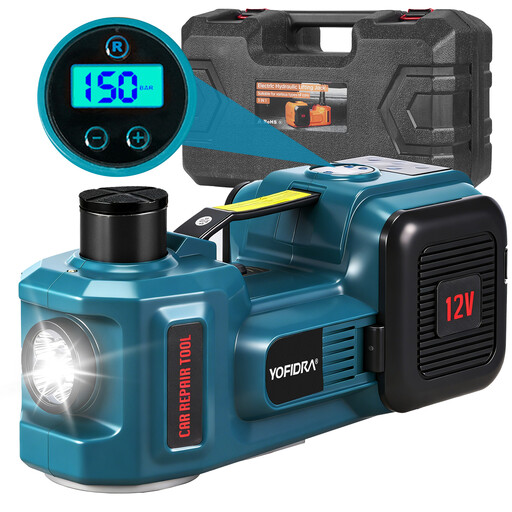
Why it suits this type of user: Powered by a 12 V supply and supplied in a case with accessories, it’s designed for roadside emergencies and vehicles requiring a higher capacity.
Its stated range of 150 to 450 mm and automatic locking meet the need for lifting height and control, but don’t replace essential precautions on stable ground.
Stated capacity of 5 tonnes, digital display, air pump and integrated LED light.
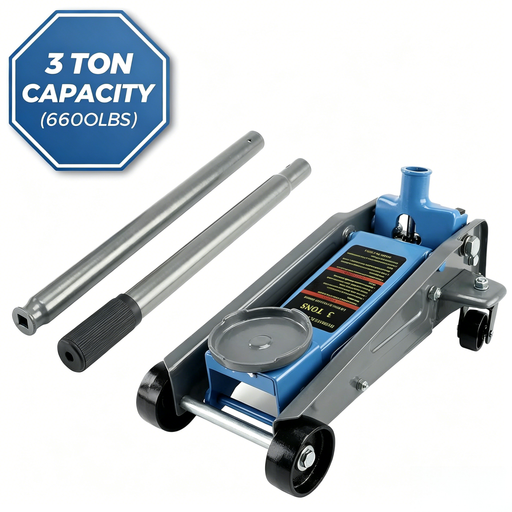
Why it suits this type of user: With a lifting range of 135 to 460 mm and wheels for easy positioning, it’s well suited to repeated use in a garage or workshop.
The lifting dimensions are clearly stated, so you don’t have to choose a model based on its maximum capacity alone.
3-tonne capacity, fixed and swivel wheels, and a steel frame as listed in the product details.
We’ve selected a comprehensive, up-to-date range of products that meet these exacting criteria and European safety requirements.
For garage work, make sure you have vehicle axle stands suited to the load and lifting height. A car dolly with swivel castors can make it easier to reorganise a workshop, but it can never replace equipment designed to support a vehicle beneath the chassis. For a caravan or motorhome, look instead for a set of stabiliser legs or a bottle jack with a capacity and height that genuinely match the vehicle’s weight.
Before each use, inspect the welds, wheels, screw and hydraulic system. If you spot a leak, a deformed base or a damaged handle, stop using the jack immediately.
A 2- to 3-tonne model may be suitable, depending on the SUV’s weight and the manufacturer’s recommendations. Pay particular attention to the minimum and maximum heights, and check the exact location of the jacking points. For a raised SUV, a trolley jack with a sufficient lifting range will generally be more practical than a small scissor jack.
No. A jack is designed to lift the vehicle, but must never be its only support when you’re working underneath the bodywork. Use axle stands positioned at solid, designated support points, on a level, firm surface.
Store the electric jack in a dry place and check its cable and fuses regularly. For a 12 V model, also check the socket, clamps and the condition of the vehicle’s battery. The motor makes lifting easier, but you still need to respect the stated capacity and follow stability precautions.