
Livraison le jour même ou le lendemain

Qualité garantie

Débloquez vos offres de bienvenue: Livraison GRATUITE | Jusqu'à -80 % | 30 jours d'essai gratuits à JoyPlus
Téléchargez l'application
A hydraulic car jack can make changing a wheel or carrying out maintenance much easier — provided it is suitable for your vehicle’s weight and height. Problems often arise from overlooked details: a stated capacity with no safety margin, a minimum height that is incompatible with a low-slung car, or confusion between lifting and safe support.
This selection guide from Joybuy helps you compare the features that really matter, whether you drive a saloon, SUV, van or heavy vehicle.
The maximum capacity does not mean that the jack must lift the entire weight of the vehicle on its own in every situation. The jacking point generally supports only part of the vehicle’s weight, but you must also take the vehicle, its accessories and the conditions of use into account. A 3-tonne hydraulic jack is suitable for many passenger cars, but its capacity must never be exceeded.
For a heavy SUV, pick-up or van, check the weight shown on the vehicle registration document or in the vehicle documentation, then choose a capacity that matches the intended use. For lorries, buses and industrial equipment, a heavy-duty hydraulic bottle jack may be more suitable.
A model marketed as versatile may prove unusable if its minimum height exceeds that of the jacking point. This is particularly common with sports cars and some saloons fitted with lowered suspension. In this case, an extra-low-profile jack with an entry height of around 85 mm will generally be more suitable.
Conversely, a van or SUV requires enough lift range to raise the wheel clear of the ground. Compare the jack’s minimum height with the ground clearance at the jacking point, then make sure its maximum height will actually lift the wheel.
A jack is designed to lift a vehicle, not to support it on its own during a prolonged repair. Once the vehicle has been raised, fit suitable axle stands at the support points specified by the manufacturer. Work on a flat, stable and clear surface, apply the handbrake and chock the wheels that remain on the ground.
The hydraulic trolley jack is particularly practical in a garage thanks to its castors and horizontal movement. It is especially suitable for changing wheels and carrying out routine work on cars, SUVs and MPVs. Positioned vertically, the hydraulic bottle jack takes up less space and often offers a higher capacity. However, it requires precise positioning and a perfectly stable surface.
For everyday use:
The lifting height does not replace the capacity. These two values must be checked separately.
A durable steel jack can be perfectly suitable for a workshop or regular use, thanks to a structure designed to support substantial loads. Aluminium reduces the overall weight and makes transport easier. Some models combine aluminium and steel to retain a good level of strength.
An aluminium double-pump jack can speed up lifting during the initial stages. This design improves ease of use, but you must still check its stability, saddle diameter and compatibility with the vehicle’s jacking points.
For models intended for the European market, look for clear documentation and information relating to EN 1494. Some products in this selection are described as CE- and EN 1494-certified. The CE marking must correspond to the product and its documentation; it does not replace checking the capacity or reading the instructions and usage limits.
Also check whether the jack has a safety valve, non-slip saddle, operating handle and controlled lowering system. These details should be included in the product listing. Under no circumstances do they authorise you to work beneath a vehicle supported solely by the jack.
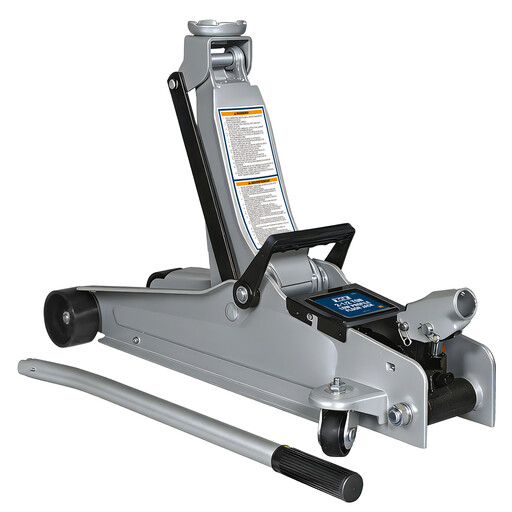
Why this model suits this profile : Its 85 mm entry height is suitable for low-slung cars, while its 2.5-tonne capacity covers many roadside assistance and wheel-changing needs.
The minimum height is clearly stated, reducing the risk of buying a model that is too tall for a sports car or lowered saloon.
Steel construction, 85 to 380 mm lifting range and CE and EN 1494 certification stated in the product listing.
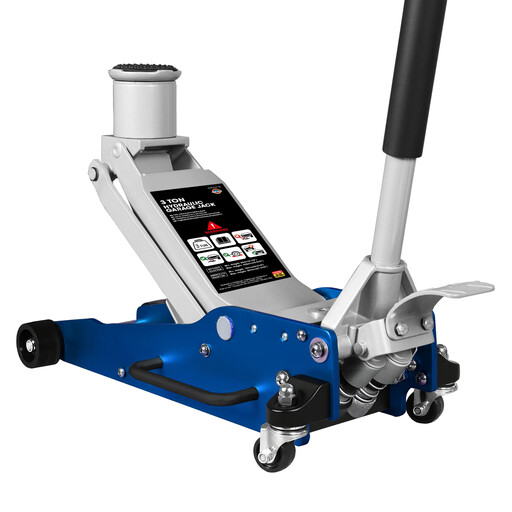
Why this model suits this profile : It combines an aluminium-alloy chassis, a 3-tonne capacity and a double pump for motorists looking for both portability and comprehensive equipment.
The 85–465 mm range is specified, with an advertised extension up to 541 mm: you can therefore compare these measurements with those of your vehicle before buying.
Dual lifting mode, double pump, 85 mm entry height and CE and EN 1494 certification stated in the description.
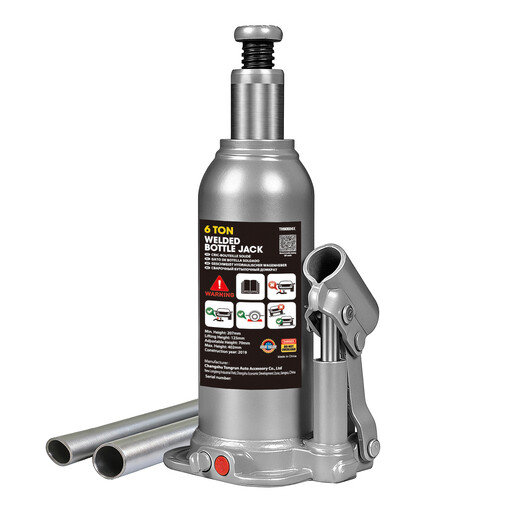
Why this model suits this profile : Its bottle design is intended for lifting SUVs, pick-ups and light commercial vehicles where lateral space is limited.
The 6-tonne capacity and 207 to 402 mm lift range are clearly stated: you can compare these figures with your vehicle’s specifications instead of relying on a general claim.
Forged steel base, chrome-plated piston rod, non-slip saddle and adjustable safety valve, according to the product listing.
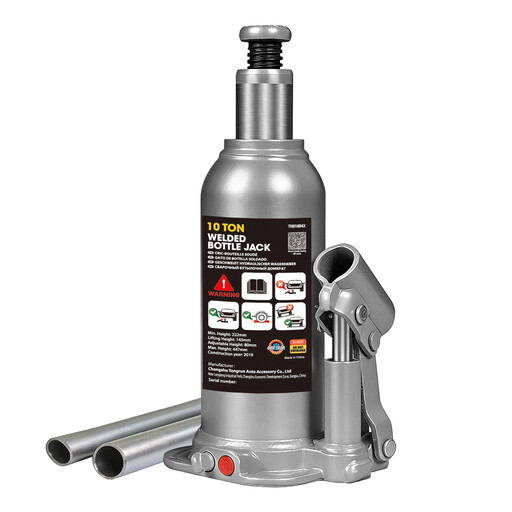
Why this model suits this profile : Its 10-tonne capacity makes it suitable for heavy lorries, buses, construction machinery and industrial equipment with a compatible jacking point.
Its capacity and 222 to 448 mm range are clearly stated: it cannot be mistaken for a small car jack intended for lighter loads.
Forged steel base, chrome-plated piston, treated non-slip saddle and overload safety valve, according to the description.
We have put together a complete, real-time updated selection of products that meet these strict criteria and European safety requirements.
Before each use, inspect the jack: an oil leak, damaged castor, bent handle or worn saddle should prompt you to stop the operation. Position the saddle beneath the jacking point specified by the manufacturer, without resting it against a fragile bodywork component.
With a jack for SUVs and vans, check that the base width and maximum height remain compatible with the available ground conditions and garage space. Raise the vehicle gradually, with nobody inside, then fit axle stands before carrying out any work that requires you to go underneath the car.
After use, lower the piston fully, wipe the exposed parts and store the equipment away from moisture. Its service life depends on how frequently it is used for lifting, the load it supports, storage conditions and compliance with the instructions. A leak or uneven lowering warrants a thorough inspection and possibly replacement of the jack.
For a passenger car, a 2.5 to 3-tonne model may be suitable if its height and support points match the vehicle. For a heavier SUV or pick-up, compare the vehicle’s weight with the jack’s capacity and the margin recommended in the manual. A 6-tonne jack may be suitable for certain applications, but a higher capacity does not automatically make positioning safer.
Yes, for a one-off breakdown, provided the vehicle is immobilised on a stable surface and traffic conditions allow you to work safely. On an inclined or loose road surface, or one exposed to traffic, move to a safe location as soon as possible. The jack must always rest on a sufficiently level and solid base.
A visual inspection before every use is essential. Keep the joints and castors clean, protect the equipment from corrosion and follow the manual when checking or replacing the hydraulic fluid. Never use oil that is not recommended, and do not dismantle a safety valve unless you have the necessary expertise.