
Livraison le jour même ou le lendemain

Qualité garantie

Débloquez vos offres de bienvenue: Livraison GRATUITE | Jusqu'à -80 % | 30 jours d'essai gratuits à JoyPlus
Téléchargez l'application
A hydraulic car jack may seem straightforward to choose… until it will not fit under the sill, reaches its load limit or lacks stability. Whether you are changing a wheel at home or carrying out work in a workshop, a few checks can help you avoid buying the wrong equipment.
The stated load refers to the jack’s maximum lifting capacity, not the weight it must always support at a single point. You need to consider the vehicle’s total weight, how its weight is distributed and the lifting point specified by the manufacturer.
A 2.5-tonne model may be suitable for many saloons, city cars, SUVs and MPVs, depending on the vehicle’s specifications. For a van, pick-up or heavier model, a 6-tonne hydraulic jack provides a more comfortable safety margin. The vehicle’s handbook remains the best reference for locating the lifting points.
A standard jack may be unusable under a sports car or lowered model. Conversely, a device capable of lifting very high must also remain stable once the vehicle has been raised.
For a low-slung car, check its minimum height. The TCE 2.5-tonne ultra-low-profile trolley jack featured below starts at 85 mm and rises to 380 mm, according to its product details. This range may suit different vehicles, provided you compare it with the actual ground clearance and the location of the lifting point.
A jack is designed to lift a vehicle, not to keep it raised for an extended period. For repairs or maintenance, use stands suitable for the load, positioned on solid lifting points, and work on a flat, sturdy surface. For a simple wheel change, apply the handbrake, chock the remaining wheels and follow the manufacturer’s instructions.
Rated capacity is generally expressed in tonnes. Here are some useful guidelines, which should be adjusted according to the vehicle’s kerb weight and load:
The term 5-tonne pneumatic jack refers to a different technology that operates using compressed air. This type of model may be suitable for a garage equipped with a compressor, but you must check the required pressure, connector compatibility and operating conditions. For home use, hydraulic models are generally easier to operate.
The minimum height determines whether the jack can fit underneath the vehicle. The maximum height must allow you to lift the wheel clear or reach the area requiring work without putting the device in an unstable position.
Always compare the jack’s dimensions with:
A steel construction, sufficiently wide base and non-slip saddle all contribute to stability, but they do not replace correct positioning. The EN 1494 designation refers to a European standard applicable to certain mobile or movable lifting devices. Check the model’s product details for precise information about the tests carried out, stated capacity and operating limitations.
Also beware of accessories shown in the images but not included in the parcel. For the 2.5-tonne TCE model, the product details specify that the handle components shown are non-standard parts for this batch and are not supplied with the product.
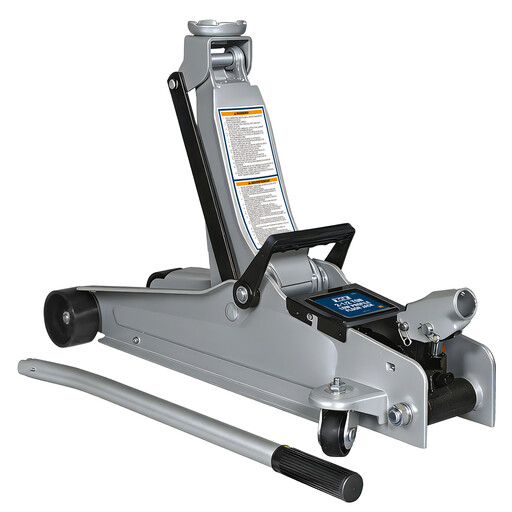
Why this could be right for you : With an entry height of 85 mm, this model can fit more easily under certain low-slung cars. Its 2.5-tonne capacity may suit a saloon, SUV or MPV, subject to checking the vehicle’s specifications.
The lifting range is clearly stated, allowing you to compare it with the ground clearance before buying. The product details also specify which components are not included with this batch.
Stated lifting height of 85 to 380 mm, steel construction and EN 1494 and CE markings in the description.
Why this could be right for you : This trolley jack makes it easier to move around the vehicle and benefits from a low access height. These are two valuable qualities in a home garage or when regularly servicing several cars.
It does more than simply state the load capacity: its two key measurements, minimum height and maximum height, are clearly specified.
Stated capacity of 2.5 tonnes, lifting range of 85 to 380 mm and horizontal steel construction.
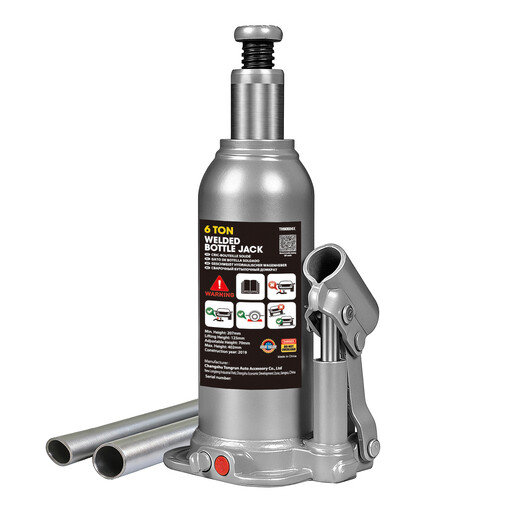
Why this could be right for you : This hydraulic bottle jack is aimed at owners of SUVs, pick-ups, vans and commercial vehicles looking for a high capacity, whether for workshop use or occasional jobs.
Its 6-tonne capacity and lifting range of 207 to 402 mm are specified in the product details. This makes it easier to check compatibility with a tall or heavy vehicle.
Forged steel base, chrome-plated piston rod, non-slip saddle and overload safety valve, according to the description.
We have brought together a complete, real-time updated selection of products that meet these demanding criteria and European safety regulations.
Before positioning the wheel-changing jack, check the condition of the ground and remove anything that could obstruct movement. Position the saddle on the point specified by the manufacturer, then raise the vehicle gradually while checking its alignment.
To minimise wear and risks:
A professional garage jack should also be chosen according to how often it will be used, available storage space, the weight of the device and how easy it is to manoeuvre. For a breakdown vehicle or roadside work, the format, durability and ease of transport matter just as much as lifting capacity.
Start by checking the vehicle’s weight and the manufacturer’s instructions. A lightweight SUV may be fine with a 2.5-tonne model, while a pick-up or van may require a more powerful SUV and van jack. The load supported by a single lifting point does not automatically correspond to the vehicle’s total weight.
Its service life depends on the load supported, frequency of use, storage conditions and maintenance. A leak, uneven lowering or loss of pressure should prompt you to stop using the device immediately and have it checked. Before buying, also consider wear parts and the availability of information supplied by the manufacturer.
Yes, provided that its minimum height, capacity and contact point are compatible with the vehicle. A hydraulic bottle jack is generally compact and well suited to taller vehicles, but it is not operated in the same way as a trolley jack. For a low-slung car, check its entry height as a priority.