
Same-day & Next-day Delivery

Quality Guaranteed

Unlock Your Welcome Offers: FREE Delivery | Up to 80% OFF | Free 30-day JoyPlus trial
Download the APP
Changing a wheel, carrying out an oil change or working underneath a vehicle requires a hydraulic jack suited to its weight and ground clearance. However, product specifications are not always easy to interpret. A high lifting capacity is not enough: the jack must also be able to slide under a low-profile car and reach a sufficient height for a van.
Here are the main pitfalls to avoid before choosing a hydraulic trolley jack, bottle jack or model designed for a motorcycle and quad bike.
A 1.8 t, 2.5 t or 3 t hydraulic jack indicates its maximum rated capacity. This value must never be exceeded, and it does not mean that the jack can lift any vehicle. The load must be compatible with the lifting point being used and with the vehicle’s position.
For a city car or saloon, a 1.8 t model may be sufficient, depending on the car’s weight. For an SUV, MPV or van, a 2.5 t or 3 t jack generally provides a more comfortable safety margin, provided you follow the manufacturer’s recommendations.
A conventional jack may be impossible to slide under a sports car, lowered vehicle or car with very little clearance beneath the sill. An ultra-low-profile jack, with a minimum height of 85 mm like certain TCE models, is better suited to this type of vehicle.
Conversely, a high-clearance vehicle requires a sufficient maximum height. Before buying, always compare both figures: the minimum access height and the maximum lifting height.
A jack is designed to lift a vehicle, not to support it on its own during prolonged work. For any operation underneath the body, use suitable axle stands and position them on the support points specified by the manufacturer. The ground must be flat, hard and stable. Gravel, slopes and loose surfaces should be avoided.
The jack’s capacity must match both the vehicle and the intended operation. A 1.8 t hydraulic jack is generally suitable for passenger cars compatible with this load. A 2.5 t hydraulic jack may be suitable for heavier saloons, SUVs and MPVs. A 3 t hydraulic jack is better suited to larger vehicles, provided its size remains compatible with your working area.
For high-clearance vehicles and light commercial vans, a 6 t bottle jack offers substantial capacity. The TCE model featured below provides a lifting range of 207 to 402 mm. However, its vertical design is not particularly suitable for very low cars.
The lifting range is defined by a minimum and maximum height. The MICHELIN jack, for example, specifies a range of 105 to 350 mm. The TCE 2.5 t ultra-low-profile model covers 85 to 380 mm, while the aluminium TCE 3 t reaches 85 to 465 mm—or 161 to 541 mm with its extension attachment.
Check the height of your car’s lifting point in the owner’s manual or measure it before ordering. For a simple wheel change, also make sure the jack has enough travel to lift the tyre clear of the ground.
Prioritise a stable base, wheels suitable for repositioning the jack and a saddle compatible with your vehicle’s lifting point. A safety valve or overload valve helps reduce the risks associated with excessive loads, but it does not replace proper operating procedures.
The CE marking indicates a declaration of conformity with applicable European requirements. The EN 1494 standard covers jacks and mobile or movable equipment designed for lifting vehicles. Before ordering a jack advertised as CE EN 1494 certified, consult its product page and the accompanying documents to confirm that this claim applies specifically to the model you have chosen.
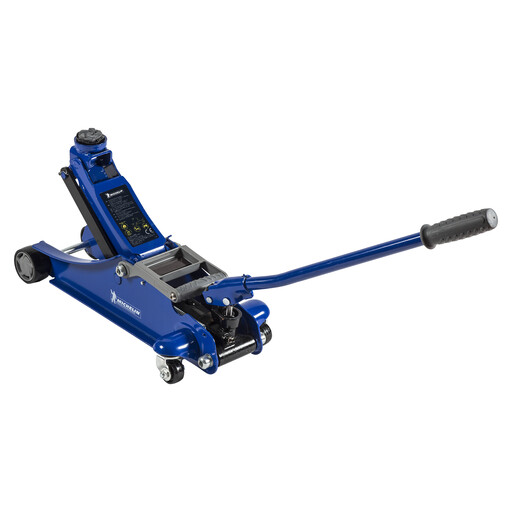
Why this model suits this profile: Its 1,800 kg capacity and 105–350 mm lifting range are suitable for routine work on many passenger cars.
With a minimum height of 105 mm, it makes it possible to check compatibility with a standard car in practical terms, rather than relying solely on the stated capacity.
Swivel castors, a 360° rotating handle, rubber saddle and magnetic storage for nuts and small parts.
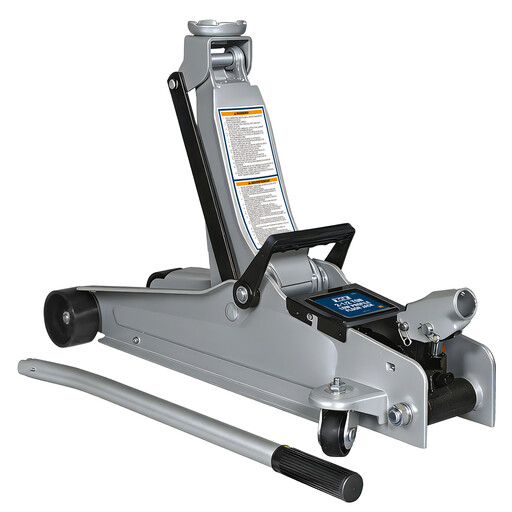
Why this model suits this profile: Its stated 85 mm entry height is designed for low-profile cars, while its 2.5 t capacity may also suit compatible SUVs and MPVs.
The stated minimum height lets you compare the jack with the vehicle’s actual ground clearance before buying.
85–380 mm lifting range, steel construction and CE and EN 1494 compliance information listed on the product page.
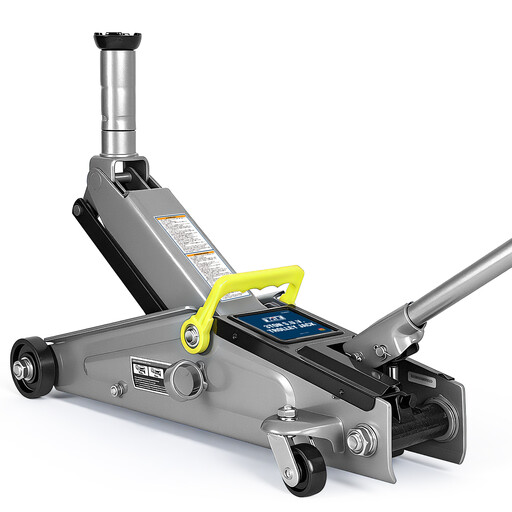
Why this model suits this profile: This hydraulic trolley jack offers a 3 t capacity and an adjustable height of 150–530 mm for working on cars, SUVs and MPVs.
The lifting range is clearly specified, and the description mentions a safety valve to protect against overloading.
Steel construction, a stated 3,000 kg capacity and safety valve, with CE marking indicated.
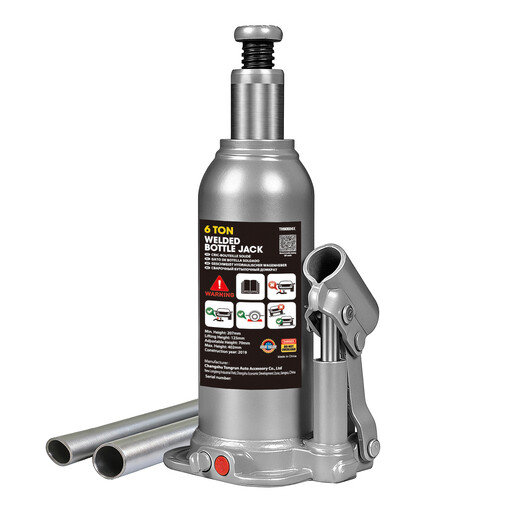
Why this model suits this profile: Its vertical design and 6,000 kg rated capacity make it suitable for SUVs, pick-ups and light commercial vehicles.
Its 207 mm minimum height is a reminder that a bottle jack is not suitable for every low-profile car.
207–402 mm lifting range, forged steel base, chrome-plated piston and adjustable overflow valve as specified.
For a motorcycle and quad bike jack, choose a model suited to the geometry and weight of these vehicles. The VEVOR model featured offers a stated capacity of 544 kg and a lifting range of 250–465 mm. Check the weight of your motorcycle or quad bike before use.
We have brought together an updated selection of products that meet these criteria and the compliance information provided by the manufacturers.
Start by checking the vehicle’s weight, then compare it with the jack’s rated capacity. A 1.8 t model may be suitable for some passenger cars, while a 2.5 t or 3 t jack is better suited to heavier vehicles. The maximum capacity must never be exceeded.
No. A jack is designed for occasional lifting. To support the vehicle during an operation, use suitable axle stands and follow the support points specified by the manufacturer. Never work underneath a car supported solely by a jack.
Store it in a dry place, never exceed its stated capacity and use it on stable ground. Regularly inspect it for leaks, check the condition of the wheels and verify that the valve is functioning correctly. Also follow the manufacturer’s maintenance instructions.