
Livraison le jour même ou le lendemain

Qualité garantie

Débloquez vos offres de bienvenue: Livraison GRATUITE | Jusqu'à -80 % | 30 jours d'essai gratuits à JoyPlus
Téléchargez l'application
Choosing a new frying pan often presents a dilemma: the durability and powerful searing of stainless steel, or the convenience of an easy-to-clean non-stick coating? It's a tough choice for home cooks seeking both performance and practicality. The hybrid pan emerges as the perfect solution, designed to reconcile these two worlds.
With a growing number of models on the market, it can be hard to know where to start. Our guide is here to demystify hybrid pan technology and help you make the right choice—one that truly fits your cooking habits.
To avoid making a mistake, let's review the essential criteria that separate a great hybrid pan from a mere marketing gimmick.
The pan's construction is the foundation of its performance. Multi-ply models, often featuring an aluminium core sandwiched between layers of stainless steel, ensure rapid heating and perfectly even heat distribution. This design prevents the infamous hot spots that burn food and guarantees uniform cooking. For total versatility, check that the model is an induction-compatible pan, which is generally the case thanks to their magnetic stainless steel base.
Hybrid technology combines a stainless steel structure with a non-stick coating. The most common configuration is the honeycomb pan, where the metal is etched to create a hexagonal pattern. The raised stainless steel ridges provide a perfect sear for meats, while the recessed wells, covered with a non-stick coating, prevent delicate foods like eggs or fish from sticking.
For healthier cooking, opt for a PFOA-free pan, also free from PTFE or other controversial substances. A ceramic-titanium coating is an excellent alternative, renowned for its robustness. A scratch-resistant pan will better stand the test of time, although using wooden or silicone utensils is still recommended to preserve the coating.
A good pan must be versatile. An oven-safe pan is a real plus, allowing you to start cooking on the stovetop and finish in the oven—ideal for a duck breast or a frittata. Also, keep an eye on the handle: it should be ergonomic and stay cool on the stovetop for a safe and secure grip.
To help you see more clearly, here is our selection of standout models, each tailored to a specific user profile.
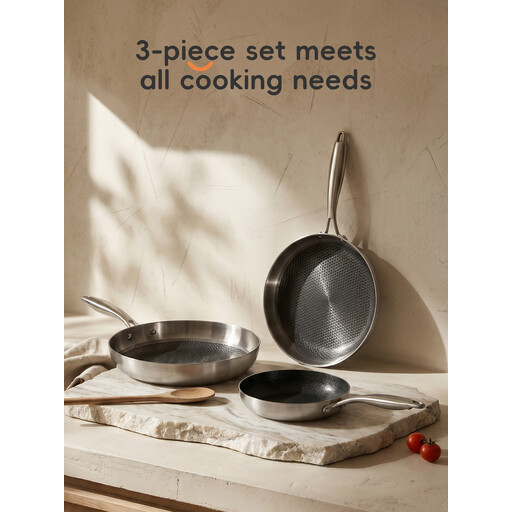
Why it stands out: This set is an excellent starting point for equipping your kitchen. Made from food-grade 304 stainless steel, it's built to last. The multi-layer composite base ensures rapid heating and even heat distribution, which helps reduce smoke and prevent food from sticking.
Advantages:
Who it's for: Perfect as a starter set or for upgrading your cookware with a versatile and durable collection, in this case, without a coating.
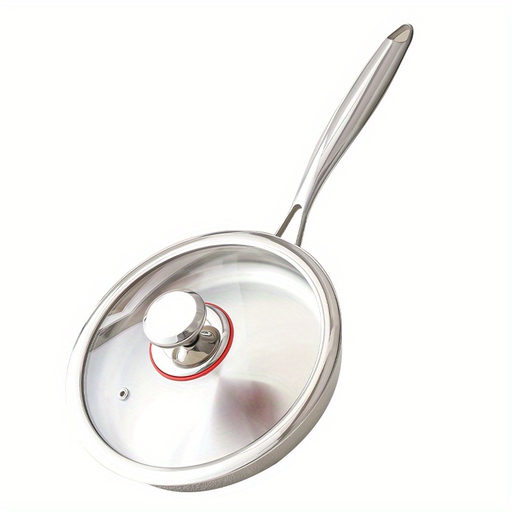
Why it stands out: This model focuses on thermal performance with its tri-ply construction (stainless steel-aluminium-stainless steel). This structure allows for very precise temperature control, which is essential for searing meat to perfection or making delicate sauces. The glass lid with a silicone base is a practical feature for monitoring cooking without losing moisture.
Advantages:
Who it's for: For demanding cooks who seek professional-grade performance, especially for dishes requiring high thermal responsiveness.
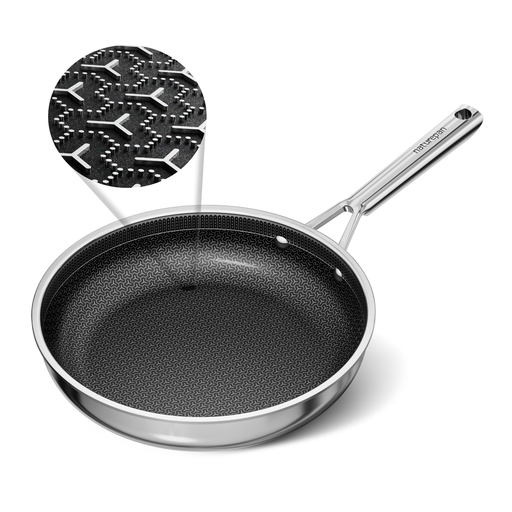
Why it stands out: This pan is the epitome of modern hybrid technology. Its surface combines a raised stainless steel pattern for searing with recessed wells featuring a ceramic-titanium coating for non-stick performance. This honeycomb pan is designed to offer the best of both worlds. Furthermore, it is guaranteed PFOA, PFAS, and PTFE-free.
Advantages:
Who it's for: For the modern cook who is both a tech enthusiast and health-conscious, looking for the Swiss Army knife of pans: a model that can do it all, from searing a ribeye steak to frying an egg, and can transition seamlessly from stovetop to oven.
Having the right tools is great. Having the space to use them is even better! If your countertop is constantly cluttered, there are ways to gain precious square inches.
Take a look at our selection of folding kitchen tables: you'll find clever solutions to optimise your prep space.
Yes, but with an important nuance compared to a 100% non-stick pan. The raised structure allows food to glide over the coating in the recessed areas, while the elevated stainless steel parts ensure direct contact with the heat for perfect caramelisation (the famous Maillard reaction). Adding a little fat or oil is still recommended for optimal results, combining an excellent sear with very limited sticking.
Although most models are dishwasher-safe, hand washing with a non-abrasive sponge and mild detergent is still the best way to preserve the coating long-term. Avoid scouring pads and metal utensils at all costs, as they can damage the non-stick surface.
Absolutely. Almost all modern hybrid pans feature a ferromagnetic stainless steel base, making them perfectly compatible with induction cooktops. As a precaution, always check this information on the product's technical sheet before you buy.