For a bedroom where the air is too dry
If your measurements show that you need one, compare the noise level on the setting you’ll use at night, the stated run time and whether you can monitor humidity until morning.


Once you’ve measured the humidity and confirmed that the air is too dry, choose a humidifier suited to the room and keep a hygrometer handy so you know when to turn it down or switch it off. An ultrasonic model may suit you if size and noise at night are priorities, provided you’re prepared to maintain it in line with the water you use. An evaporative model is worth considering if you’re concerned about mineral deposits, but check whether it needs filters.
If your measurements show that you need one, compare the noise level on the setting you’ll use at night, the stated run time and whether you can monitor humidity until morning.
Mineral deposits, access to the water tank and any filters may matter more to your choice than capacity alone. Check the model’s instructions on which water to use.
Compare the stated room coverage with the room’s actual dimensions and air exchange rate. Then check the result with a hygrometer rather than leaving the appliance running at full power.
The QUALITEL Association generally recommends relative humidity of 40 % to 60 % in the home. Measurements in the room should therefore guide both your choice of appliance and how you use it.
Consider one: for a bedroom, if its size and stated noise level on night mode suit your needs.
Bear in mind: hard water can lead to mineral deposits that need extra attention. Check the instructions on water and maintenance.
Consider one: if you prefer humidification without visible mist and want to look into the issue of white deposits.
Bear in mind: some models use replaceable filters. Check their reference number and availability before choosing.
| What matters to you | What to check | Consumers concerned |
|---|---|---|
| Humidity control | A hygrometer in the room; an adjustable humidistat or the option to reduce the output. | If the appliance runs for a long time, I want to be able to switch it off as soon as the humidity rises, before condensation appears. Around 42 % of consumers prioritise this level of control. |
| Maintenance and limescale | Instructions on water and cleaning; access to the tank and the reference number of any filters. | With hard water, I want to know how to deal with deposits and what maintenance routine I can follow. This is the top priority for around 33 % of consumers. |
| Bedroom and room size | Stated noise level on the setting you’ll use; compare the stated room coverage with the room and its ventilation. | If I’m sleeping in a room where the air is regularly refreshed, I’m looking for an acceptable night-time setting, rather than choosing based on tank size alone. Around 25 % of consumers put this need first. |
Heating, ventilation and everyday activities all affect humidity. Without a hygrometer, it’s difficult to know when to turn down the output or switch off the appliance.
Take measurements before and during use. The QUALITEL Association generally recommends relative humidity of between 40 % and 60 % in the home.
Hard water can leave mineral deposits, particularly on surfaces near the appliance.
Check the model’s instructions to find out which water to use and how to access the parts that need cleaning. Beurer recommends using distilled water when the water is particularly hard.
Depending on the model, managing this may also involve using distilled water, a limescale filter or spending time descaling the appliance.
Replacing filters is part of the maintenance routine. For its Oskar, Karl and Noah evaporative models, Stadler Form recommends changing them every two to three months.
Find the compatible reference number and check how often the filter needs replacing, as well as whether it’s available for the model you’re considering.
Humidifying a room that’s too dry doesn’t mean you can skip airing it or maintaining its ventilation. Excessive humidity also needs attention, especially if you notice condensation or mould.
Adjust the appliance according to your measurements, and look into the conditions in your home if these signs appear. Don’t simply increase or extend humidification every time.
The NanoCloud evaporative range is worth exploring if you’re looking for humidification without visible mist. Features vary by model.
The Classic 160 is an example of an ultrasonic model worth comparing for a smaller room.
The range includes the ultrasonic LB 37, which has manual controls and a night mode.
Oskar is an evaporative humidifier with a humidistat, worth considering if you’d like built-in humidity control.
These models are intended to humidify a room after you’ve confirmed that the air is too dry. Compare their settings and the details for each variant, then monitor humidity with a hygrometer while the appliance is in use.
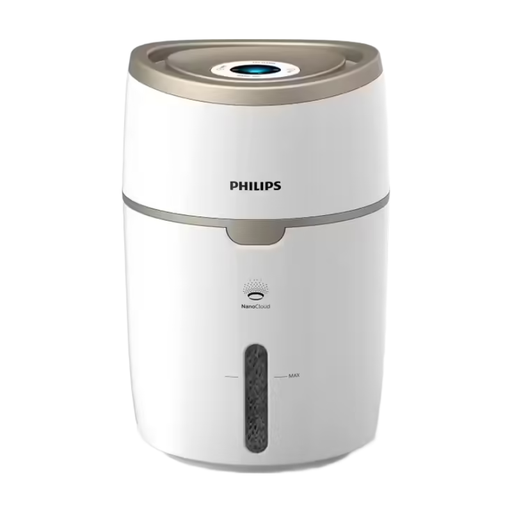 Image unavailable
Worth considering if you’re looking for an evaporative humidifier for a room where the air is too dry.
Monitor humidity in the room, even if the appliance offers adjustable settings. Before buying, check the FY2401/30 filter reference and the replacement instructions.
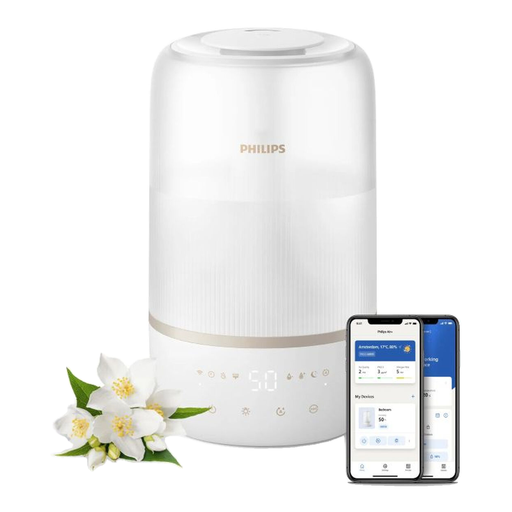 Image unavailable
For a room within the coverage stated for this variant: up to 41 m².
The product name indicates that this is a connected model. For this purpose, keep the target humidity at no more than 60 % and check the reading in the room. Also check whether the FY5133/00 anti-limescale cartridge is available.
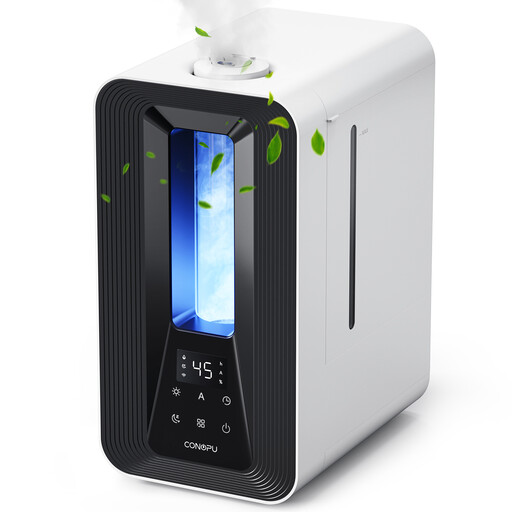 Image unavailable
Worth considering for a bedroom if you want a 5 L tank and a night mode, both of which are mentioned in the product name.
Check the exact instructions for the recommended room size, output, noise level, water and maintenance. Use a hygrometer to check humidity before setting a target level.
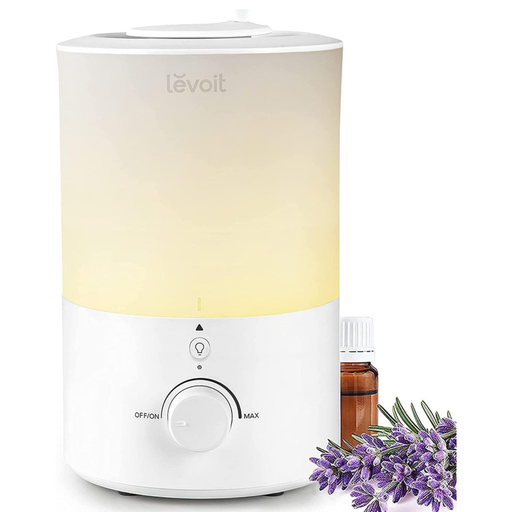 Image unavailable
This ultrasonic cool-mist model may suit a room where measurements show that the air is too dry.
Before buying, compare its recommended room size and output with the dimensions of your room. Use a hygrometer to decide whether to adjust the settings during use.
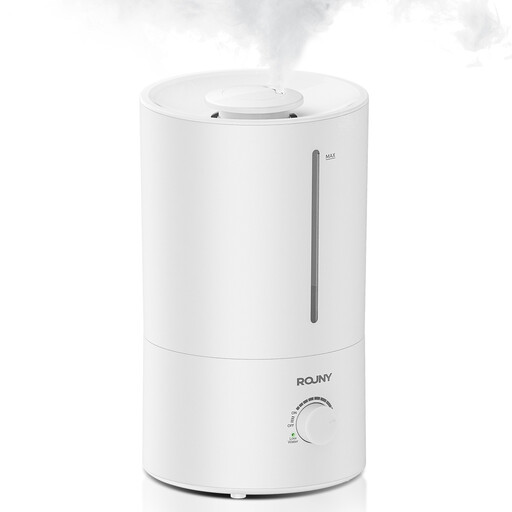 Image unavailable
Worth comparing if you’d like a 4 L tank for a room where measurements have confirmed a need for humidification.
The product name states that it uses 23 W, has a maximum output of 350 ml/h and operates at a stated noise level of 38 dB(A) or less. These figures don’t replace checking the recommended room size. Also check the instructions on water and cleaning.
The QUALITEL Association generally recommends relative humidity of 40 % to 60 % in the home. Measure it with a hygrometer and turn down or switch off the humidifier as the level rises. If you can see condensation, review how you’re using it.
Yes, if your measurements show that humidification is still needed and you can control the level. Choose a suitable setting, maintain the appliance according to its instructions and check the humidity when you wake up, rather than assuming that continuous operation is right for every night.
Follow the instructions for your model, as requirements vary from one appliance to another. Beurer recommends using distilled water when the water is particularly hard to limit deposits. If the appliance uses a filter, also check its reference number and replacement guidance.
Follow the schedule in the instructions for the appliance you’ve bought. Recommendations vary by model: Duux says to replace the water in its Ovi every day, while Dyson advises emptying and rinsing the tank every three days as part of its maintenance guidance.