
Livraison le jour même ou le lendemain

Qualité garantie

Débloquez vos offres de bienvenue: Livraison GRATUITE | Jusqu'à -80 % | 30 jours d'essai gratuits à JoyPlus
Téléchargez l'application
Indoor air that’s too dry can make heating, air conditioning or winter nights far less comfortable. Buying a humidifier might seem straightforward, but some marketing claims can quickly turn a good idea into a device that’s a hassle to use every day.
Before comparing models, here are the most common pitfalls to watch out for:
Measured in ml/h, the mist output gives you a more concrete way to compare devices. A small model meant for a desk will obviously have different needs from a humidifier for a large room.
For a bedroom or office, a stated coverage of 20 to 35 m² can work, depending on the layout, insulation and ventilation of your home. In an open-plan living room, a 5 or 6-litre model with an adjustable nozzle will generally be more practical. However, the coverage figures given by manufacturers are only a guide – they don’t replace measuring the actual humidity level with a hygrometer.
An ultrasonic humidifier typically produces a visible, cool mist. It’s quiet and energy-efficient, but it can leave white mineral dust around the unit if your water is hard. Always follow the manual’s recommendations when using filtered, purified or distilled water.
For a bedroom humidifier, the noise level stated in decibels is a useful indicator, but it doesn’t tell the whole story. Also check for:
The stated values – 16, 20, 25 or 32 dB, for example – are measured under the manufacturer’s test conditions. In practice, how you perceive the noise will vary depending on distance, furniture and how quiet the room is.
A top-fill humidifier can be refilled without having to remove the tank completely. That’s a real advantage when the unit is sitting on a chest of drawers or in a bedroom.
Before you buy, check the width of the opening and make sure the parts that come into contact with water can be easily removed. Regular cleaning helps prevent limescale build-up and unpleasant odours. Get into the habit of emptying any leftover water, rinsing the tank and letting the parts dry out when the device isn’t in use.
In a baby’s room, choose a stable model, place it out of reach and keep it away from the cot, electrical sockets and electronic devices. A baby humidifier should not be marketed as a medical device – it’s simply meant to improve indoor air comfort.
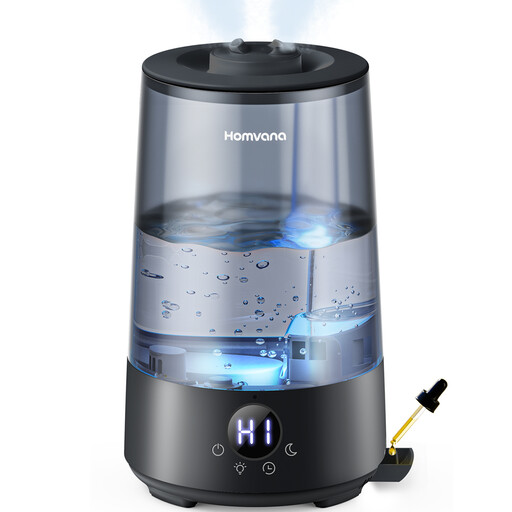
Why this suits this profile: With its 3.6 L tank and stated coverage of 24 to 35 m², it works well in a bedroom, office or small living room. The top-fill design really simplifies everyday use.
The five timer settings, from 2 to 10 hours, prevent the unit from running longer than needed. Essential oils go into the dedicated tray, never into the tank.
Stated noise level of 16 dB, cool mist, aroma tray and multi-colour night light depending on the version.
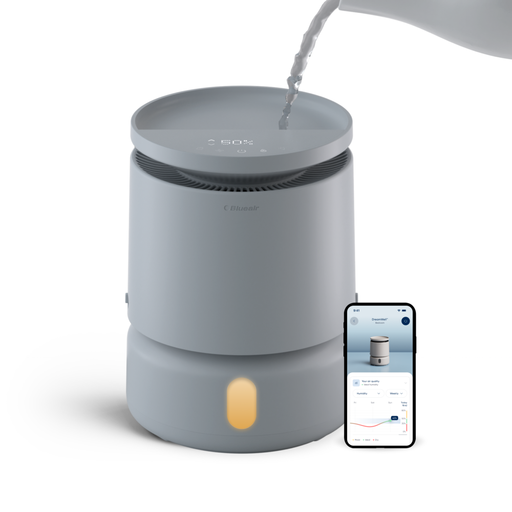
Why this suits this profile: This evaporative model produces no visible mist, making it ideal for those who want to avoid white dust while monitoring humidity levels from an app.
The dishwasher-safe tank and washable wick filter make maintenance easier – something that’s often neglected. Top-fill or bucket-fill options also give you more flexibility.
Stated coverage up to 55 m², stated run time up to 48 hours, stated noise level of 20 dBA and app control.
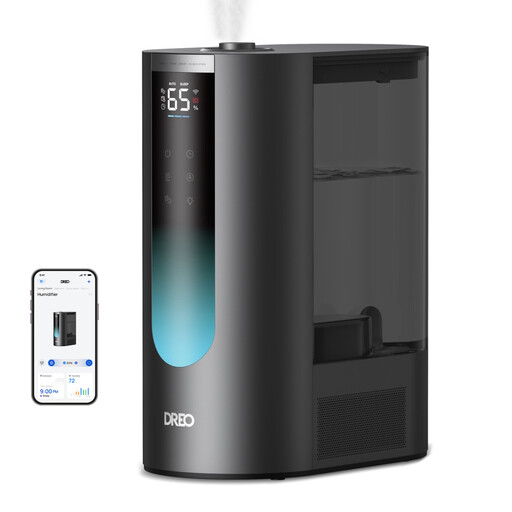
Why this suits this profile: With cool and warm mist modes, a 6 L tank and app control, it’s designed for large rooms and users who want to automate their settings.
The built-in sensor and auto mode mean you don’t have to keep adjusting the settings. Cleaning reminders in the app also help you stay on top of maintenance.
Stated output up to 500 ml/h, humidity adjustment in 5% increments, warm and cool mist, two aroma pads.
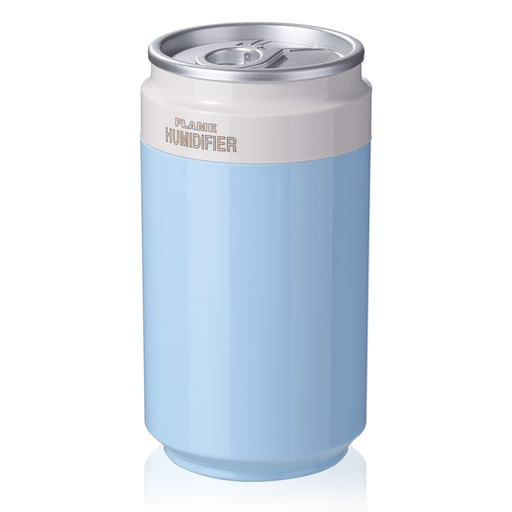
Why this suits this profile: Powered via USB, this 260 ml model fits on a desk, in a car or in a small bedroom without taking up much space.
The two mist modes automatically shut off after 4 or 6 hours, depending on the setting you choose. Its small capacity makes it clear that it’s not a replacement for a full-size humidifier.
USB power, two mist modes, dry-run protection and seven-colour lighting.
We’ve put together a full, real-time updated list of products that meet these demanding criteria and European safety regulations.
A hygrometer lets you track the humidity level more accurately than just going by feel. A moderate setting, typically between 40 and 60%, is a good everyday target. However, always consider the manufacturer’s recommendations and the characteristics of your home. In any case, avoid condensation forming on windows and walls.
It depends on the device’s power, how long it runs and your electricity rate. An ultrasonic model rated at 18 to 25 W will generally use less energy than a warm-mist unit, which can draw up to 150 W according to manufacturer data. A timer and auto mode help cut down on unnecessary running time.
That depends on build quality, how often you use it and, most importantly, how well you maintain it. Limescale, stagnant water and worn-out filters can all reduce performance. Before you buy, check that filters, aroma pads and spare parts are readily available.