
Livraison le jour même ou le lendemain

Qualité garantie

Débloquez vos offres de bienvenue: Livraison GRATUITE | Jusqu'à -80 % | 30 jours d'essai gratuits à JoyPlus
Téléchargez l'application
Acquiring an advanced humanoid robot or bionic robot is a significant investment, whether for research, development, or professional applications. The market is booming, promising spectacular advancements. However, navigating complex technical specifications and marketing claims can quickly become a headache. Common pitfalls can lead to a purchase that is ill-suited to your actual needs, resulting in buyer's remorse.
To make the right choice, you first need to understand the most common pitfalls.
To properly evaluate a robot, you must look beyond the marketing numbers. Here are three decisive technical criteria that separate the gadgets from true professional tools.
The number of degrees of freedom (DOF) indicates a robot's flexibility, but the motor torque, expressed in Newton-metres (N·m), defines its real-world strength. High torque, reaching up to 120 N·m on high-end models, ensures the robot can not only move but also carry loads, get up after a fall, or perform tasks with precision. It is a hallmark of robustness and versatility.
An intelligent robot doesn't just follow instructions; it perceives and interprets its environment. To achieve this, its sensors are crucial.
For tech professionals, the ability to customise and program the robot is a non-negotiable criterion. A well-documented SDK (Software Development Kit) and open APIs (Application Programming Interfaces) allow you to integrate your own artificial intelligence algorithms, create new behaviours, and adapt the robot to specific use cases. The absence of this feature turns a potential tool into a mere demonstration product.
Different projects have different requirements. Here is a selection of models that cater to distinct user profiles, based on the criteria we've just discussed.
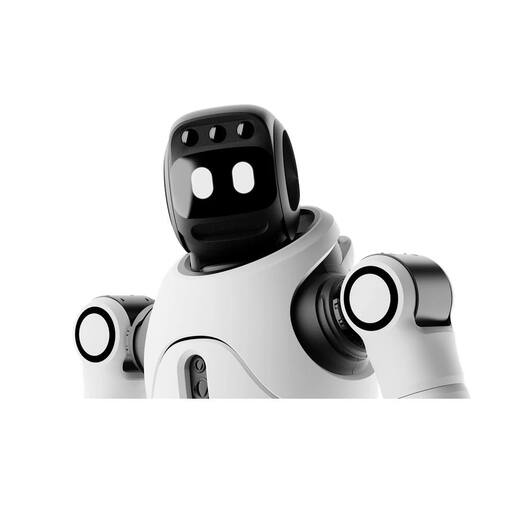
Why it stands out : Designed for demanding R&D projects, this robot offers an open hardware and software platform, ideal for testing AI algorithms, developing complex interactions, or simulating tasks in a professional environment.
It offers full support for custom development and integrates advanced sensors (LiDAR, RGB-D camera), ensuring real perception and autonomy that go far beyond mere marketing promises.
31 degrees of freedom with high torque (120 N·m), computing power from an Orin NX board (157 TOPS), and support for autonomous charging.
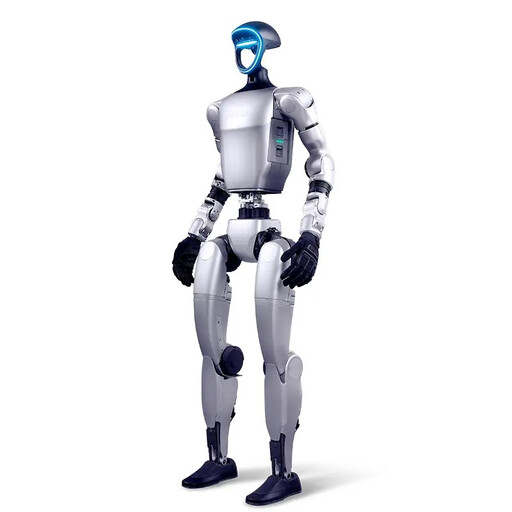
Why it stands out : Perfect for those who want to own a marvel of cutting-edge robotics. Its dynamic capabilities and foldable design make it an impressive technology showcase for a company or a collector.
The product page clearly states that this version does not offer an SDK/API, thus preventing any unpleasant surprises for a buyer looking for a finished product rather than a development platform.
Exceptional agility with a knee torque of 90 N·m, an ultra-compact design when folded (69 cm height), and 3D perception thanks to the combination of a depth camera and LiDAR.
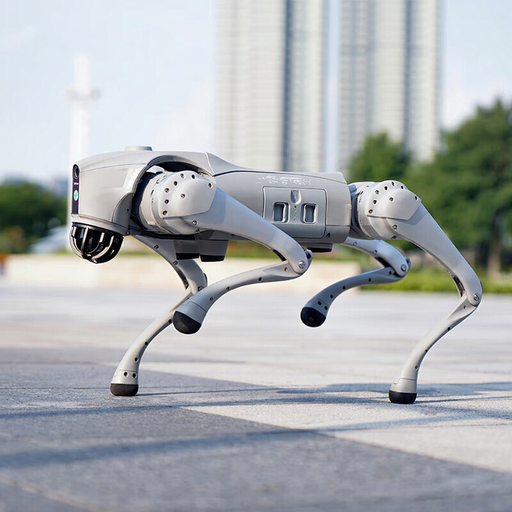
Why it stands out : For applications requiring all-terrain mobility (site inspection, surveillance, mapping), this robot dog from Unitree offers a robust and agile alternative to humanoid robots, which are often less stable on uneven surfaces.
It is equipped with the 4D LiDAR L2 developed by Unitree, offering 360° hemispherical perception with a near-zero blind spot. This ensures reliable autonomous navigation, far from vague promises of autonomy.
Top speed of up to 4.7 m/s, ability to climb 40° slopes, and intelligent voice interaction. A proven mobile platform for real-world applications.
For interactive companions or more budget-friendly models, we have hand-picked products for you that comply with current regulations.
Several factors come into play. Lithium-ion batteries typically have a lifespan of 300 to 500 full charge cycles. The motors and actuators, especially high-torque ones, are designed for thousands of hours of use, but their wear depends on the intensity of the tasks. Longevity also depends on the manufacturer's software support, particularly security and feature updates. An 18-month warranty, as offered on some models, is a good indicator of the manufacturer's confidence in its product.
Not necessarily. Basic functions like locomotion, local navigation via LiDAR, and pre-programmed sequences can often operate offline. However, an internet connection is usually required for advanced artificial intelligence features (such as voice interaction via language models), remote control outside the local network, over-the-air (OTA) software updates, and cloud data backup.
Yes, it's actually one of the most practical applications for advanced robotics. Quadruped models like the Unitree Go2 are particularly well-suited due to their all-terrain mobility and stability. Equipped with LiDAR for mapping and obstacle avoidance, HD cameras for real-time video streaming, and a battery life of several hours, they can perform autonomous patrol rounds on industrial sites, in warehouses, or across large areas, day or night.