
Livraison le jour même ou le lendemain

Qualité garantie

Débloquez vos offres de bienvenue: Livraison GRATUITE | Jusqu'à -80 % | 30 jours d'essai gratuits à JoyPlus
Téléchargez l'application
Choosing a new saltwater lure fishing rod can quickly become a daunting task. Faced with marketing hype, baffling tech names, and a jungle of available models, it's easy to make the wrong choice. And unsuitable gear is a surefire way to guarantee a frustrating fishing trip and an investment thrown overboard. To avoid falling into this trap, here are the common pitfalls that cost anglers dearly.
To get a clearer picture, let's focus on the technical specifications that truly matter. They are what define the DNA of your future saltwater fishing rod.
These two concepts are often confused, but they are distinct and complementary.
The length of your rod depends primarily on your fishing grounds.
Today, the majority of models are 2-piece rods, which offer the ideal balance between the performance of a one-piece blank and the convenience of transport and storage.
The quality of the blank isn't everything. The reel seat and guides are on the front line, in constant contact with your braided line and the reel. For saltwater use, it is imperative that they are treated against corrosion. Components from reputable brands like Fuji are a guarantee of reliability, ensuring smooth line flow and resistance to oxidation. An ergonomic handle, whether made of cork or high-density EVA foam, ensures a good grip and lasting comfort.
Rather than an endless catalogue, here are three angler profiles and the rods that meet their needs, based on the criteria we've just discussed.
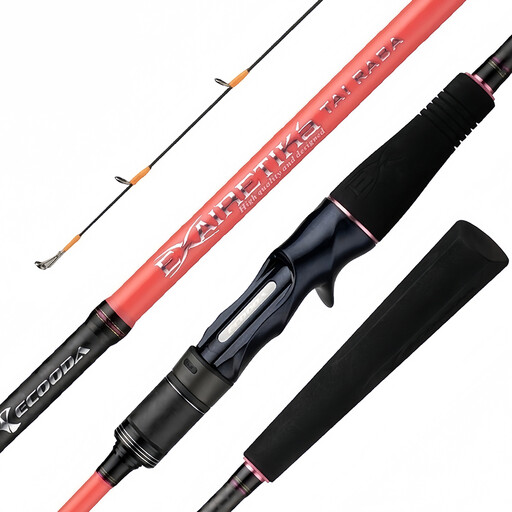
Why this model? This angler seeks sensitivity above all else to target wary sparids like pagrus and sea bream. This rod is specifically designed for the slow action of a Tai Rubber or Tenya, where the slightest bite must be felt.
That of "false versatility". This is a specialised Tenya rod with a progressive action that absorbs headshakes and limits pulled hooks, unlike a standard lure rod that is too stiff.
Its sensitive solid tip allows for the detection of the most subtle bites, while its progressive power reserve ensures perfect control during the fight.
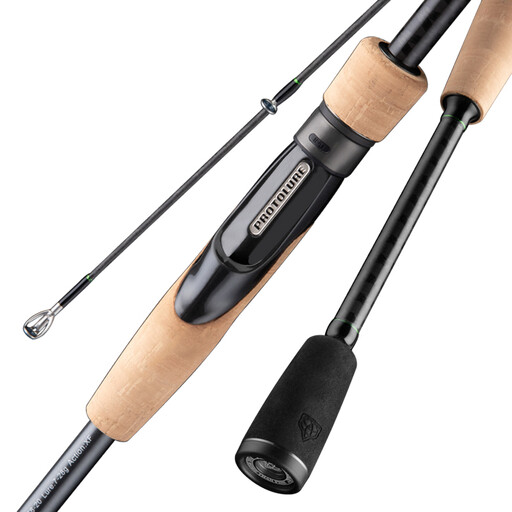
Why this model? This angler needs distance to reach feeding frenzies and the authority to pull a sea bass from the rocks by force. They use a variety of hard and soft lures and demand a highly responsive rod.
That of components that don't hold up. Designed for saltwater fishing, this ECOODA fishing rod is equipped with components built to resist corrosion—a non-negotiable feature for shore fishing.
Its 2-piece rod design and fast tip action make it the perfect tool for long-distance casts and precise lure animations, all while maintaining a strong power reserve.
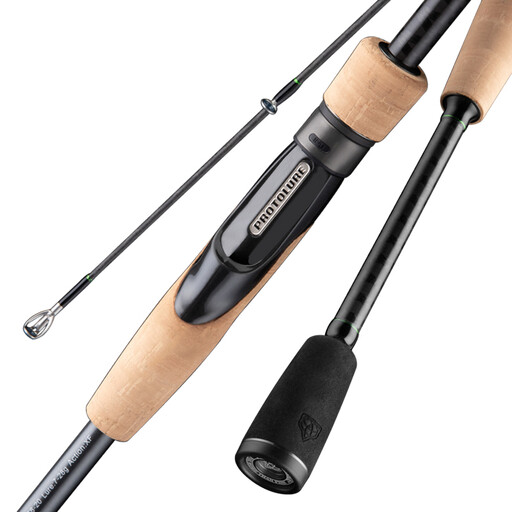
Why this model? This angler fishes mainly from a boat, where manoeuvrability is king. They need a short, responsive rod for vertical jigging or for precisely working soft lures right under the boat.
That of an unsuitable action. Its compact length and pronounced tip action are optimised for vertical control, offering perfect resonance to read the bottom and detect the most discreet bites.
The lightness and responsiveness of the blank allow for hours of fatigue-free fishing, while ensuring an effective hookset and total control of the fish during the fight.
The passion for fishing is passed down. Discover our selection of toys to introduce the youngest to the sport safely and playfully.
The lifespan of a rod depends on three factors: the quality of its materials, your frequency of use, and, most importantly, the care you give it. A carbon rod, even a high-end one, remains susceptible to impacts. The crucial point is to systematically and thoroughly rinse the rod with fresh water after every saltwater trip to dissolve the salt. A well-maintained rod can last you for many, many years.
In Europe, the spinning setup (fixed-spool reel, positioned under the rod) is the most common and versatile for saltwater fishing, both from the shore and from a boat. It allows for easy casting of a wide range of lures. The casting setup (revolving-spool reel, on top of the rod) is more technical. It offers more direct line control and more power, making it suitable for heavy vertical jigging or using very large lures. The choice therefore depends on your preferred technique and your habits.
Yes, it is highly recommended. A Tai Rubber fishing rod has a very soft and parabolic action. This design allows the fish to inhale the lure without feeling resistance, which is crucial for species like pagrus or sea bream. This flexibility also acts as a shock absorber during the fight, preventing the tearing of these fish's fragile mouths and thus limiting pulled hooks. Using a classic, stiffer sea bass rod will result in far fewer catches.
By our Joybuy product expertsPublication date: August 26, 2026