By Joybuy, your product expert – Published July 22, 2026
Whether it's for back-to-school, the office, or simply to unleash your creativity, choosing a notebook might seem like a simple task. But that's only at first glance. Faced with a jungle of sizes, paper types, and bindings, finding the perfect writing companion can be a real challenge. A student's needs will differ from those of a project manager or a journaling enthusiast.
This guide is here to break down the criteria that truly matter. We've selected products that stand out for their quality and practicality, helping you make an informed choice beyond the marketing hype.
Key Factors for Making the Right Choice
Before you start shopping, whether online or in-store, take a moment to define your needs. Three essential points will guide your decision.
1. Size and Ruling?: A Matter of Use
The size of the notebook and its page layout (the ruling) depend directly on how you'll use it day-to-day.
- For Students?: The Clairefontaine 24x32 notebook is a staple on school supply lists. Its large size is designed to let you paste in A4 sheets without folding them. The Sèyes ruling (a grid system) is the standard for guiding students' handwriting.
- For Professionals?: A5 (14.8 x 21 cm) or B5 (17.6 x 25 cm) sizes are often favoured for their portability. A lined ruling remains the most versatile for note-taking, while dotted pages offer a flexible structure, ideal for planning and project tracking.
- For Creatives?: A journaling notebook or sketchbook calls for plain (blank) or dotted pages to give your creativity free rein.
2. Paper Quality?: Writing Comfort Above All
The paper weight, expressed in grams per square metre (g/m?), directly impacts writing comfort and the tendency for ink to bleed through the page.
- 70-80 g/m??: This is the standard weight, perfect for writing with a ballpoint pen or pencil. However, being lighter, it doesn't handle ink from fountain pens or markers well, which may ghost or show through on the other side.
- 90 g/m? and up?: This thicker, more opaque paper is the hallmark of high-quality stationery. It provides an incomparably smooth writing experience and prevents ink from bleeding through, making it ideal for most writing instruments, including the most demanding ones.
3. Binding and Cover?: Durability and Practicality
The way the pages are held together and protected plays a crucial role in the notebook's lifespan and usability.
- The spiral-bound notebook?: It allows for a 360° fold-over, lying perfectly flat, which is a major advantage on a cluttered desk or for quick note-taking.
- Stitched or sewn binding?: Often found in more elegant notebooks like the Moleskine notebook, sewn binding ensures a neat finish and excellent long-term durability.
- The cover?: A polypropylene cover is durable and nearly waterproof, ideal for heavy, on-the-go use. A hardcover better protects the pages, while a softcover makes the notebook lighter and more flexible.
Our Recommended Notebook Picks
To illustrate these tips, here are three models, each tailored to a specific use case.
Clairefontaine Koverbook Polypro Notebook, 24 x 32 cm
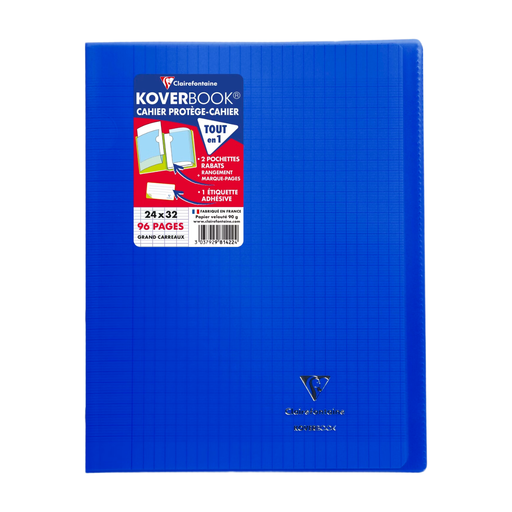
- Why It Stands Out?: The Koverbook is a clever 2-in-1 product that integrates a notebook protector directly into the cover. Its polypropylene design and two large flaps make it an ultra-practical organisational tool.
- Pros?:
- 90g/m? Velvety Vellum paper for a perfect glide.
- Sturdy cover that protects the notebook all year long.
- Two storage flaps for tucking in documents.
- Sèyes ruling and 24 x 32 cm size compliant with school supply lists.
- Made in France and PEFC certified for sustainable forest management.
- Who Is It For??: The smart choice for middle and high school students looking for a durable, efficient, all-in-one notebook for their classes.
Moleskine Lined Notebooks, Large, Set of 3
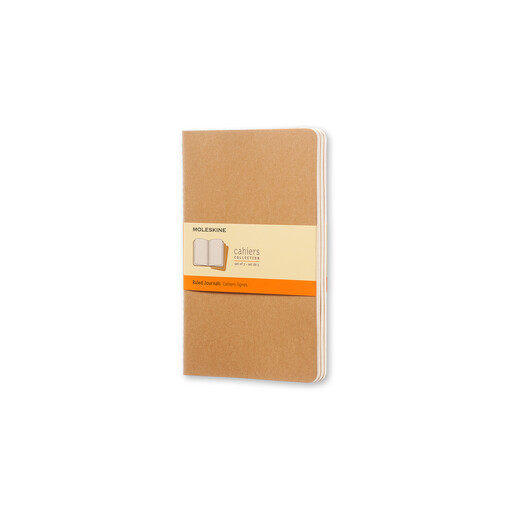
- Why It Stands Out?: This set of notebooks embodies Moleskine's iconic design. The exposed stitched binding and customisable cover make it an object that's as stylish as it is functional, perfect for getting organised.
- Pros?:
- Sold in a set of three, ideal for dedicating a notebook to each project.
- Acid-free, ivory-coloured 70 g/m? paper.
- The last 16 pages of each notebook are detachable.
- Internal gusseted pocket for stashing loose notes.
- Paper from responsibly managed, FSC-certified sources.
- Who Is It For??: Professionals, students, and creatives juggling multiple projects. It adds a touch of elegance to any desk and is a classic in office supplies.
Moleskine Classic Notebook, Plain Pages
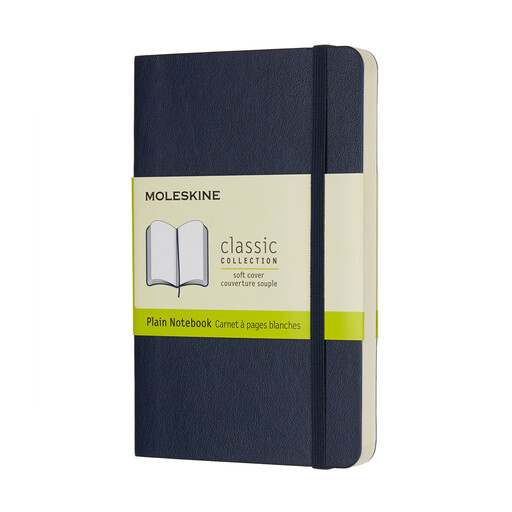
- Why It Stands Out?: This softcover model with plain pages offers total freedom. It retains Moleskine's signature elements (elastic closure, ribbon bookmark) in a lightweight, portable format.
- Pros?:
- Softcover makes it light and easy to carry.
- Opens flat at 180° for optimal writing or drawing comfort.
- Expandable inner pocket for storing small documents.
- Plain pages for unrestricted creativity.
- Acid-free, FSC-certified 70 g/m? paper.
- Who Is It For??: Artists, designers, architects, and all fans of journaling or sketching. Its versatility makes it an excellent travel journal.
Looking for Other Options??
Our selection covers the most common uses, but the perfect notebook is a personal choice. Size, colour, binding... if you have a specific idea in mind, explore our complete collection to find your perfect match.
Explore our full range of stationery and office supplies
Frequently Asked Questions About Notebooks
What is Séyès (or French) ruling??
Sèyes ruling, also known as "grands carreaux" or French ruling, is a standard in France. It consists of a main 8?mm x 8?mm grid, supplemented by thinner horizontal lines spaced 2?mm apart. These intermediate lines serve as a guide to properly size the height of letters, which is particularly helpful when learning to write.
What paper weight should I choose??
For everyday use with a ballpoint pen, 70 to 80 g/m? paper is more than sufficient. If you use a fountain pen, markers, or simply appreciate a superior writing experience, a 90 g/m? (or higher) paper is highly recommended. It will absorb ink better and prevent it from bleeding through the page.
How do I choose between a Moleskine and a Clairefontaine notebook??
It all depends on your priorities. Clairefontaine is praised for the exceptional quality of its 90 g/m? paper, which offers a perfect glide and foolproof opacity, even with a fountain pen. Moleskine, on the other hand, wins hearts with its iconic design, portable format, and ecosystem of accessories. For the sheer pleasure of writing with a fountain pen, many turn to Clairefontaine. For an elegant, functional, take-anywhere notebook, Moleskine remains a reliable choice.


