
Livraison le jour même ou le lendemain

Qualité garantie

Débloquez vos offres de bienvenue: Livraison GRATUITE | Jusqu'à -80 % | 30 jours d'essai gratuits à JoyPlus
Téléchargez l'application
Who hasn't felt that pang of anxiety seeing the red battery icon flash on their smartphone?? Whether you're on the move, on a long train ride, or simply at the end of a busy day, a dead battery never comes at a good time. A power bank, also known as a portable charger, has become the essential accessory to ensure you never run out of juice again.
Faced with an overwhelming number of options, it can be difficult to find your way. This guide breaks down the essential criteria for you to choose the portable battery that perfectly suits your needs, without drowning you in technical jargon.
Before looking at specific models, it's crucial to understand the three features that make all the difference?: capacity, power, and connectivity.
Expressed in milliampere-hours (mAh), capacity simply represents your battery's energy reserve. To put it simply?: the higher the mAh number, the more you can recharge your devices.
The output power, expressed in watts (W), determines how fast your device will charge. A standard battery provides about 5?W. To benefit from fast charging, look for models offering higher power (18?W, 22.5?W, 30?W, or more) that are compatible with protocols like Power Delivery (PD).
A USB-C power bank equipped with Power Delivery can charge a compatible smartphone from 0 to 50% in about thirty minutes. Remember to check if your smartphone battery is compatible with these technologies to take full advantage of them.
Modern batteries go far beyond a simple USB-A port.
Here is a selection of three models that meet different needs, from the urban commuter to the frequent traveller.
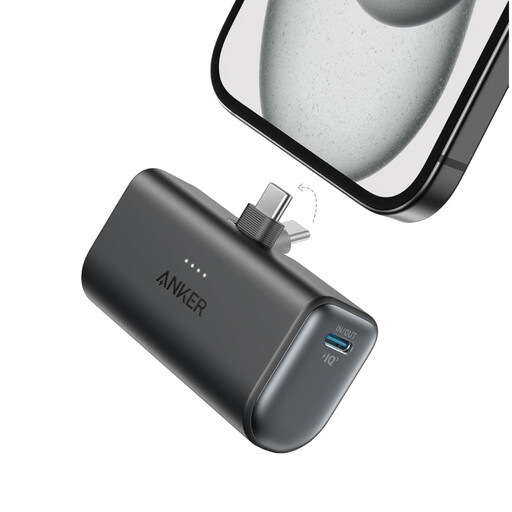
Why it stands out?: Its key feature is its extreme compactness and its built-in, foldable USB-C connector. It plugs directly into your smartphone, eliminating the need for any cable.
Key features?:
Who is it for?? Ideal for the daily user looking for a discreet and ultra-portable backup solution to eliminate end-of-day battery anxiety. It's the perfect companion for outings where you want to travel light.

Why it stands out?: This model combines a very high capacity with great versatility, allowing you to charge up to three devices at once, including some laptops.
Key features?:
Who is it for?? Aimed at travellers, mobile professionals, and anyone who needs a large energy reserve to power multiple devices. Its capacity and power make it a powerful ally for long journeys.
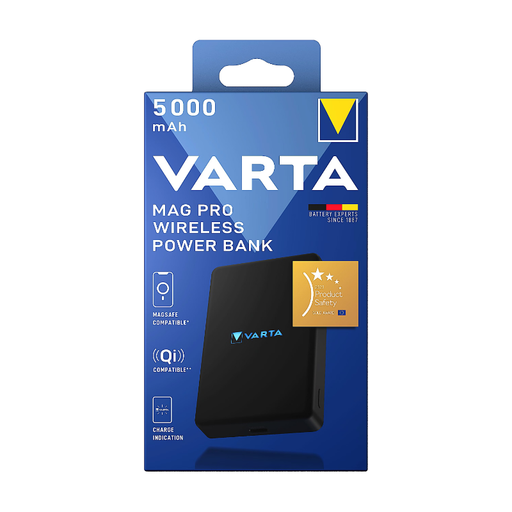
Why it stands out?: It offers the convenience of magnetic wireless charging, attaching securely to the back of compatible smartphones for effortless, cable-free charging.
Key features?:
Who is it for?? Perfect for owners of recent iPhones or compatible Android devices who prioritise simplicity and dislike cables. It provides simple and seamlessly integrated charging on the go.
Our selection targets specific use cases. If your needs are different or if you simply want to explore more models, feel free to browse our complete category of portable chargers. There you will find a wider variety of capacities, designs, and features.
Discover our full range of power banks
For daily use and to ensure at least one full charge, a capacity of 5,000 to 10,000?mAh is generally sufficient. If you use multiple devices or are travelling for several days without access to an outlet, a 20,000?mAh battery or larger will be necessary.
Yes, but only in your carry-on luggage. Lithium batteries are prohibited in checked baggage. Most airlines limit the total capacity to 100?Wh (watt-hours), which is equivalent to about 27,000?mAh. A word of advice?: always check your airline's policy before travelling.
Fast charging is a technology that delivers higher electrical power (measured in watts) to charge the battery of a compatible device much faster than a standard charger. For it to work, the power bank, the cable, and the device (smartphone, tablet, etc.) must all be compatible with the same fast-charging protocol, such as Power Delivery (PD) or Quick Charge (QC).