
Livraison le jour même ou le lendemain

Qualité garantie

Débloquez vos offres de bienvenue: Livraison GRATUITE | Jusqu'à -80 % | 30 jours d'essai gratuits à JoyPlus
Téléchargez l'application
Balancing professional projects, university courses, and personal goals can be a complex juggling act. Faced with a mountain of tasks and deadlines, a reliable ally is essential to stay on track. The paper planner remains a timeless choice, praised for its simplicity and effectiveness. It offers a tangible space to visualise your schedule, set priorities, and measure progress—all away from the constant stream of digital notifications.
This guide is designed to help you navigate the multitude of options. We will walk you through the key criteria and present our selection of the best models to help you find the perfect planner for 2026.
Choosing a planner is a highly personal decision that depends on your work methods and ambitions. Here are the key points to consider to make the right choice.
This is the first question to ask yourself: do you need a fixed time frame or complete flexibility?
Your planner will be with you everywhere, every day. Its format and the quality of its materials should not be overlooked. The A5 format (approx. 15?x?21?cm) is the most common, offering an excellent balance between a comfortable writing surface and a manageable size.
The paper weight (in gsm) is a decisive factor for writing comfort. A 70?gsm paper is standard, but a higher weight (90?gsm or 100?gsm) will offer better opacity and prevent your fountain pen ink from bleeding through the page.
How you intend to use it will determine the ideal model.
To illustrate these different points, here are three models that cater to distinct user profiles.
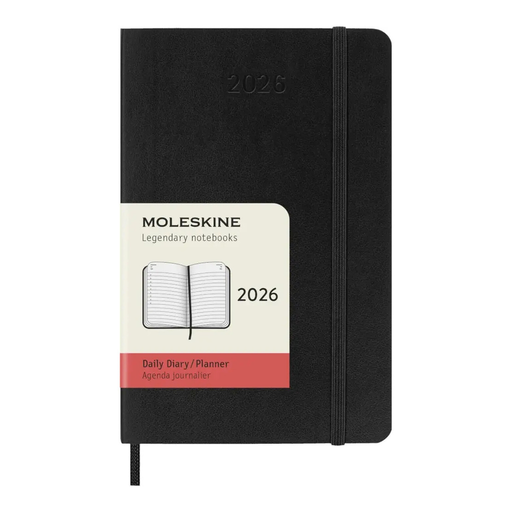
The Highlights
This dated Moleskine planner for 2026 focuses on structure, with an entire page dedicated to each day. It includes practical tools like calendars, note pages, and stickers for seamless organisation. Its minimalist and functional design makes it a timeless classic.
Pros
Who is it for?
For professionals, students, and anyone looking for a comprehensive and reliable daily organisational framework for 2026.
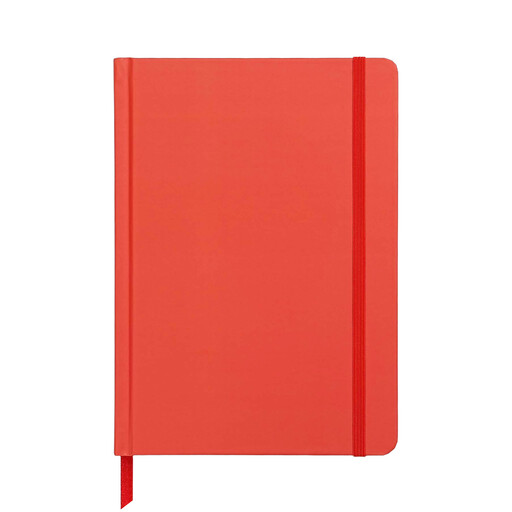
The Highlights
This undated planner is all about flexibility and long-term vision, with a structure designed for 18 months. Its sturdy hard cover and premium paper make it a durable companion, available in a wide range of colours to suit any style.
Pros
Who is it for?
For those who plan long-term, track specific goals, or want a tool that is 100% adaptable to their pace, whether for work, studies, or personal development.
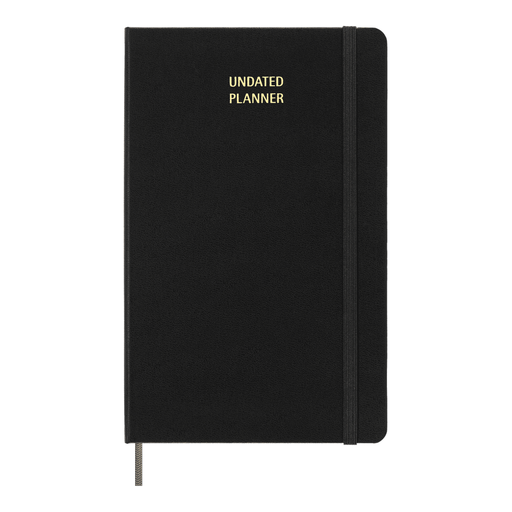
The Highlights
This model combines the iconic Moleskine design with the versatility of a customisable weekly planner. Its secret? A well-designed two-page spread: the week on the left, and a lined page on the right for journaling, lists, or sketches.
Pros
Who is it for?
For creatives, project managers, and anyone seeking the perfect balance between a weekly framework and a space for free expression, without the constraint of pre-printed dates.
This selection is, of course, just a glimpse of the solutions available to help you organise your year. Every organisational method is unique. The best tool will always be the one that integrates most naturally into your daily life.
To discover a wider range of organisational tools, feel free to explore our complete collection of productivity planners.
The daily planner dedicates an entire page to each day. It is perfect for hour-by-hour scheduling and highly detailed to-do lists. The weekly planner, on the other hand, displays the full week on one or two pages. It provides an ideal overview for visualising your main appointments and priorities.
The main advantage of an undated planner is its flexibility. To get the most out of it, don't hesitate to number the pages and create an index. Use stickers or coloured pens to create your own visual codes. The most important thing is consistency: take a few minutes each week to date and plan the next one. This is the key to maintaining momentum.
In an all-digital era, the paper planner still holds its own and retains undeniable advantages. The simple act of writing by hand helps improve memory and clarify thoughts. It offers a distraction-free space, away from the incessant flow of notifications on our smartphones and computers. Finally, it serves as a physical and personal archive of your projects, achievements, and memories.