
Livraison le jour même ou le lendemain

Qualité garantie

Débloquez vos offres de bienvenue: Livraison GRATUITE | Jusqu'à -80 % | 30 jours d'essai gratuits à JoyPlus
Téléchargez l'application
By Joybuy, your product recommendation expertPublished: August 26, 2026
Choosing a new notebook? In theory, it's simple. In practice, the experience often ends in disappointment. Who hasn't been frustrated by ink bleeding through the pages, a binding that falls apart after a few weeks, or a cover that gets ruined at the bottom of a bag? However, these issues aren't inevitable. They are usually the result of overlooked technical specifications, often hidden behind flashy marketing. Before your next purchase of school and office supplies, here is our guide to sidestepping the most common traps.
To ensure you never make the wrong choice again, focus on three technical points. These alone determine 90% of your writing experience.
Expressed in grams per square metre (gsm), paper weight measures the paper's thickness and density. It's the number one criterion for a successful writing experience.
The ruling, which is the type of printed lines, should be chosen based on your intended use.
The way the pages are held together directly impacts the notebook's durability and usability.
No more endless lists! We've matched user profiles with products that precisely meet their needs, all while avoiding the pitfalls we just discussed.
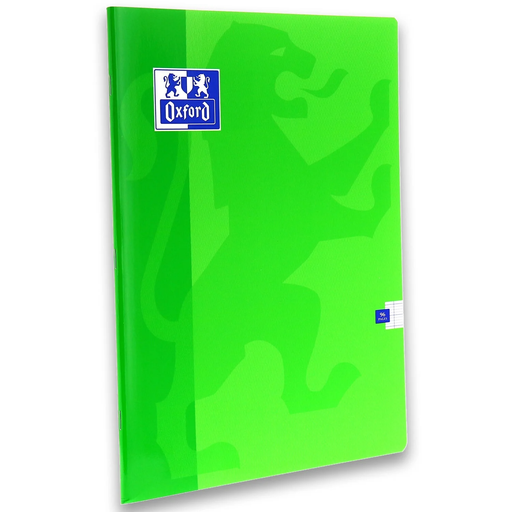
Why we chose it: Its large 24x32 cm format, Seyès ruling, and superior quality paper make it the ideal tool for the French school system, from middle school to higher education.
Its Optik Paper 90 gsm paper blocks ink from bleeding through, even with a fountain pen. Its laminated card cover is designed to withstand a school year in a backpack.
According to the brand, its two-tone ruling was developed with ophthalmologists to reduce visual fatigue and improve concentration.
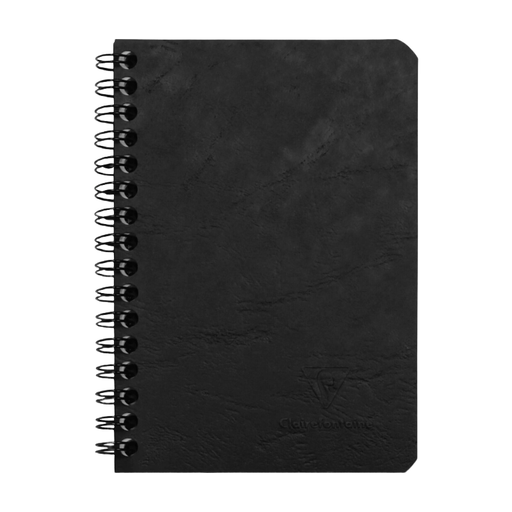
Why we chose it: Compact, elegant, and durable, this notebook is built for taking notes on the go. Its pocket-friendly size and hardcover make it a reliable travel companion.
Its sewn binding ensures a perfect 180° lay-flat opening, ideal for writing comfortably. The textured hardcover effectively protects notes from the rigours of travel.
The Clairefontaine Vélin Velouté 90 gsm paper provides remarkable smoothness and opacity, offering a premium writing experience in a compact format.
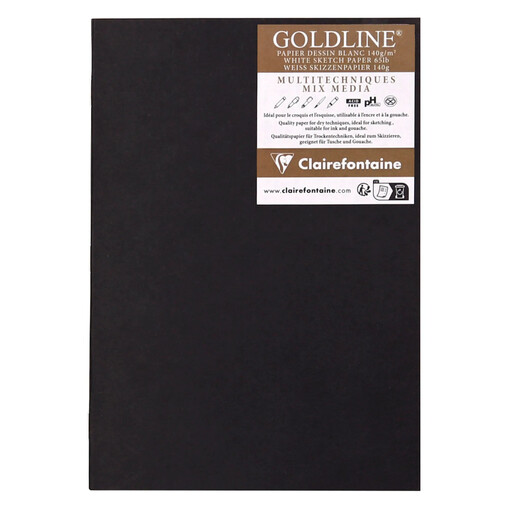
Why we chose it: This sketchbook is a true Swiss Army knife for creatives. Its thick paper is designed to handle both dry media (pencil, charcoal) and light wet media (watercolour, gouache).
With its 140 gsm paper, it prevents warping and bleed-through, a major flaw in standard notebooks when using wet media. The sewn binding ensures excellent long-term durability.
Its versatility makes it an excellent "all-in-one" notebook, saving you from needing multiple pads for different media. The lay-flat opening is a real bonus for drawing across a two-page spread.
Explore our full selection of notebooks and notepads, all vetted by our experts for their quality and durability.
Seyès ruling consists of 8x8 mm main grid lines, with thinner horizontal lines spaced 2 mm apart to guide the height of letters. It is primarily used in the French school system. The 5x5 mm grid ruling is simpler, with no intermediate lines, and is preferred for scientific subjects, technical notes, or diagrams.
Yes, in the vast majority of cases. A high-quality 90 gsm paper, like those from Clairefontaine or Rhodia, is designed to be very smooth and non-porous. It prevents fountain pen ink from feathering (spreading out) and bleeding through the page, ensuring an optimal writing experience. For very saturated inks or broad nibs, a 100 gsm or heavier paper can offer extra security.
The choice depends on your use case. Spiral binding is very flexible: it allows the notebook to be folded back on itself completely (a 360° opening), which is ideal for writing while standing or in a tight space. Saddle-stitched binding is slimmer and lighter. It offers a good lay-flat opening, which is comfortable for writing on a desk, but it cannot be folded back. It is often used for school notebooks or thin notepads.