
Livraison le jour même ou le lendemain

Qualité garantie

Débloquez vos offres de bienvenue: Livraison GRATUITE | Jusqu'à -80 % | 30 jours d'essai gratuits à JoyPlus
Téléchargez l'application
Whether it's for the back-to-school season, taking notes in a meeting, or simply jotting down ideas, choosing a notebook or notepad seems simple enough. But who hasn't been frustrated by paper that bleeds ink, a binding that falls apart after two weeks, or an impractical size? The stationery aisle is a marketing minefield where a simple purchase can quickly become a frustrating experience. To avoid falling for the common tricks, here are the most common pitfalls to watch out for.
The 3 Pitfalls to Avoid in the Stationery Aisle:
To make the right choice, ignore the flashy packaging and focus on a few objective technical criteria.
You don't need to be an expert: mastering two or three key points is enough to choose a product that truly fits your needs, whether for school supplies or a professional tool.
Paper weight, expressed in grams per square meter (g/m?), defines the paper's thickness and opacity. It's the primary indicator of the quality and comfort of your note-taking experience.
The ruling (the type of lines) should be adapted to your use case.
The way the pages are held together directly impacts the notebook's sturdiness and ergonomics.
Rather than an endless list, here are our top picks for different profiles, selected based on the quality criteria we've just covered.
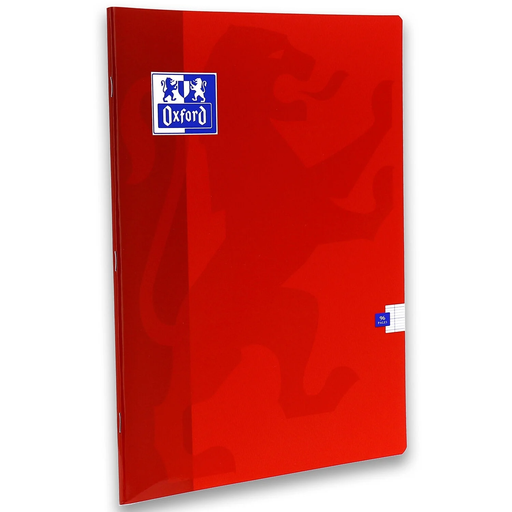
Why it's a perfect match: Perfect for heavy-duty school use. Its 24x32 cm format allows you to paste A4 sheets in without them sticking out, and the Seyès ruling is the classroom standard. It's designed to last an entire school year.
Its Optik Paper 90 g/m? prevents ink bleed-through (pitfall #1). The laminated card cover withstands the wear and tear of a backpack and protects the pages (pitfall #2).
Exceptional writing comfort thanks to its extra-smooth and perfectly white paper. The two-tone ruling is designed to optimize readability and reduce eye strain.
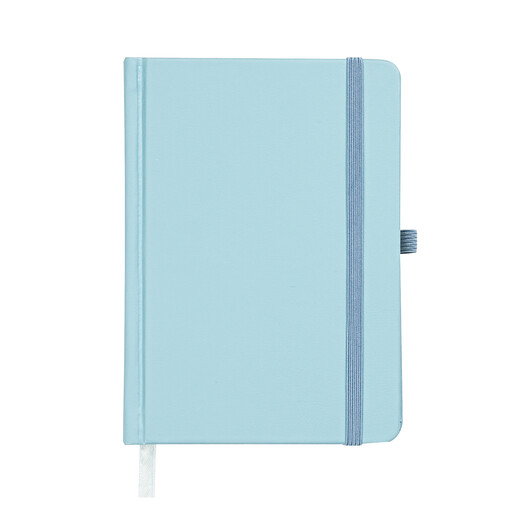
Why it's a perfect match: Its A6 pocket size slips into any bag, from a briefcase to a purse. It's designed for on-the-go note-taking, with practical details for professionals.
Its PU hardcover and elastic closure shield the pages (pitfall #2). The 100 g/m? paper is thick enough to prevent any ink, even from a fountain pen, from bleeding through (pitfall #1).
Ultra-functional: ribbon marker, elastic closure, pen loop... it has it all. Its ivory-coloured paper is easy on the eyes, even during intensive use.
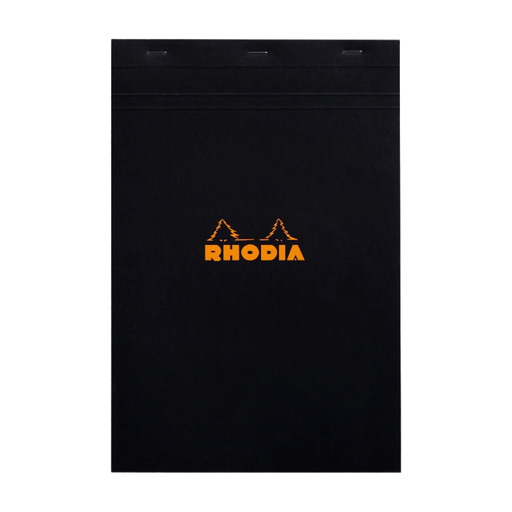
Why it's a perfect match: The go-to tool for architects, designers, and engineers. Its large format (21 x 31.8 cm) and 5x5 mm graph ruling provide a perfect grid for technical drawings, plans, and detailed diagrams.
Its ultra-rigid cardboard back allows you to draw or take notes anywhere, even without a surface. The micro-perforated sheets detach cleanly, with no risk of torn pages (goodbye, pitfall #2).
The unmatched smoothness of the Clairefontaine 80 g/m? superfine vellum paper, ideal for precision instruments. Its 80 detachable sheets can be scanned or shared in a flash.
We've curated a complete selection of products that all meet our quality criteria.
Seyès ruling, typically French, is the standard in their school system. It consists of a main 8 mm grid with three finer horizontal lines (2 mm apart) to guide the height of letters. Graph ruling (usually 5x5 mm) forms a uniform grid, which is more versatile and suitable for science, diagrams, or technical notes.
Not necessarily. A heavy weight (100 g/m? or more) guarantees perfect opacity and a premium feel, but it also makes the notebook heavier and thicker. For daily, on-the-go use, a 90 g/m? paper, like that in a Clairefontaine notebook, offers the ideal compromise between writing comfort, opacity, and lightness.