Joybuy Insights

How to Choose the Right Notebook and Avoid Common Pitfalls

A notebook is far more than just a stack of paper. It's a tool for organising your thoughts, a playground for creativity, and an indispensable daily companion for students and professionals alike. Yet, finding the perfect model can often feel like an uphill battle. A cover that gets damaged in days, ink that bleeds through the pages, or a binding that hinders your writing—the frustrations are many. This guide is here to help you decode the essential features, sidestep marketing traps, and finally find the notebook that's perfectly suited to your needs.

The 3 Mistakes to Stop Making When Buying a Notebook

Before we dive into the technical specifications, let's review the most common flaws that turn a promising purchase into a real disappointment.

  1. Paper that's too thin and causes ink bleed-through: The culprit? Insufficient paper weight. The ink from your fountain pen, or even a simple fine-liner, bleeds through the page, making the other side unusable and smudging the next sheet. This is the unmistakable sign of poor-quality paper, often less than 80?g/m?.
  2. Binding that doesn't live up to the hype: A spiral binding that bends out of shape, staples that come loose, a glued binding that cracks and releases pages—these problems are all too common. Good binding must be sturdy, but it also needs to allow the notebook to lay perfectly flat for optimal writing comfort.
  3. A cover that lacks durability: A thin, non-laminated cardboard cover won't stand up to the friction and bumps inside a backpack. The corners get bent, the surface gets stained, and the notebook quickly loses its new look and, more importantly, its protective function.

Essential Criteria for an Informed Choice

To avoid these setbacks, three technical criteria demand your full attention. They are the true guarantors of your notebook's quality and durability.

Paper Weight: The End of Bleed-Through

Paper weight, expressed in grams per square metre (g/m?), determines the paper's thickness and opacity. This is the most critical factor.

  • 70-80?g/m?: The standard for budget-friendly notepads and exercise books. It's sufficient for a pencil or ballpoint pen but will quickly show its limits with more liquid inks. The Rhodia notepad, with its exceptionally high-quality 80g paper, is a notable exception.
  • 90?g/m? paper: This is the benchmark for a premium writing experience. It offers excellent opacity, preventing most inks from bleeding through. The 90g Vélin Velouté paper in a Clairefontaine notebook is an icon in this category, renowned for its whiteness and perfect glide.
  • 100?g/m? and up: The holy grail for graphic arts, journaling, or using high-flow fountain pens. This thick paper guarantees a writing experience with zero compromises.

The Binding: Spiral, Stitched, or Sewn?

The type of binding directly impacts your notebook's handling and longevity.

  • Spiral (or wire-o) binding: This allows for a 360° opening, which is very practical for writing without a desk. It's the top choice for a spiral notebook intended for taking notes in lectures or conferences.
  • Stitching (staples): Reserved for notebooks with a low page count (under 100 pages), this method is economical but less durable. It's the typical format of a classic school exercise book.
  • Sewn or glued binding: Often associated with premium hardcover notebooks, like the famous Moleskine notebook, it offers rock-solid durability and a lay-flat opening that is highly valued for writing across the full width of both pages.

Size and Ruling: A Notebook for Every Need

The size should, of course, match your intended use.

  • The 24x32?cm notebook: This is the quintessential large school format, perfect for pasting in A4 sheets without them sticking out.
  • The A5 notebook (14.8 x 21?cm): Versatile and easy to carry, it's ideal for the office, journaling, or as a travel journal.
  • Pocket sizes (A6, 9x14?cm): They slip into any pocket to capture an idea on the fly.

The ruling is also a decisive factor. Seyes ruling (large grid with intermediate lines) is the standard in the French school system, while simple lines, small grids (5x5?mm), or blank pages are favoured for other uses.

Top Notebook Picks to Consider

To help you see how these criteria apply in practice, here are a few models we recommend for different profiles.
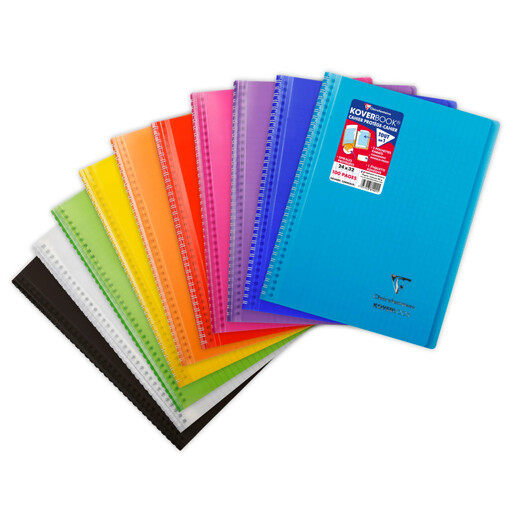
IDEAL FOR: THE ORGANISED STUDENT
Koverbook Spiral Notebook 24x32 cm Wide Ruled 100 Pages Transparent Cover

Koverbook Spiral Notebook 24x32 cm, 100 pages

Why it's a great choice: Perfect for intensive school use. The 24x32 notebook format is a must-have for classes, and its integrated polypropylene cover protects it all year long without needing a separate book protector.

How It Avoids the Pitfalls

Its sturdy, flexible plastic cover prevents premature wear and bent corners. The Clairefontaine 90 g/m? paper drastically limits ink show-through.

Key Strengths & Features

Its 2-in-1 concept (notebook + protector) with storage flaps is a real bonus. The spiral binding allows for a 360° opening, which is incredibly practical.
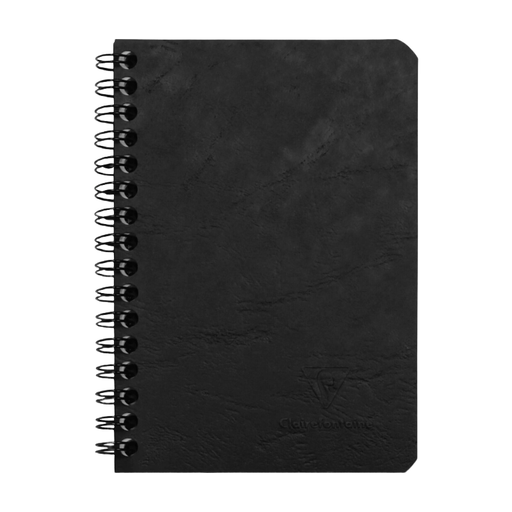
IDEAL FOR: THE MOBILE PROFESSIONAL
CLAIREFONTAINE Nomaddict (Age Bag) Hardcover Notebook, 9 x 14 cm, 100 Pages, 5 x 5 Black

Clairefontaine Nomaddict (Age Bag) Hardcover Notebook, 9 x 14 cm

Why it's a great choice: Its pocket-friendly size, understated design, and textured hardcover make it the ultimate discreet and elegant tool for taking notes in meetings, at a client's office, or on the go.

How It Avoids the Pitfalls

Its sewn binding guarantees rock-solid durability and a perfectly flat opening, a far cry from fragile bindings that break or prevent you from writing near the centre.

Key Strengths & Features

The Clairefontaine Vélin Velouté 90 g/m? paper ensures a perfectly smooth glide. Its 180° lay-flat opening is a major plus for writing comfort.
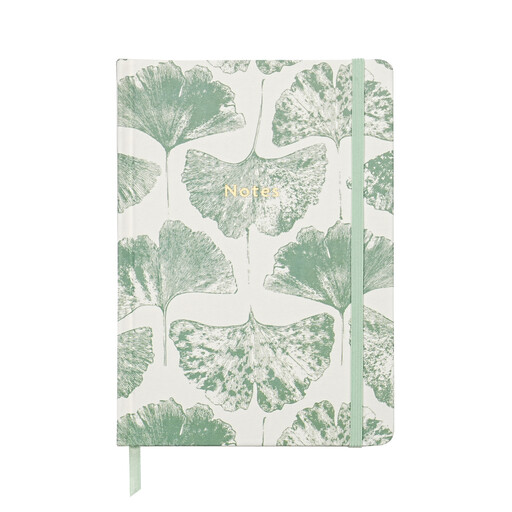
IDEAL FOR: THE JOURNALING ENTHUSIAST
Jubiluu A5 Elegant Fabric Hardcover Lined Notebook - Ginkgo Imprint

Jubiluu A5 Fabric Hardcover Notebook – Ginkgo Pattern

Why it's a great choice: Its refined aesthetic, with a fabric cover, and its superior quality paper make it a very personal object, perfect for creative writing or a bullet journal. The A5 notebook format is an excellent compromise between portability and writing space.

How It Avoids the Pitfalls

The 100 g/m? ivory paper is the perfect answer to the problem of ink bleeding through. This makes it compatible with a wide variety of pens, including the most generous fountain pens.

Key Strengths & Features

Its highly refined aesthetic, with a fabric cover and gold details, makes it a beautiful object. The thick 100g paper offers a premium writing experience.

Looking for other models?

We've curated a complete selection of notebooks that meet our strict quality and performance standards.

Frequently Asked Questions About Notebooks

What's the difference between Seyes ruling and a 5x5?mm grid?

Seyes ruling is a French standard consisting of a main 8x8?mm grid with finer horizontal lines spaced 2?mm apart. It's designed to guide handwriting, particularly for learning uppercase and lowercase letters. The small grid (5x5?mm) ruling is a simple grid, more versatile for note-taking, diagrams, or tables.

Is 90?g/m? paper really superior?

Yes, and the difference is striking as soon as you use a liquid ink pen (fountain pen, rollerball, fine-liner). A 90?g/m? paper offers unparalleled writing comfort: the nib glides more smoothly and, most importantly, the ink doesn't bleed through, or only very slightly. For a simple pencil or ballpoint pen, a good quality 80?g/m? paper may suffice, but 90?g/m? remains the gold standard for its versatility.

How do I choose the right binding for my needs?

  • For flexibility:Spiral binding is unbeatable if you often write without a stable surface (on your lap, standing up). It allows you to fold the notebook completely back on itself.
  • For durability and archiving: Sewn binding, typical of hardcover notebooks, is the most robust. It's ideal for a diary or an important notebook that you want to keep for the long term.
  • For occasional use: Stitched (stapled) binding is suitable for thin, economical notebooks, like a scratch pad or for a short-term project.