
Livraison le jour même ou le lendemain

Qualité garantie

Débloquez vos offres de bienvenue: Livraison GRATUITE | Jusqu'à -80 % | 30 jours d'essai gratuits à JoyPlus
Téléchargez l'application
A new project, the back-to-school season, or simply the desire to organise your thoughts: choosing a notebook seems like child's play. Yet, the experience often ends in disappointment: paper that bleeds ink, binding that falls apart after two weeks, a size that turns out to be impractical… Faced with overloaded shelves, it's easy to make the wrong choice. This guide breaks down the criteria that truly matter to help you find the ideal writing companion, far from the marketing hype.
Before diving into the technical specs, it's best to know the most common disappointments so you can steer clear of them.
To make an informed choice, focus on these three fundamental parameters.
The paper is the soul of your notebook. Your choice will depend directly on your favourite writing tools.
How the pages are bound determines the notebook's everyday durability and ergonomics.
Here are a few recommendations that meet specific needs, based on our criteria for quality and practicality.
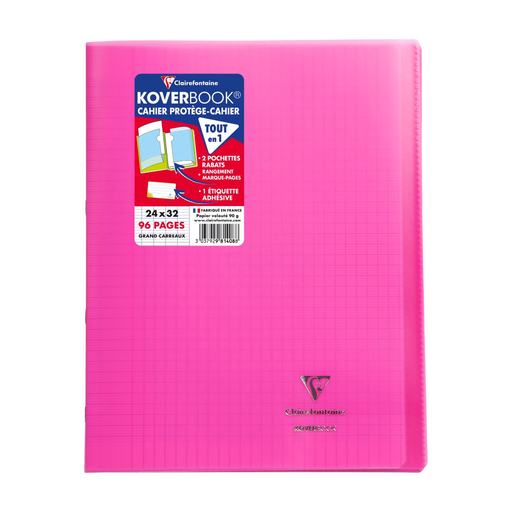
Why this choice? It's the ultimate all-in-one notebook for middle school, high school, and university students. Its 24x32 cm format is perfectly suited to the French school system, and its polypropylene cover replaces a separate notebook protector, offering foolproof durability.
No more damaged covers or bindings that give out: its integrated protection is built to last. The famous Clairefontaine 90g paper prevents any bleed-through, even with a fountain pen.
Its 2-in-1 concept (notebook + cover) with flaps for storing documents. All with PEFC-certified 90g Vélin Velouté paper.
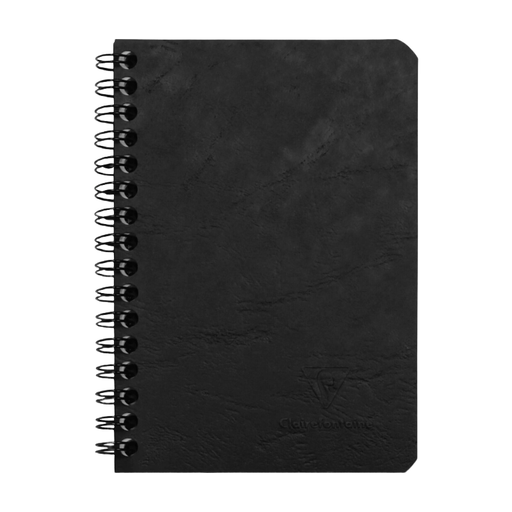
Why this choice? Its pocket-friendly size (9x14 cm) fits anywhere. The textured hardcover is as elegant as it is durable, while the sewn binding ensures a perfect lay-flat opening for taking notes anytime, anywhere.
Its robust design (hardcover, sewn binding) is a guarantee of longevity, a far cry from notebooks that fall apart in a few weeks. The Clairefontaine 90g paper remains a safe bet for smooth, smudge-free writing.
Compact, sturdy, and with a perfect lay-flat (180°) opening. It's the reliable and discreet companion for daily professional use.
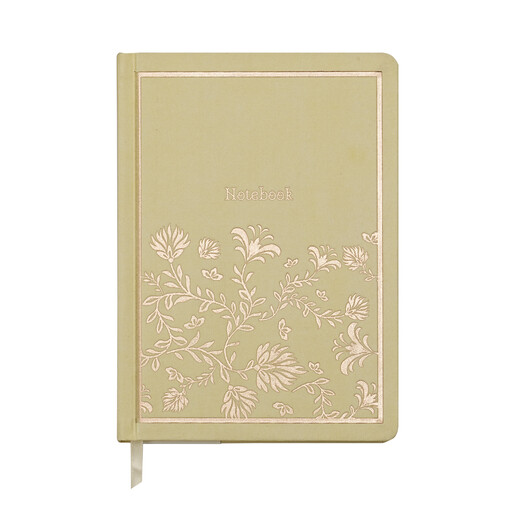
Why this choice? This notebook is as much a pleasure for the eyes as it is for writing. Its floral fabric cover makes it a beautiful object, while its 100g ivory paper is thick enough to handle various inks without bleed-through, a must-have for *journaling*.
With its thick 100g paper, it avoids pitfall #1: ink doesn't bleed through, even with generous pens. The hardcover and neat binding ensure excellent durability over time.
Its 100g paper, fabric cover, and premium finishes (hot stamping, embossing) make it a truly special item.
Discover our complete selection of notebooks and journals, all vetted for their quality and practicality.
1. What's the difference between Seyès ruling and a 5x5 mm grid?Seyès ruling, also known as "French ruling," is the standard in the French national education system. It consists of a main 8 mm grid with three finer interlines to guide the height of letters. The 5x5 mm grid is a simple 5 mm square grid, which is much more versatile for mixed-use notes (text, diagrams, tables).
2. Is thicker paper always better? Not always! While a high paper weight (e.g., 120 g/m?) certainly guarantees excellent opacity, the real magic lies in the paper's composition and surface treatment. An excellent 90 g/m? paper from a top brand like Clairefontaine will offer a more pleasant writing experience and better ink resistance than a budget 100 g/m? paper.
3. How do I choose between a spiral-bound and a saddle-stitched (stapled) notebook? The spiral-bound notebook is the champion of convenience: its 360° opening is perfect for taking notes while standing or on the corner of a desk. Ideal for conferences or when you're on the move. The saddle-stitched (stapled) notebook is thinner and lighter. It's an excellent choice for classic school use or short projects, but it will show its limits in terms of durability on models with a high page count.