
Livraison le jour même ou le lendemain

Qualité garantie

Débloquez vos offres de bienvenue: Livraison GRATUITE | Jusqu'à -80 % | 30 jours d'essai gratuits à JoyPlus
Téléchargez l'application
A new project, a new school year, a brilliant idea you can't afford to forget... Buying a notebook might seem trivial, yet the experience often ends in disappointment. A cover that gets damaged in three days, ink that bleeds through the pages, binding that gives out?—these are the small, everyday frustrations that are entirely avoidable. As a Product Expert at Joybuy, my mission is to help you decode the details that truly matter, beyond the marketing slogans, so you can make the right choice.
Before you make your choice, let's navigate the common traps that turn a promising notebook into a real letdown.
To avoid falling into these traps, let's focus on three technical points that determine a notebook's quality and suitability for your needs.
The paper weight, expressed in grams per square meter (g/m?), is the primary indicator of quality.
The finish also plays a role?: ivory paper is often considered easier on the eyes than a bright white. Blank pages (unlined) offer total freedom, ideal for a sketchbook, while a lined notebook or one with Sèyes ruling (the famous French grid from our school days) provides structure for note-taking.
Above all, the size should fit your lifestyle.
The way the pages are bound directly impacts the notebook's sturdiness and user comfort.
The cover is your first line of defense. A hardcover offers maximum protection and serves as a makeshift writing surface. A polypropylene (PP) cover is a modern alternative that is flexible, waterproof, and virtually indestructible.
Rather than searching for a perfect notebook that doesn't exist, it's better to find the ideal model for each specific need.
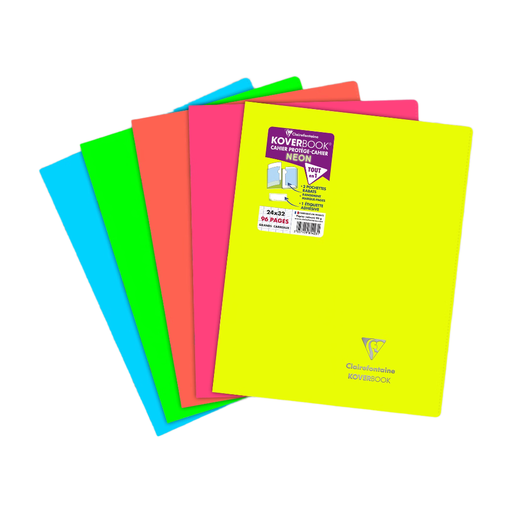
Why this choice? Students need a robust and practical ally. This 2-in-1 notebook merges the notebook with a polypropylene cover, making it virtually indestructible to survive a school year. Cleverly, its flaps can be used as bookmarks or as a pocket for handouts.
Its polypropylene cover eliminates the risk of a damaged cover. The Clairefontaine 90 g/m? paper guarantees zero bleed-through, even with a fountain pen.
All-in-one concept (notebook + cover). High-quality 90 g/m? paper. Tricolour Sèyes ruling for better visual comfort.
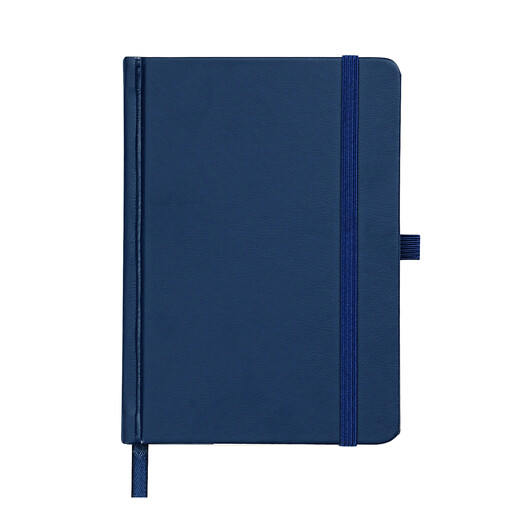
Why this choice? For the professional on the move, compactness and functionality are key. This A6 notebook checks all the boxes: a durable PU hardcover that withstands impacts and thoughtful accessories (elastic closure, bookmark, pen loop) that simplify daily life.
Its rigid shell is a real shield for the pages. The 100 g/m? paper is a pleasant surprise: at this price point, such opacity and writing comfort are rare.
Ultra-practical pocket size. Functional accessories that make a difference (pen loop, elastic). Thick 100 g/m? paper.
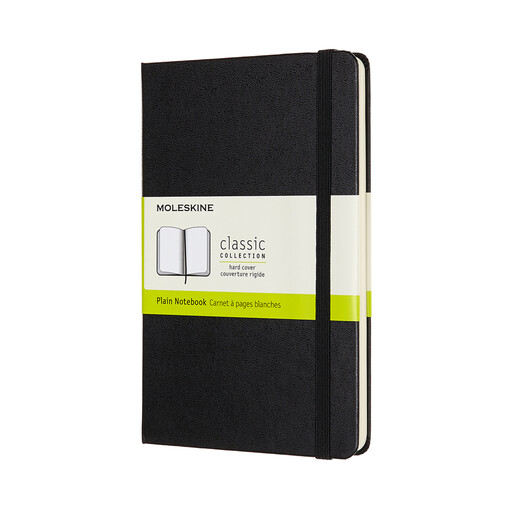
Why this choice? Creatives seek a blank page, a space for freedom. That's the promise of this Moleskine: a blank canvas for drawing, mind-mapping, or spontaneous writing. Its iconic design and sewn binding (guaranteeing a 180° lay-flat opening) have made it a classic among artists and designers.
Its sewn binding and hardcover are guarantees of durability. While the 70 g/m? paper may seem lightweight, its quality and ivory tint are optimised for visual comfort and dry media (pencil, ballpoint pen).
The creative freedom of blank pages. The perfect 180° lay-flat opening. The timeless design and its expandable inner pocket.
Explore our complete selection of notebooks and journals, all chosen for their quality and durability, and find the perfect model for your projects.
In practice, 90 g/m? paper is noticeably thicker and more opaque. When you use it, the difference is striking: you can write with a fountain pen or marker without the ink bleeding through, a common problem with 70 g/m?. However, for a simple ballpoint pen or pencil, a good 70 g/m? paper is still a perfectly viable option.
Not necessarily. A hardcover perfectly protects your notes and allows you to write anywhere, even without a desk. The downside: it's heavier and bulkier. For those who prioritise lightness, a quality softcover (or a polypropylene one) is an excellent compromise, combining flexibility and durability.