
Livraison le jour même ou le lendemain

Qualité garantie

Débloquez vos offres de bienvenue: Livraison GRATUITE | Jusqu'à -80 % | 30 jours d'essai gratuits à JoyPlus
Téléchargez l'application
A new notebook is a blank slate for your ideas, projects, and memories. Yet, when faced with fully-stocked shelves, making a choice can quickly become overwhelming. Ink that bleeds through the paper, a binding that falls apart after a few weeks, a cover that gets damaged at the bottom of your bag... disappointments are common. To help you avoid them, our guide breaks down the essential criteria and the pitfalls to sidestep to find your perfect companion.
Before diving into the technical details, let's review the three deal-breakers that can ruin your experience.
To make the right choice, three technical criteria must be scrutinised: the paper, the binding, and the format.
Paper weight, expressed in grams per square metre (g/m?), indicates the paper's thickness and density. Far from being a mere technical detail, it directly impacts your writing comfort.
The method used to assemble the pages is crucial for your notebook's durability and ergonomics.
The format should adapt to your lifestyle: a pocket size (9?x?14?cm) fits anywhere, while an A5 notebook (14.8?x?21?cm) offers a more comfortable writing space for the office or for your studies.
The ruling (the page style) is just as crucial:
Instead of an endless list, we've selected iconic models for three distinct user profiles. It's up to you to find yours.
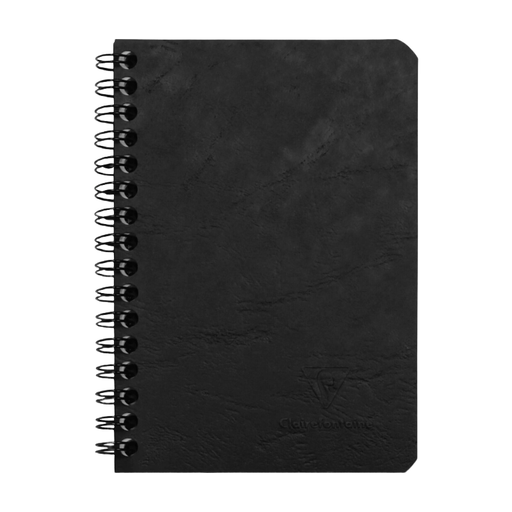
Why we love it: Its pocket size is perfect for capturing ideas on the fly. The textured hardcover easily handles the rigours of travel, and its premium paper works just as well with a pencil as it does with a fountain pen for a quick sketch.
Its Brushed Vellum 90 g/m? paper stops ink without bleed or ghosting. Its sewn binding guarantees a lay-flat opening, and its hardcover is a real shield for your notes.
The quality of Clairefontaine paper, made in France and PEFC-certified, which offers an unparalleled smoothness and writing experience.
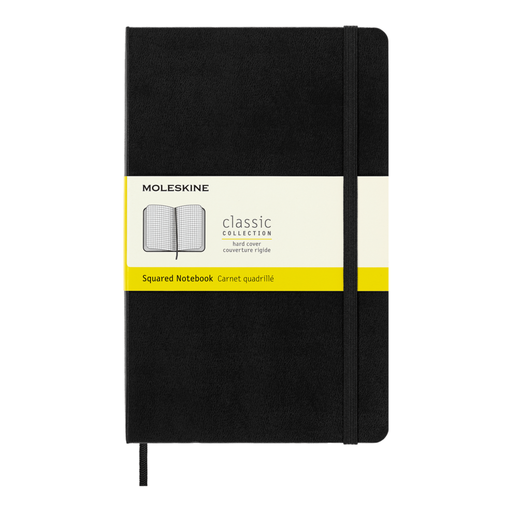
Why we love it: Its Large format (close to A5) is a staple in the professional world. The grid ruling is perfect for juggling notes, diagrams, and tables. Its iconic design and hardcover make it as much a status symbol as a functional tool for meetings.
Its sewn binding ensures a 180° opening, making every corner of the page usable. The hardcover and iconic elastic closure provide long-lasting protection for its contents.
Its complete ecosystem (bookmark, expandable pocket, limited editions) and iconic design. The ivory-coloured paper is FSC-certified.
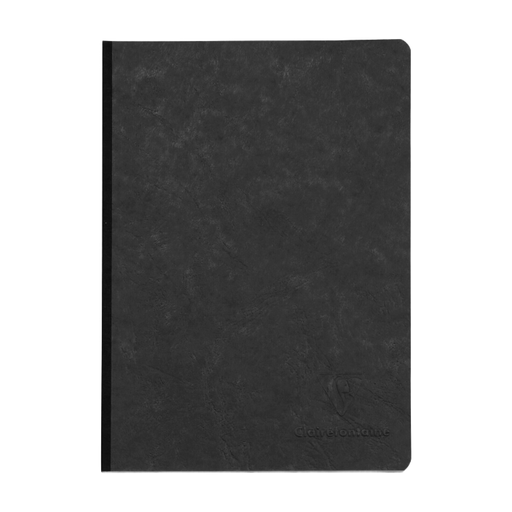
Why we love it: The 90 g/m? paper is a "BuJo's" best friend: it handles markers and highlighters with no problem. The grid ruling provides a flexible framework for creating your own layouts, and its 192 pages are enough to last the whole year.
Its premium paper absorbs all inks without ghosting or bleed. The sewn binding with its cloth spine ensures a perfect lay-flat opening and excellent longevity.
Unbeatable value for money and page count. Its velvety paper offers a smooth writing experience that is truly addictive.
We have curated a complete range of notebooks that meet our strictest quality criteria.
A 70?g/m? paper (the standard for Moleskine) is thinner and lighter. It's perfect for ballpoint pens and pencils. A 90?g/m? paper (Clairefontaine's signature) is thicker, more opaque, and offers superior smoothness. It's the choice for fans of fountain pens and markers because it prevents ink from bleeding through the page.
It all depends on your priorities and your writing tools. Moleskine appeals with its iconic design, complete ecosystem (accessories, limited editions), and its famous 70?g/m? ivory paper, ideal for its light weight. Clairefontaine stands out for the excellence of its 90?g/m? Brushed Vellum paper, its French manufacturing, and a writing experience of incomparable smoothness, especially with liquid inks (fountain pens, markers).
Not necessarily. A hardcover notebook offers maximum protection and a stable writing surface, even without support. It's the ideal companion for archiving, travel, or for those who often write while standing. On the other hand, it's heavier and more rigid than a softcover notebook. The latter, being lighter, will slip more easily into an already full bag for daily use.