
Livraison le jour même ou le lendemain

Qualité garantie

Débloquez vos offres de bienvenue: Livraison GRATUITE | Jusqu'à -80 % | 30 jours d'essai gratuits à JoyPlus
Téléchargez l'application
Choosing a notebook? In theory, it sounds simple. In practice, the sheer variety of options can be overwhelming. Whether you're jotting down lecture notes, organising your day, sketching a brilliant idea, or keeping a personal journal, the right notebook can make all the difference. This guide is here to help you make sense of it all by breaking down the essential criteria for finding the writing companion that's perfect for you.
Before you make a purchase, the first step is to define how you'll use it. Three key points should be considered: size, paper quality, and cover type.
The size of your notebook depends primarily on your daily routine.
Paper weight, expressed in grams per square meter (gsm), determines the paper's thickness and opacity. It's a crucial factor for your writing experience.
The cover protects your notes and affects how the notebook handles. A hardcover notebook is more robust and provides a stable surface for writing anywhere, even without a desk. A softcover will be lighter and more flexible. As for the binding (stitched, spiral, sewn), it determines the notebook's sturdiness and its ability to lie completely flat.
To guide you, we've reviewed three models that caught our attention. Each one is tailored to a specific profile, from the student to the artist to the on-the-go professional.
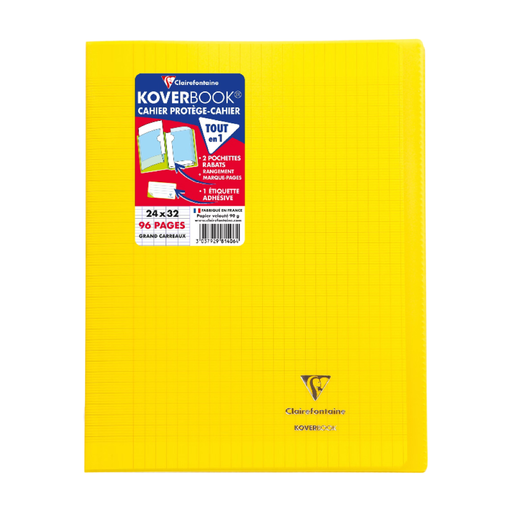
Why It Stands Out
The Koverbook is a clever two-in-one solution that merges a notebook and a protective cover. Its transparent polypropylene cover is not only ultra-durable but also features well-designed flaps for tucking in loose papers. A real organisational bonus.
Pros
Who is it for?
Ideal for high school and university students looking for a durable and functional notebook to last them through the entire academic year.
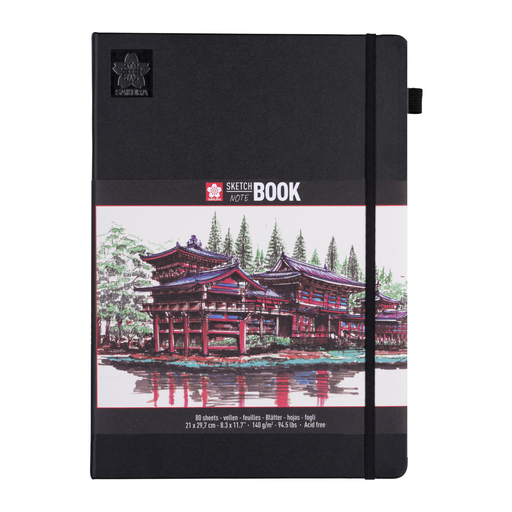
Why It Stands Out
This notebook was designed from the ground up for artists. Its high-quality thick paper and hardcover make it a true portable studio. Thoughtful extras, like the pen holder and storage pocket, make it as practical as it is inspiring.
Pros
Who is it for?
Perfect for artists, illustrators, designers, and all creatives seeking a reliable sketchbook for their work, whether professional or personal.
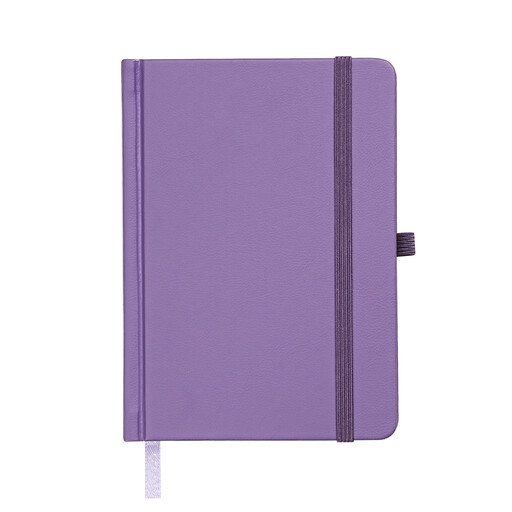
Why It Stands Out
This A6 notebook is a masterclass in elegance, compactness, and functionality. Its refined PU cover, 100g thick paper, and thoughtful accessories make it an excellent choice for those seeking a reliable and highly portable writing companion.
Pros
Who is it for?
Recommended for professionals on the go, bullet journal enthusiasts, or anyone who wants to capture their thoughts and organise their tasks, wherever they are.
Did our selection not quite catch your eye? If you're searching for a more playful or out-of-the-ordinary design, take a look at our collection of Cute Notebook with Pen to find models that combine practicality with personality.
For a standard ballpoint pen, 80 gsm paper gets the job done. However, if you're a fan of fountain pens or liquid ink rollerballs, step up to at least 90 gsm, and aim for 100g thick paper for peace of mind. For felt-tip pens and markers, 120 gsm paper (or higher) is essential to avoid nasty surprises on the other side of the page.
A notebook is the generic term for any bound book of paper. A bullet journal, or "bujo" for short, is primarily a method of personal organisation. You use a notebook (often with dotted pages) to create your own custom planner, to-do lists, and trackers. While any quality notebook can work, models with dotted pages are particularly popular for the freedom they offer.
Absolutely! The thick, high-quality paper of a sketchbook provides a premium writing experience, especially with ink pens. The only notable difference is that the pages are usually blank (without lines or grids). This offers total freedom but might take some getting used to if you're accustomed to writing in straight lines.