
Same-day & Next-day Delivery

Quality Guaranteed

Unlock Your Welcome Offers: FREE Delivery | Up to 80% OFF | Free 30-day JoyPlus trial
Download the APP
Switching to an electric car is a decisive step, but the question of home charging quickly becomes a central issue. Faced with a plethora of options, the pitfalls are numerous: overpaying for power you don't need, or missing out on features that could significantly lower your electricity bills.
As the Head of Product Selections at Joybuy, my mission is to help you see things more clearly. Let's cut through the marketing jargon and focus on what's essential: the criteria that truly matter for equipping your home effectively and for the long term. This guide is designed to lead you to an informed choice, perfectly suited to your vehicle, your electrical system, and your budget.
Before you even start comparing models, it's crucial to understand three fundamental parameters. These will determine if your future home charging station is the right choice for you.
Charging power is the number one criterion. It must be perfectly aligned with your vehicle's capacity and, most importantly, with your home's electrical installation.
A word of caution?: Installing a 22?kW charger on a single-phase system is simply impossible. Likewise, if your car only accepts a 7.4?kW charge on alternating current (AC), an 11 or 22?kW charger will work, but its power will be throttled to the maximum capacity accepted by the vehicle.
The choice essentially comes down to two options: the wall-mounted charger (or wallbox) and the mobile charger.
Far from being mere gadgets, smart features are powerful allies. A Wi-Fi connected charger allows you, via a mobile app, to manage your charging remotely. This is a major advantage for saving money.
To illustrate these concepts, here are a few models that cater to distinct user profiles, selected based on their performance, safety, and smart features.
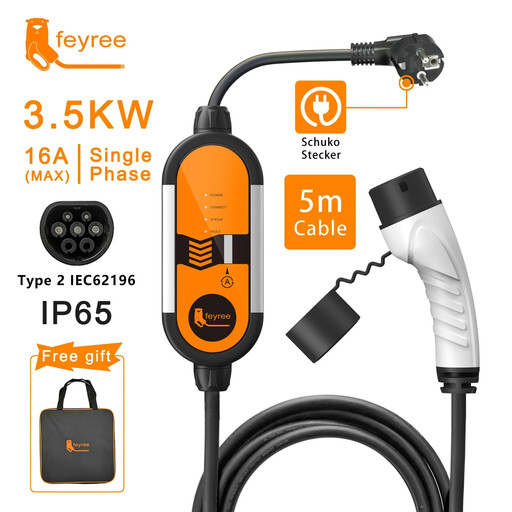
Why we chose it : Ideal for owners of plug-in hybrids or small electric city cars. It offers maximum flexibility without the constraints and cost of a fixed installation. Perfect for a slow overnight charge or as a backup solution on the go.
This charger helps you avoid overspending on unnecessary power. Its ability to connect to a standard Schuko plug (provided the circuit quality is verified) eliminates the need for a costly intervention by an electrician.
Its portability and ease of use. The OLED screen and adjustable current (from 8 A to 16 A) allow for direct and safe control of the charge.
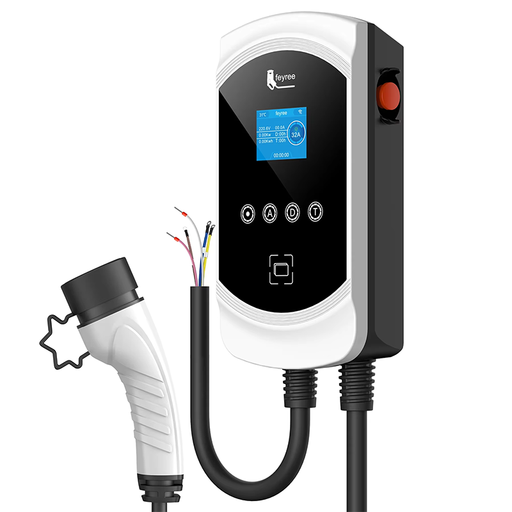
Why we chose it : For those who want a fixed, powerful, and intelligent solution. This 7 kW charger model is perfect for single-phase installations and includes essential features to control consumption and secure your system.
This model directly addresses the often-overlooked pitfall of ignoring smart features. The dynamic load balancing (DLB) function prevents overloads, while the Wi-Fi connection allows you to schedule off-peak charging to achieve substantial savings.
Intelligent energy management. Dynamic load balancing provides true peace of mind, ensuring that charging your car will never disrupt the rest of your household.
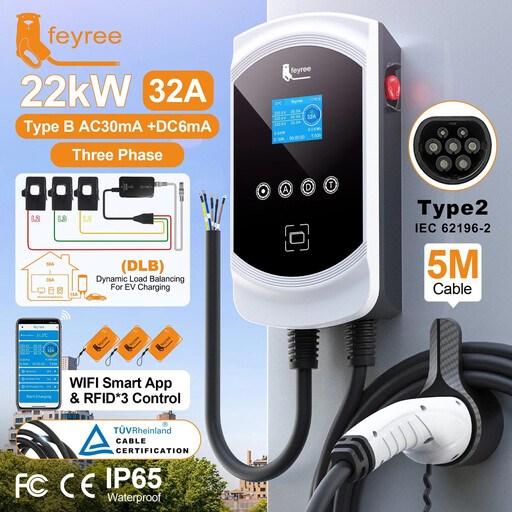
Why we chose it : Designed for users with a three-phase installation and a compatible vehicle (like many Tesla models, the Audi e-tron, or the Porsche Taycan). This 22 kW three-phase charging station maximizes home charging speed.
This model avoids the frustration of slow charging for a long-range vehicle. It takes full advantage of a three-phase installation while integrating dynamic load balancing for safe management of this high power output.
Maximum home charging speed. It significantly reduces the vehicle's downtime while offering full control via the app and optimal electrical safety.
If your setup requires specific adapters or if you want to explore other solutions, we have selected a full range of products that meet strict quality and safety criteria.
For most homes with a single-phase supply, a 7.4?kW charger is the most balanced choice. It allows you to add about 40?km of range per hour of charging, which is more than enough for a full charge overnight. Power ratings of 11?kW and 22?kW are reserved for three-phase installations and compatible vehicles.
No, it is not a requirement at all. A standard single-phase installation is sufficient for a 7.4?kW charger. Switching to three-phase is only relevant if you want to install an 11?kW or 22?kW charger to drastically reduce charging times, and only if your vehicle supports it. This typically involves upgrading your electricity subscription and work on your electrical panel.
The charging time depends on three key factors: your battery's capacity (in kWh), the charger's power output, and the maximum power accepted by the vehicle's onboard charger.