
Livraison le jour même ou le lendemain

Qualité garantie

Débloquez vos offres de bienvenue: Livraison GRATUITE | Jusqu'à -80 % | 30 jours d'essai gratuits à JoyPlus
Téléchargez l'application
A set of highlighters might seem simple to pick. Yet between garish fluorescent shades, tips that flatten after a few weeks and inks that bleed through the page, a hasty purchase can quickly lead to disappointment. A student, a teacher, a professional or a bullet journal enthusiast won't necessarily have the same priorities.
Here are the criteria to consider when looking for highlighters that suit your documents, your usage habits and your budget.
A pack of 15 or 20 shades isn't necessarily helpful if several colours are hard to tell apart on the same page. Whether for study notes or professional documents, a coherent palette is often more practical than an XXL assortment.
Pastel highlighters work well for discreet annotations, planners and bullet journals. Fluorescent highlighters, on the other hand, immediately draw the eye to key information. Combining the two allows you to structure your reading and prioritise content.
A tip that's too wide lacks precision on small text. Conversely, a fine tip requires more passes to cover an entire line. Chisel-tip highlighters offer a good compromise when they provide two widths: a fine line for underlining and a broader stroke for highlighting a paragraph.
Anti-dry-out technology can extend a highlighter's life when the cap is left off, but it doesn't mean you can skip replacing the cap after use. Also check the ink type and storage recommendations. Water-based ink generally works well on standard paper, though the result also depends on the paper's weight and porosity.
For annotating notes, photocopies or diaries, a water-based, transparent ink helps keep the text readable. On thin paper, always test the colour on a similar page before highlighting an important document.
Claims like "smudge-free" or "doesn't bleed through" should be taken as usage guidelines, not as a guarantee that works on every paper. The paper weight, finish and the amount of ink applied can all noticeably affect the result.
A chisel tip of 1 to 4 mm works well for both precise annotations and broader strokes. A model of 2 to 5 mm is better suited to printed text and clearly visible blocks of colour.
For prolonged use, consider the shape of the barrel, whether it has a clip and how it can be stored. A slim format slips easily into a student's pencil case or a work pouch. A retractable model also reduces the risk of losing the cap.
Some refillable highlighters mean you don't have to replace the whole pen when the ink runs out. The STABILO BOSS ORIGINAL range, for example, states compatibility with STABILO BOSS refills for certain models. The claimed capacity can reach 375 metres of highlighting, according to the manufacturer's information and usage conditions.
This theoretical lifespan doesn't guarantee the same duration for everyone, though. The pressure you apply, the type of paper and how often you use the highlighter all directly affect ink consumption.
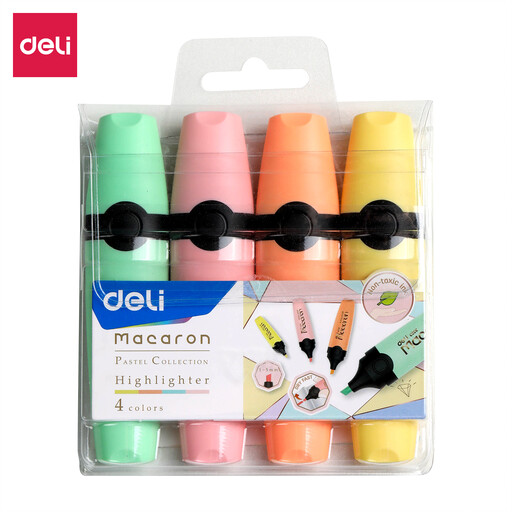
Why this choice suits this profile: This pack of four pastel colours lets you start organising your notes visually without juggling too many references. It works well for lessons, lists and everyday annotations.
The set is limited to four shades, making it easier to categorise information and avoiding redundant colours.
Water-based ink, PP/ABS plastic barrel and a chisel tip stated as 1 to 5 mm.
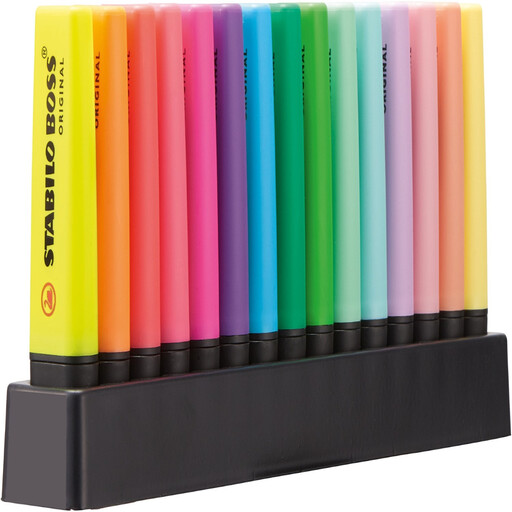
Why this choice suits this profile: This set combines nine fluorescent shades and six pastel shades. It's aimed at those who want to organise their notes, desk or creative projects with an extensive palette.
The different colour families let you distinguish priorities without relying solely on one fluorescent tone.
Chisel tips of 2 and 5 mm, water-based ink, anti-dry-out technology for up to 4 hours according to the product sheet, and refillable for certain models.
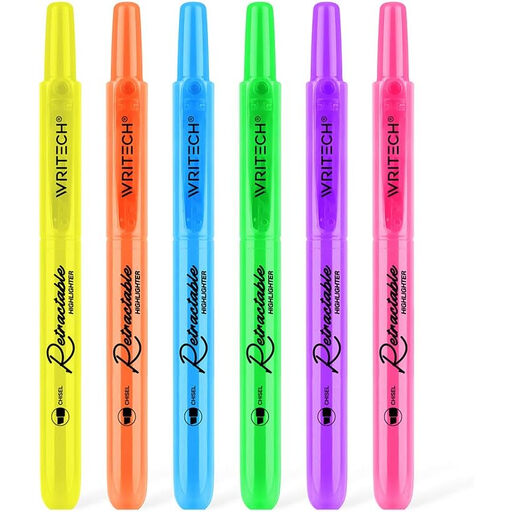
Why this choice suits this profile: The retractable mechanism is ideal for people who often annotate on the go, in meetings or during long revision sessions.
There's no cap to remove or lose, and the tip retracts when the highlighter is stored away.
Chisel tip, push-button mechanism and ink stated to be fade-resistant and designed to minimise bleed-through.
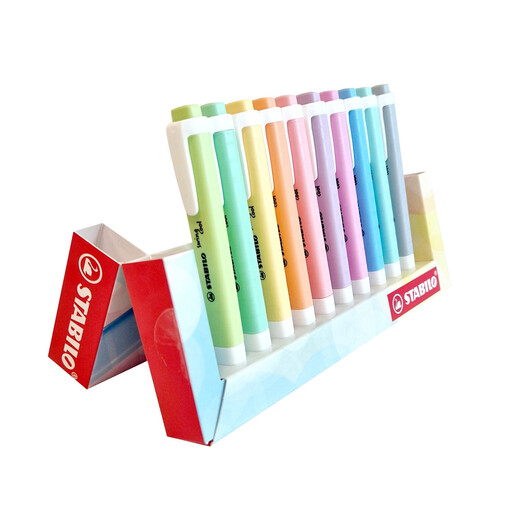
Why this choice suits this profile: Its slim design, clip and mix of pastel and fluorescent colours make it a handy companion for planners, lettering and on-the-go annotations.
The 1 and 4 mm tips mean you don't have to choose between precision and coverage, while the clip makes it easy to carry.
Water-based ink and anti-dry-out protection stated for up to 4 hours without the cap.
We've curated a full list, updated in real time, of products that meet these strict criteria as well as European safety requirements.
It all depends on how often you use it, the paper and storage conditions. Always close the cap carefully after each use and store the pens in a dry place, away from heat and direct sunlight. Anti-dry-out models can stay open for longer, according to the manufacturer's instructions, but this feature doesn't replace proper storage.
Yes, as long as you choose a shade that contrasts well with the paper. Pastel colours are useful for distinguishing different levels of information without obscuring the text. For definitions or important dates, a fluorescent shade will provide a stronger contrast.
A dual-width chisel tip offers real versatility: a fine line for frames, lettering and underlining, and a broad stroke for headings and blocks of colour. For the most intricate details, compare the stated width and test the ink on your notebook's paper to minimise smudging.