
Livraison le jour même ou le lendemain

Qualité garantie

Débloquez vos offres de bienvenue: Livraison GRATUITE | Jusqu'à -80 % | 30 jours d'essai gratuits à JoyPlus
Téléchargez l'application
Choosing a hairbrush? It seems like a simple task, but it can quickly become a headache. Faced with an overwhelming array of models and marketing promises, it's easy to end up with an accessory that damages your hair, irritates your scalp, or breaks after just a few weeks. Our mission: to bring you clarity and help you find the perfect tool for your hair type.
Before we get to our top picks, let's break down the two classic pitfalls that lead to a purchase you'll regret:
To avoid these disappointments, there are three essential points to check before you buy. Far from being mere details, these technical criteria determine the effectiveness and lifespan of your brush.
The element in direct contact with your hair is crucial. The most common options have very specific uses:
The shape of your brush isn't just about design. It defines its primary function:
Wide spacing is recommended for thick, frizzy, or curly hair, as it limits tension and therefore breakage. Conversely, more closely spaced bristles offer better control and precision for styling fine hair or achieving a flawless finish. A travel brush often combines different sizes for versatility in a compact format.
To put theory into practice, here are a few products that perfectly illustrate these criteria, tailored to specific needs.
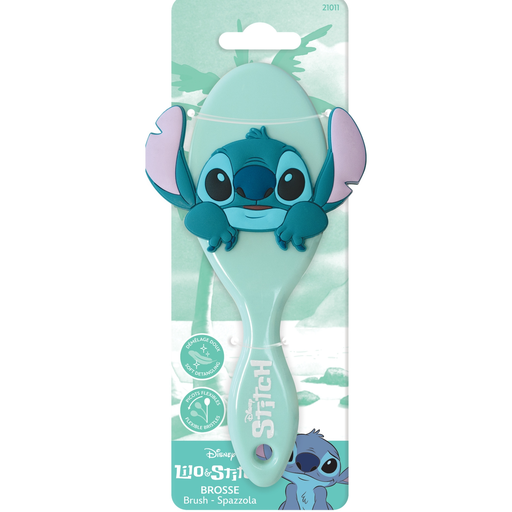
Why we chose it: Perfect for parents who want to turn the chore of brushing into a fun activity. Its playful design motivates children, and it's engineered for pain-free detangling, making it ideal for sensitive scalps.
It avoids the pitfall of harsh bristles thanks to its flexible, round-tipped bristles that glide through knots without snagging and protect the scalp from irritation.
It combines a kid-friendly design with effective, gentle detangling on both wet and dry hair.
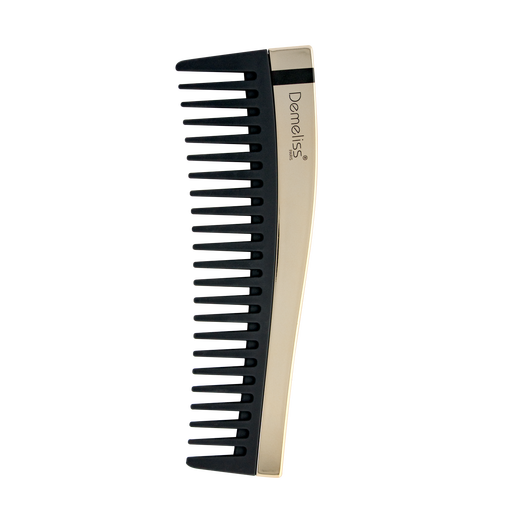
Why we chose it: Designed for curly, coily, or very thick hair that requires respectful detangling without breaking the curl pattern or the hair fibre.
It debunks the "one-size-fits-all" brush myth. Its widely spaced teeth are specifically designed to glide through textured hair without snagging, thus preserving its natural shape.
It minimises breakage and frizz on curly hair and can be used on both wet and dry hair for gentle detangling.
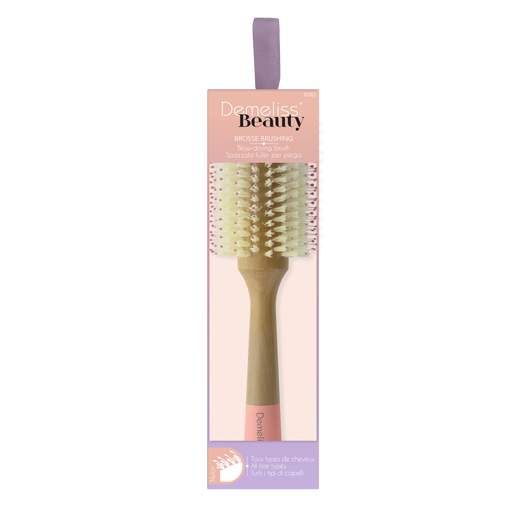
Why we chose it: This is the ultimate **styling brush** for blowout enthusiasts. Its versatile 32mm diameter is ideal for lifting roots, adding volume to mid-length hair, or smoothing lengths.
It avoids the trap of materials that can't handle heat. Its wooden body and dual-height nylon bristles are made to withstand a hairdryer and grip hair sections perfectly.
It ensures precise styling and controlled volume during a blowout, while being gentle on the hair fibre.
Discover our complete selection of products that meet our quality criteria and current safety standards.
To ensure hygiene and the longevity of your brush, remember to remove trapped hair after each use. Once a month, give it a deep clean: soak it for a few minutes in warm water with a small amount of mild soap or shampoo. Use a small brush (like a dedicated toothbrush) to scrub the base and bristles. Rinse thoroughly and let it air dry, bristles down, on a towel. Warning: never soak wooden brushes.
The lifespan of a brush obviously depends on its quality and how often you use it. It's time for a replacement when the bristles are bent, broken, or missing, if the rubber cushion is cracked, or if the base is damaged. A damaged brush can become harsh on your hair and scalp. As a general rule, for daily use, replacing it every 1 to 2 years is a good average.
It all depends on your goal. Nylon bristles are the champions of detangling; their flexibility and spacing allow them to tackle the most stubborn knots, especially in thick hair. Boar bristles, on the other hand, are renowned for conditioning: their composition, similar to hair's keratin, helps distribute sebum along the hair shaft. The result: the hair fibre is smoothed, and the hair is shinier. However, they are less effective for detangling very knotted hair.