
Same-day & Next-day Delivery

Quality Guaranteed

Unlock Your Welcome Offers: FREE Delivery | Up to 80% OFF | Free 30-day JoyPlus trial
Download the APP
A beautiful flower pot can transform an interior or a balcony, but the wrong choice can quickly become a headache. A wilting plant, a pot that cracks at the first frost, a colour that fades to a washed-out pastel after just one summer... These scenarios are unfortunately all too common. To avoid these disappointments, it's best to know the pitfalls to watch out for and focus on the criteria that truly make a difference.
The goal isn't to find the perfect pot—it doesn't exist—but to find the one that suits your plant, your environment, and your lifestyle. Here is our advice for making the right choice with confidence.
The shelves are overflowing with models making tempting promises, but not all of them hold up. To avoid buyer's remorse, it's crucial to know how to read between the lines.
For a long-lasting purchase that ensures your plants' health, three parameters should be examined closely.
Each material has its pros and cons, which dictate the pot's maintenance and ideal location.
Water management is a non-negotiable point.
The location of your pot is crucial: it directly determines the technical specifications to look for.
outdoor planter, balcony planter): Outdoors, durability is paramount. Opt for materials certified as frost and UV-resistant. A drainage hole is simply non-negotiable.indoor flower pot): Aesthetics take centre stage. You can choose more delicate materials like untreated ceramic or metal. A cachepot is an excellent option here to hide a plastic nursery pot, which is often unattractive but highly functional.Rather than an endless catalogue, here are three targeted solutions that meet specific needs, all while avoiding the pitfalls we've just discussed.
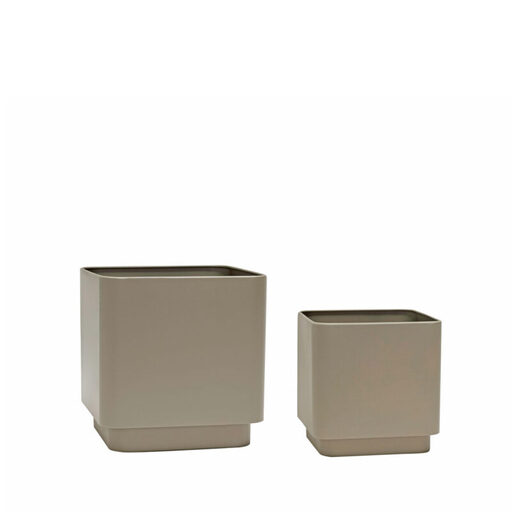
Why we chose it: This set of two iron pots is for those seeking a raw, geometric aesthetic for a contemporary interior. It's perfect for showcasing large green plants and creating a focal point in a living room or office.
It doesn't pretend to be something it's not. Made of iron for exclusively indoor use, it avoids the trap of "imitation" materials that age poorly. Its authenticity is its greatest asset.
A bold cubic design and robust construction that bring an industrial touch of character to your decor.
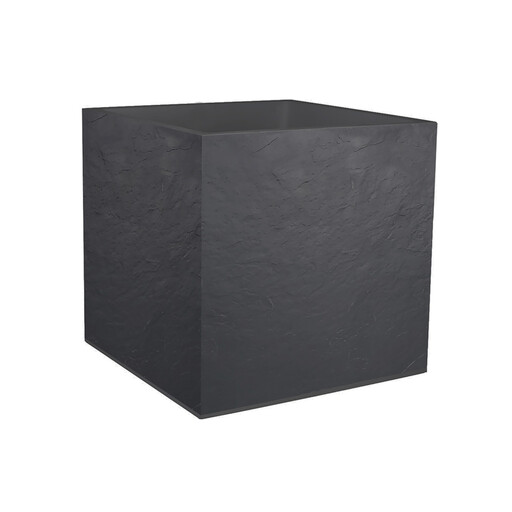
Why we chose it: This French-made planter is designed to withstand the elements. It is ideal for structuring a balcony or terrace with shrubs or floral arrangements, while offering well-designed technical features.
It directly addresses the "false frost-resistant" pitfall. Its double wall protects roots from both cold and intense heat. The integrated water retention zone prevents root suffocation, a common problem with pots lacking proper drainage.
An all-in-one solution: UV and frost resistance, root insulation, and integrated water management.
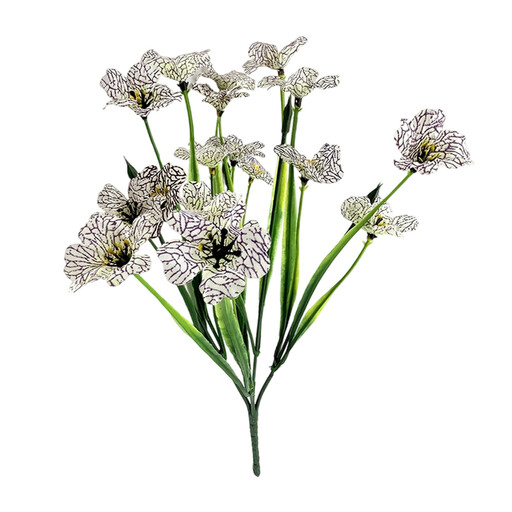
Why we chose it: For those who dream of a balcony in bloom all year round, without any maintenance. These artificial outdoor flowers are the ultimate "zero effort" solution for a flawless look.
It bypasses the problem at its source: no more risk of plants wilting. The UV-resistant plastic ensures colours hold up against the sun, the usual weak point of entry-level artificial flowers.
A "set it and forget it" solution that provides instant and long-lasting blooms, even in difficult exposure conditions.
We have selected a full range of products that meet our criteria for quality and durability.
The label alone is not enough. Rely on the technical details that justify it: an insulating double wall, high-density composite plastic, or ceramic fired at a very high temperature (like stoneware). A simple, thin, lightweight plastic pot is unlikely to survive several winters unscathed.
Absolutely not! That's the surest way to kill your plant. A cachepot, by definition, has no drainage hole. If you plant directly in it, water will stagnate at the bottom and cause the roots to rot. The correct method: keep the plant in its original nursery pot (the plastic one with holes) and place the entire thing inside the cachepot. Remember to empty the excess water that collects in the cachepot after each watering.
The golden rule of repotting: choose a new pot with a diameter 2 to 4 cm larger than the old one. A pot that is much too large is a bad idea: the excess soil will take too long to dry, increasing the risk of rot. Conversely, a pot that is too small will restrict your plant's growth.